“Loss of genetic diversity in agriculture is leading us to a rendezvous with extinction – to the doorstep of hunger on a scale we refuse to imagine. To simplify the environment as we have done with agriculture is to destroy the complex interrelationships that hold the natural world together. Reducing the diversity of life, we narrow our options for the future and render our own survival more precarious.”
– Cary Fowler and Pat Mooney, Shattering: Food, Politics and the Loss of Genetic Diversity
Vanastree, the organization that has taken me on as chief cook and bottle washer (ie, intern), is one of many NGOs tackling this issue of genetic diversity in agriculture. Basically, thanks to the “green revolution” of pesticides and hybrid crops, India’s agricultural land is in danger of becoming a giant, Monsanto-owned rice paddy, susceptible to disease and chaos and not coming near to providing enough food for its constituents. By decentralizing the food supply and reducing the heavy dependence on chemical inputs, food security (both in terms of safety and availability) becomes a much easier task.
Vanastree’s mission is to promote biodiversity in cultivated plants, which means it’s involved in a variety of activities. Documenting the infinite varieties of rice, vegetables, medicinal plants and food-producing trees in the region is a major task. We also organize farmers into seed-exchange groups, and get people started in home-based, conservation-oriented businesses (ie drying bananas for sale or hosting ecology camps).
And who does all this work? Well, there’s the collective of farmers that make up Vanastree’s 80-some member base. They keep the seeds, comprising a regional seed bank that uses the landscape itself instead of some subzero vault in the arctic. Then there’s Sunita, who basically does everything else from the organizational standpoint. Sunita started the organization in 2001, and is probably the most dedicated person I’ve ever met outside of my workaholic family. Burnout is not in her vocabulary. (Luckily, she also has a great sense of humor and knows how to take a break.)
So far, my job as an intern has been to get Vanastree up to date, technology wise (Sunita jokes that she’s the only Indian without computer skills), complete a bunch of background research for myself so I can get some grasp on the issues, and do photodocumentation of farms/home gardens and food processing. This last task has been the most fun and interesting, and not just because I’m out in the field. As a journalism student, I’ll take any excuse I can get to stick a camera in someone’s face.
This Tuesday, I got one of those opportunities – a trip to the coast to tour home gardens with a partner NGO. Except that at six in the morning when Sunita politely asked me to get up already, I was not ready to be a dutiful intern. Neither was I relishing the thought of the 16-hour day ahead. Having been awake half the night under mosquito assault, I wondered if economists had ever tried to calculate the lost GDP due to bloodthirsty insects. It would probably be enough dough to swathe the entire country in mosquito netting.
Nonetheless, here’s a rundown of the day:
Our driver, Mushtaq (the same one who picked me up from the airport), arrives just on time; that is, ten minutes early. I grab my camera and climb in the van with Sunita and Manorama, a Vanastree trustee who not only takes care of her farm and family but also does much of the organization’s documentation work – she probably could identify hundreds of local vegetable varieties by sight, along with their ideal growing conditions, pest management techniques and preparation methods. With her quiet yet inquisitive manner she pulls data out of even the most secretive gardeners.
Mushtaq throws the van into gear and we go bumping off down the road. I’ve been on a few trips now with Mushtaq at the wheel and have gained an appreciation for both his skillful driving and his sense of style. Like many young Indian men, he typically wears clothing flamboyant enough for an American preteen girl: rhinestone-studded jeans embroidered with colorful patterns; tight, brightly colored t-shirts emblazoned with brand names; chunky shoes. His van has just as much personality. A gold plastic tablet with text from the Koran (Mushtaq is part of the large Muslim minority here) hangs from the rearview mirror; on the side mirror, pink text instructs the viewer to SMILE.
Anyway, after climbing up and down hills for nearly two hours, we arrive at the coast. Our guide to the home gardens today is Rekha, a woman from the NGO Sneha Kunja. Sneha Kunja is a health organization that runs a hospital combining traditional (Ayurvedic, naturopathic, etc) and conventional (Western) medical practices. They also have several outreach programs, and promoting good nutrition through home gardens is one of them. We meet up Rekha for a quick breakfast of chai and dosas – thin pancakes made from rice flour –and head out to the first garden.
This part of the coast is home to the Hallaki Vokkal tribe, a unique but swiftly diminishing group that has farmed and fished here for thousands of years. Although they never had the bureaucratic clout to gain official tribal status from the government (a process that takes time, negotiating skills and money), the Hallaki Vokkal maintain their distinct appearance and way of life. The women traditionally wear a backless sari topped with thick layers of beaded necklaces, and men perform work according to their caste – the family we visited specializes in carpentry.
After admiring the patch of tall white okra plants and a thorny cow fence, we head down to the house where the vegetables for home consumption are grown. The greenery is flourishing despite what seem like impossible conditions – a whopping 13 feet of rainfall per year (most of it in the last three months) and soil that resembles reddish gravel. We stop inside the house for a few minutes to eat some surplus bananas; with different varieties ripening all year round, it’s a tough job in these parts, but somebody’s got to do it. We also get our foreheads dusted with red and yellow powders, a ritual performed on all guests to traditional households. Then we head back to the van, wake Mushtaq from his nap, and hit the potholes to the next garden.
On the way, we make a tender coconut stop. Tender coconuts are a fleshy, green cousin of the usual brown-husked coconut, mostly prized for their juice. Not only does they contain salts to replenish your ever-depleted sweat glands, but tender coconuts are also a guaranteed pathogen-free source of hydration. The roadside vendor sells them for about eight rupees (20 cents) each, and uses his machete to lop off the top. Then you pour the cool, slightly tangy juice down your throat and hand the empty coconut back to him. He makes a series of cuts to slice it in half and fashion a spoon out of the hull, which you can then use to scrape out the thin layer of gooey innards. That part is a bit too mucousy for me but the liquid was refreshing. We toss our coconut shells onto the large mound next to the vendor’s stand. They’ll dry there and be used to fuel someone’s fire. Because the coast is so densely populated, wood is hard to come by – the forests are as free of leaf litter as a well maintained city park – and any burnable scrap is valuable property.
While Sunita and I were getting coconuts, Rekha had made a few phone calls and discovered that there weren’t any more gardens for us to visit that day. We decide instead to take a look at Rekha’s house and then go to an island hosting a sustainable fishing village.
At Rekha’s house, I pet a cute calf and get more powder rubbed on my forehead. From there, it’s a short distance down the road to the river.
The river is the Aghanashini, one of four main rivers in this district. It’s one of the few rivers that hasn’t been dammed in India and as a result still feeds a huge estuary, rich with birds, fish and other wildlife. The island we’re visiting, Aigalkurve, is in one of these backwater reaches.
When we get out of the van, the boatman is waiting to ferry us to the island. He pushes the wood canoe across the estuary using a long stick – this is shallow, completely still water. I stick my hand in and half wish for a swim. The rains have been receding and I’m discovering how hot the sun here can get, even when behind a layer of clouds. The high humidity makes even a trace of heat magnified a thousand times. But the lush jungle on either side of the river promises shade and it’s a short ride. I still have no idea what’s on the island, but I have a feeling it will be interesting, if only because it looks like I’m entering the set of Lost.
I check my watch. It's 11 am. I don't remember the last time I've seen so many different things before lunchtime.
To be continued...
Thursday, September 25, 2008


Thursday, September 18, 2008
Blood donation in the jungle
During my first weekend in India, I took a little jungle expedition between rain showers. When I got back home and kicked off my sandals, I noticed what looked like a tiny stick stuck to the top of my foot. Except it wouldn’t brush off. I reached down to pick it off. It wouldn’t be picked. When I dug in with my nails, it squirmed.
It was burrowing into my skin.
Freaking out commenced.
While in full panic mode, I somehow got it off my foot and onto my fingers. The little bastard was like glue, though, and only through an elaborate combination of shaking, scraping, and cursing did I finally fling it onto the ground.
It scrunched up sadly on the dirt, to maybe a centimeter in length. Its hateful little body was full of blood. MY blood! I reached out with my sandal to squish it, but it sensed me with its leech-sense and stretched out like a hungry baby bird, suddenly a full two inches long. (I realize these are not impressive figures, but two inches of anything that wants to suck your blood is two too many, in my opinion.)
Opting not to kill it, I spent the next half hour compulsively checking my ankles, feet and toes for more black sticks. Then I declared personal jihad on leeches.
Later, I learned that leeches have no eyes but they actually can detect body heat. Also, they don’t burrow into your skin, they just bite and hang on with amazing strength. And now, a couple of weeks after that incident, I’ve begun to accept leeches as a part of life in the tropics, at least until monsoons end (two more weeks, two more weeks...) You go outside, you get a leech, you pick it off and bleed a bit. Then you put on more mosquito repellant before they, too, follow the blood scent and want a piece of the action.
I’ve also discovered new ways of dealing with my friends the leeches, the best of which was taught to me by Sunita’s farmhand, Manju. Upon returning from a walk one day, I was doing the leech dance on her porch (fingers stuck under my velcro sandal strap, one foot off the ground, hopping, cursing under my breath). He happened to walk by just as I’d removed it and looked at me curiously. “Leech,” I said, pointing to the ground (our communication is rather limited due to the language barrier). He nodded, went into the house, and came back with a lighter. Then he proceeded to roast the little sucker with a satisfying sizzling noise, while his four-year-old son and I looked on in equal awe and fascination.
Incredibly, I’d actually planned on coming here in June, when the monsoons start. I was crushed when I was told I would have to wait until fall because Sunita had fallen ill. Now I realize that while it’s good to have the experience of living with monsoons, had I come in summer I would have been eaten by fungus, bugs, spiders and lecherous foot-mongers before I could even hop on a plane back home. In September, it still rains off and on throughout the day, but according to Sunita, this is just a drizzle. In a couple of weeks, the puddles will dry up, my clothes will dry out and lose the rotting smell, and the leeches will greatly diminish.
Then, tick season starts.
It was burrowing into my skin.
Freaking out commenced.
While in full panic mode, I somehow got it off my foot and onto my fingers. The little bastard was like glue, though, and only through an elaborate combination of shaking, scraping, and cursing did I finally fling it onto the ground.
It scrunched up sadly on the dirt, to maybe a centimeter in length. Its hateful little body was full of blood. MY blood! I reached out with my sandal to squish it, but it sensed me with its leech-sense and stretched out like a hungry baby bird, suddenly a full two inches long. (I realize these are not impressive figures, but two inches of anything that wants to suck your blood is two too many, in my opinion.)
Opting not to kill it, I spent the next half hour compulsively checking my ankles, feet and toes for more black sticks. Then I declared personal jihad on leeches.
Later, I learned that leeches have no eyes but they actually can detect body heat. Also, they don’t burrow into your skin, they just bite and hang on with amazing strength. And now, a couple of weeks after that incident, I’ve begun to accept leeches as a part of life in the tropics, at least until monsoons end (two more weeks, two more weeks...) You go outside, you get a leech, you pick it off and bleed a bit. Then you put on more mosquito repellant before they, too, follow the blood scent and want a piece of the action.
I’ve also discovered new ways of dealing with my friends the leeches, the best of which was taught to me by Sunita’s farmhand, Manju. Upon returning from a walk one day, I was doing the leech dance on her porch (fingers stuck under my velcro sandal strap, one foot off the ground, hopping, cursing under my breath). He happened to walk by just as I’d removed it and looked at me curiously. “Leech,” I said, pointing to the ground (our communication is rather limited due to the language barrier). He nodded, went into the house, and came back with a lighter. Then he proceeded to roast the little sucker with a satisfying sizzling noise, while his four-year-old son and I looked on in equal awe and fascination.
Incredibly, I’d actually planned on coming here in June, when the monsoons start. I was crushed when I was told I would have to wait until fall because Sunita had fallen ill. Now I realize that while it’s good to have the experience of living with monsoons, had I come in summer I would have been eaten by fungus, bugs, spiders and lecherous foot-mongers before I could even hop on a plane back home. In September, it still rains off and on throughout the day, but according to Sunita, this is just a drizzle. In a couple of weeks, the puddles will dry up, my clothes will dry out and lose the rotting smell, and the leeches will greatly diminish.
Then, tick season starts.
Tuesday, September 16, 2008
Photos!
I've finally got some uploaded. Don't miss your chance to see the Bridge of Death, my bloody foot, and more!
http://picasaweb.google.com/tuula11/ArrivalMattigatta
http://picasaweb.google.com/tuula11/ArrivalMattigatta
Mathigatta
Two days after arriving at Sunita’s, she has guests in town and so I’m off to my first homestay.
First, we cross the paddy fields to the bus stop, where we nab a fast-moving private bus headed to Sirsi, the nearest city. Personal transportation is not commonplace here, and the bus is reliable – well, reliable enough – for the daily commute. In Sirsi, we stop by Vanastree’s office. I meet one of the trustees of the organization, a woman named Manorama. Her son, Vivek, is with her and offers to take me to the bus station on his motorbike. Thankful for the opportunity to skip a walk in the muggy weather, I accept. Sunita gives me a piece of paper with my host’s name, phone number, and address, and advises me not to talk to strange men on the bus. Then we’re off.
Dodging cows, street vendors, schoolchildren and auto-rickshaws, Vivek gets us to the bus station in one piece. This place handles busses traveling all over the district, and to say it is a zoo would be a gross understatement.
Inside the walled parking lot, ramshackle, exhaust-belching busses careen in and out without warning and with no regard for who might be in their way. Before they’ve even stopped, crowds of people swarm begin shoving their way through the doors – some getting off, some trying to get on. Once bodies are practically bursting out the windows of the bus, the driver takes off again.
There’s no schedule. Instead, those who aren’t sure which bus to take interrogate every person they bump into until they get some semi-consistent answers. Using this strategy, Vivek and I wander around for a few minutes, him shouting at people in busses and me gathering enough stares to wonder if I should offer to sign autographs (foreigners aren’t a common sighting here). Finally, he finds the right bus, wishes me luck, and disappears into the crowd. As soon as my fellow passengers realize my strange appearance and lack of Kannada doesn’t mean I won’t take up a seat, they’re pushing me out of their way just as if I were one of the gang. It’s great to be accepted.
The ride to Mattigatta, the village where I will be spending the weekend, is actually quite nice, once I get over the bumps and the suffocating crowd of people. As the bus strains up the hills, the air cools off, the traffic dissipates, and the jungle takes over.
The hills the bus is working so hard to overcome are part of the Western Ghats mountain range, which runs down almost the entire Western side of India. The district I’m in (and will stay in for the length of my internship) is known as Uttara Kannada, and it is almost entirely composed of these foothills, right up to the Arabian Sea to the West. This area is known locally as the “Malnad”, and it’s part of a biodiversity “hotspot” comprising the Western Ghats and Sri Lanka. This designation means two things – that the region has a high number of species found nowhere else in the world, and that many of those species are endangered.
The Western Ghats are volcanic mountains, created back when India was still part of Pangea. That means the range is older than the geologically young Himalayas. In the Malnad region, the combination of warm temperatures and high annual rainfall (13 feet at the coast and 8 inland at Sirsi) means that most of the area is forested. But those forests are threatened in several ways – just a few decades ago, the settlers were trying hard to convert the whole area into plantations. Still today, the growing human population and huge land-eating government projects are splitting up the forest into biologically useless chunks, where invasive species can easily take over.
Now, I’m on my way to meet a man who hopes to improve that dynamic, a horticulturalist who maintains his plantation using traditional agroforestry methods, which produce crops for humans using an intercropping structure that mimics native habitats. His name is P.P. Hegde, and he and his wife, Savitri, are part of Vanastree’s seed collective (more on that in a future post). Their house in the village of Mattigatta is where I’m headed.
Mattigatta is the last stop on the bus route and the literal end of the road, which winds 40 km west of Sirsi. Feeling guilty for my earlier savagery in obtaining a seat, I let the other passengers out before me and get off the bus last.
It’s early evening and a thick fog obscures much beyond the pavement and a few small huts. As I pay the fare collector (76 rupees, or about $1.75), a spry old man hurries out of the fog toward me. After introducing himself, P.P. beckons me to follow him across the road and down a rocky hill.
At the bottom, we come to small river. Here we have two options – climb up a narrow path to a hanging footbridge (which looks like an exact replica of Monty Python’s Bridge of Death), or wade across the stream. My feet are hot and tired from the ride, and the bridge is swinging ever so slightly in the breeze, so I roll up my jeans and follow him across the slippery rocks.
We’re on the other side in no time, where another rocky hillside faces us. Taking a deep breath (estimated vaporized water content – 80%), I begin trudging slowly upwards as my host scampers ahead.
A few minutes later, me panting and soaked in the particularly useless variety of sweat that one attains in the tropics, we’re on the jungle path to P.P.’s cottage. Butterflies and songbirds fill the air, reminding me that I really do love this place.
As my eyes adjust to the darkness inside the house, the first thing I notice is the open fire. Actually, there are three open fires in the large room. Over one, in the center of the upper part of the room, the a woman is cooking chapaathis, a tortilla-like wheat bread.
The other surprising part about the house is the cows. As in much of rural India, the cows hang out under the same roof as the rest of the family. Having them close at hand makes it much more convenient to milk, feed and clean up after the animals. And, not having a separate cowshed maximizes the amount of land available for cultivation.
The cows are tied up to the feeding trough, which separates their area from ours. The trough, the wood-fired stove, and most of the floor and walls are made of hardened mud. The rest of the dwelling is built of wood, thatch and a few bricks, with red roofing tiles to keep the rain out overhead.
P.P. gives me a brief tour, which includes my room near the entrance, the outhouse at the edge of the arecanut orchard behind his house, and the bathroom for washing up.
After the tour, we go into the living quarters, where things are suddenly modern. A TV hooks up to the satellite dish outside, a phone sits on a table by the window, and a few electric bulbs keep things cozily lit.
Over the weekend, P.P. shows me around his plantation. He grows arecanut, bananas, coconuts, vanilla and a variety of fruit and spice trees. All are raised organically, with a liberal contribution of compost, supplemented by the cows, added each growing season.
Savitri had to leave town, so I don’t get a cooking lesson, but I doubt I would have had any luck replicating the superb food anyway. She uses only the spices and vegetables grown in the area, creating authentic South Indian cuisine that probably isn’t duplicated many other places. As in most rural homes, all meals are served on stainless steel plates placed on the floor, and the man of the house and guests eat first. The person or people who prepare the food eat last, a practice that I’m not going to change in this lifetime so I keep my mouth shut except to shove in delicious rice and curry. Instead of using silverware – which, I’m beginning to realize, is a cold, unnecessary intermediary between you and your food – we eat with our hands for the full experience. Right hand only, though. The left hand is for cleaning mud off feet, performing bathroom duties (water replaces toilet paper here) and other unsavory tasks.
Overall, it was a relaxing, informative visit, in more ways than one. While mud construction and outhouses may seem primitive to westerners, P.P. is a plantation owner and is well off compared to others in the village. He gets a fair price for most of his goods at the market. And his presence on the land is legal – he’s not one of the tens of thousands displaced by “development” projects, including a naval base, a dam and a nuclear power plant in this district alone. Those that have been displaced move on to what is supposed to be preserved forest land, and many of them earn cents on the pound for what they produce. Next week, I’ll get to see the implications of this first hand.
First, we cross the paddy fields to the bus stop, where we nab a fast-moving private bus headed to Sirsi, the nearest city. Personal transportation is not commonplace here, and the bus is reliable – well, reliable enough – for the daily commute. In Sirsi, we stop by Vanastree’s office. I meet one of the trustees of the organization, a woman named Manorama. Her son, Vivek, is with her and offers to take me to the bus station on his motorbike. Thankful for the opportunity to skip a walk in the muggy weather, I accept. Sunita gives me a piece of paper with my host’s name, phone number, and address, and advises me not to talk to strange men on the bus. Then we’re off.
Dodging cows, street vendors, schoolchildren and auto-rickshaws, Vivek gets us to the bus station in one piece. This place handles busses traveling all over the district, and to say it is a zoo would be a gross understatement.
Inside the walled parking lot, ramshackle, exhaust-belching busses careen in and out without warning and with no regard for who might be in their way. Before they’ve even stopped, crowds of people swarm begin shoving their way through the doors – some getting off, some trying to get on. Once bodies are practically bursting out the windows of the bus, the driver takes off again.
There’s no schedule. Instead, those who aren’t sure which bus to take interrogate every person they bump into until they get some semi-consistent answers. Using this strategy, Vivek and I wander around for a few minutes, him shouting at people in busses and me gathering enough stares to wonder if I should offer to sign autographs (foreigners aren’t a common sighting here). Finally, he finds the right bus, wishes me luck, and disappears into the crowd. As soon as my fellow passengers realize my strange appearance and lack of Kannada doesn’t mean I won’t take up a seat, they’re pushing me out of their way just as if I were one of the gang. It’s great to be accepted.
The ride to Mattigatta, the village where I will be spending the weekend, is actually quite nice, once I get over the bumps and the suffocating crowd of people. As the bus strains up the hills, the air cools off, the traffic dissipates, and the jungle takes over.
The hills the bus is working so hard to overcome are part of the Western Ghats mountain range, which runs down almost the entire Western side of India. The district I’m in (and will stay in for the length of my internship) is known as Uttara Kannada, and it is almost entirely composed of these foothills, right up to the Arabian Sea to the West. This area is known locally as the “Malnad”, and it’s part of a biodiversity “hotspot” comprising the Western Ghats and Sri Lanka. This designation means two things – that the region has a high number of species found nowhere else in the world, and that many of those species are endangered.
The Western Ghats are volcanic mountains, created back when India was still part of Pangea. That means the range is older than the geologically young Himalayas. In the Malnad region, the combination of warm temperatures and high annual rainfall (13 feet at the coast and 8 inland at Sirsi) means that most of the area is forested. But those forests are threatened in several ways – just a few decades ago, the settlers were trying hard to convert the whole area into plantations. Still today, the growing human population and huge land-eating government projects are splitting up the forest into biologically useless chunks, where invasive species can easily take over.
Now, I’m on my way to meet a man who hopes to improve that dynamic, a horticulturalist who maintains his plantation using traditional agroforestry methods, which produce crops for humans using an intercropping structure that mimics native habitats. His name is P.P. Hegde, and he and his wife, Savitri, are part of Vanastree’s seed collective (more on that in a future post). Their house in the village of Mattigatta is where I’m headed.
Mattigatta is the last stop on the bus route and the literal end of the road, which winds 40 km west of Sirsi. Feeling guilty for my earlier savagery in obtaining a seat, I let the other passengers out before me and get off the bus last.
It’s early evening and a thick fog obscures much beyond the pavement and a few small huts. As I pay the fare collector (76 rupees, or about $1.75), a spry old man hurries out of the fog toward me. After introducing himself, P.P. beckons me to follow him across the road and down a rocky hill.
At the bottom, we come to small river. Here we have two options – climb up a narrow path to a hanging footbridge (which looks like an exact replica of Monty Python’s Bridge of Death), or wade across the stream. My feet are hot and tired from the ride, and the bridge is swinging ever so slightly in the breeze, so I roll up my jeans and follow him across the slippery rocks.
We’re on the other side in no time, where another rocky hillside faces us. Taking a deep breath (estimated vaporized water content – 80%), I begin trudging slowly upwards as my host scampers ahead.
A few minutes later, me panting and soaked in the particularly useless variety of sweat that one attains in the tropics, we’re on the jungle path to P.P.’s cottage. Butterflies and songbirds fill the air, reminding me that I really do love this place.
As my eyes adjust to the darkness inside the house, the first thing I notice is the open fire. Actually, there are three open fires in the large room. Over one, in the center of the upper part of the room, the a woman is cooking chapaathis, a tortilla-like wheat bread.
The other surprising part about the house is the cows. As in much of rural India, the cows hang out under the same roof as the rest of the family. Having them close at hand makes it much more convenient to milk, feed and clean up after the animals. And, not having a separate cowshed maximizes the amount of land available for cultivation.
The cows are tied up to the feeding trough, which separates their area from ours. The trough, the wood-fired stove, and most of the floor and walls are made of hardened mud. The rest of the dwelling is built of wood, thatch and a few bricks, with red roofing tiles to keep the rain out overhead.
P.P. gives me a brief tour, which includes my room near the entrance, the outhouse at the edge of the arecanut orchard behind his house, and the bathroom for washing up.
After the tour, we go into the living quarters, where things are suddenly modern. A TV hooks up to the satellite dish outside, a phone sits on a table by the window, and a few electric bulbs keep things cozily lit.
Over the weekend, P.P. shows me around his plantation. He grows arecanut, bananas, coconuts, vanilla and a variety of fruit and spice trees. All are raised organically, with a liberal contribution of compost, supplemented by the cows, added each growing season.
Savitri had to leave town, so I don’t get a cooking lesson, but I doubt I would have had any luck replicating the superb food anyway. She uses only the spices and vegetables grown in the area, creating authentic South Indian cuisine that probably isn’t duplicated many other places. As in most rural homes, all meals are served on stainless steel plates placed on the floor, and the man of the house and guests eat first. The person or people who prepare the food eat last, a practice that I’m not going to change in this lifetime so I keep my mouth shut except to shove in delicious rice and curry. Instead of using silverware – which, I’m beginning to realize, is a cold, unnecessary intermediary between you and your food – we eat with our hands for the full experience. Right hand only, though. The left hand is for cleaning mud off feet, performing bathroom duties (water replaces toilet paper here) and other unsavory tasks.
Overall, it was a relaxing, informative visit, in more ways than one. While mud construction and outhouses may seem primitive to westerners, P.P. is a plantation owner and is well off compared to others in the village. He gets a fair price for most of his goods at the market. And his presence on the land is legal – he’s not one of the tens of thousands displaced by “development” projects, including a naval base, a dam and a nuclear power plant in this district alone. Those that have been displaced move on to what is supposed to be preserved forest land, and many of them earn cents on the pound for what they produce. Next week, I’ll get to see the implications of this first hand.
Thursday, September 11, 2008
Sunita's house
After two hours on bumpy, dusty roads, I arrive at a modestly sized dwelling built on a forested hill. If Mushtaq has brought me to the right place, this is the homestead of Sunita Rao, one of the founding trustees of Vanastree who will be my job supervisor, cultural coach and teacher during the course of the internship. I’m the only intern at this site, and she’s the only member of the organization who works full time in the office. She’s built her home as a learning center and a comfortable place for Westerners to live, so it will serve as my home base for the next twelve weeks.
Luckily, I take a liking to Sunita – and her farm – immediately. With its traditional mud-and-tile construction and the terraced garden below, the house first looks like a trendily rustic eco-resort. A woman calls from inside over the sound of excited barking.
“Tuula! You must be exhausted!” Her head passes by the kitchen window and I hear undecipherable words addressed to the dog. Looking a bit ruffled, she emerges from the kitchen. “You and Scrabble will become friends eventually,” she informs me. From the back of the house, Scrabble agrees vociferously. Other than that, no introductions are necessary; we’ve been emailing each other for months working out the logistics of my stay.
The first item of business is the tour. Sunita acquired this piece of land seven years ago to create an ecologically sound homestead, where she would build the collective that would eventually become Vanastree while running an outdoor-based learning center for students. The house is simple but comfortable, featuring western and Indian-style toilets, a dining room table (another western invention), a stove that runs off biogas and potable water pumped from a well. Above her desk in the small living room hangs a scroll with a poem by the Dalai Lama, entitled “The Paradox of our Age”. It sums up the philosophy behind her home and work quite nicely:
We have bigger houses, but smaller families:
more conveniences, but less time...
We have become long on quantity,
but short on quality.
These are times of fast foods,
but slow digestion...
It is a time
when there is much in the window,
but nothing in the room.
[There’s more, I recommend Googling it.]
In the case of my living quarters, there is much jungle in the large windows and nothing but a king-sized bed and a writing table in the room. Which couldn’t have been more perfect.
Next, we take a short walk around the homestead, starting with the forest home garden. A home garden, basically, is just what it sounds like – a large or small vegetable patch that provides produce for a family and, on a larger scale, food security for much of rural Southeast Asia. Agroforestry is the orchard side of a home garden, in which the owner grows crops and trees for harvest under the jungle canopy, maintaining forest habitats while providing a side source of income and sustenance. Agroforestry can also be practiced on a larger scale, with crop trees forming both the canopy and the undergrowth.
Sunita’s plot of land is still in the process of recovery from India’s shoddy forestry management over the last few decades. As we walk the path around the property in the fading light, she points out the invasive eupatorium plants and other non-native shrubs. Teak and eucalyptus are among the cash crops grown in this region, and when those trees are harvested, leaving the ground bare, invasives swiftly move in. Sunita has nearly eradicated all the undesirables, but as any gardener knows, the process of weeding is neverending.
She also shows me the young trees she’s planted to make the acre of land she’s actively managing not just a forest but a forest garden – cinnamon, mango, various medicinal trees I’ve yet to remember the names of. The last stop is the cowshed, which no good Indian home (outside of the city, anyway) is complete without. With two cows, Sunita has enough milk, cheese, butter and yogurt for herself, her farmhand, his family, and some to spare. In addition, they provide the biogas that runs the stove in her house, through a relatively simple system that collects methane from the manure in an underground tank before piping the slurry into her compost pit.
After dinner of traditional dhal and rice – hungrily scooped up with our fingers in Indian style – I have one more thing to take care of before sleeping. Borrowing Sunita’s cell phone, I hike back up the hill to a spot she’s informally named “cell phone point”. It’s the only place on her land where she gets a signal. Squinting to see the numbers through the monsoon rain that is now falling, I dial my mom, who hadn’t heard from me since I left three days ago. Even after having come so far to escape the madcap world at large, or perhaps because I felt so removed, I am incredibly grateful for the technological convenience and the relived voice on the other end of the line.
Luckily, I take a liking to Sunita – and her farm – immediately. With its traditional mud-and-tile construction and the terraced garden below, the house first looks like a trendily rustic eco-resort. A woman calls from inside over the sound of excited barking.
“Tuula! You must be exhausted!” Her head passes by the kitchen window and I hear undecipherable words addressed to the dog. Looking a bit ruffled, she emerges from the kitchen. “You and Scrabble will become friends eventually,” she informs me. From the back of the house, Scrabble agrees vociferously. Other than that, no introductions are necessary; we’ve been emailing each other for months working out the logistics of my stay.
The first item of business is the tour. Sunita acquired this piece of land seven years ago to create an ecologically sound homestead, where she would build the collective that would eventually become Vanastree while running an outdoor-based learning center for students. The house is simple but comfortable, featuring western and Indian-style toilets, a dining room table (another western invention), a stove that runs off biogas and potable water pumped from a well. Above her desk in the small living room hangs a scroll with a poem by the Dalai Lama, entitled “The Paradox of our Age”. It sums up the philosophy behind her home and work quite nicely:
We have bigger houses, but smaller families:
more conveniences, but less time...
We have become long on quantity,
but short on quality.
These are times of fast foods,
but slow digestion...
It is a time
when there is much in the window,
but nothing in the room.
[There’s more, I recommend Googling it.]
In the case of my living quarters, there is much jungle in the large windows and nothing but a king-sized bed and a writing table in the room. Which couldn’t have been more perfect.
Next, we take a short walk around the homestead, starting with the forest home garden. A home garden, basically, is just what it sounds like – a large or small vegetable patch that provides produce for a family and, on a larger scale, food security for much of rural Southeast Asia. Agroforestry is the orchard side of a home garden, in which the owner grows crops and trees for harvest under the jungle canopy, maintaining forest habitats while providing a side source of income and sustenance. Agroforestry can also be practiced on a larger scale, with crop trees forming both the canopy and the undergrowth.
Sunita’s plot of land is still in the process of recovery from India’s shoddy forestry management over the last few decades. As we walk the path around the property in the fading light, she points out the invasive eupatorium plants and other non-native shrubs. Teak and eucalyptus are among the cash crops grown in this region, and when those trees are harvested, leaving the ground bare, invasives swiftly move in. Sunita has nearly eradicated all the undesirables, but as any gardener knows, the process of weeding is neverending.
She also shows me the young trees she’s planted to make the acre of land she’s actively managing not just a forest but a forest garden – cinnamon, mango, various medicinal trees I’ve yet to remember the names of. The last stop is the cowshed, which no good Indian home (outside of the city, anyway) is complete without. With two cows, Sunita has enough milk, cheese, butter and yogurt for herself, her farmhand, his family, and some to spare. In addition, they provide the biogas that runs the stove in her house, through a relatively simple system that collects methane from the manure in an underground tank before piping the slurry into her compost pit.
After dinner of traditional dhal and rice – hungrily scooped up with our fingers in Indian style – I have one more thing to take care of before sleeping. Borrowing Sunita’s cell phone, I hike back up the hill to a spot she’s informally named “cell phone point”. It’s the only place on her land where she gets a signal. Squinting to see the numbers through the monsoon rain that is now falling, I dial my mom, who hadn’t heard from me since I left three days ago. Even after having come so far to escape the madcap world at large, or perhaps because I felt so removed, I am incredibly grateful for the technological convenience and the relived voice on the other end of the line.
Tuesday, September 9, 2008
The Journey
My internship experience starts at the departure gate at
I’m on my way to a site in rural south
Back at the airport gate, a couple of Continental Airlines representatives finally show up. The ticket-taker encourages everyone to form an orderly, single-file line to facilitate the boarding process. Everyone ignores him completely. I shove my way on.
Non-Indians boarding the plane: Three.
I hope this episode is somehow indicative of what I should expect over the next three months. I’m having fun already.
Ten hours later: Still on the plane. Have been watching nonstop Bollywood films and Ellen Degeneres on my personal video screen. Just dozed off when, for some inexplicable reason, somebody made the following announcement: “Good morning ladies and gentlemen. It is time to wake up.” According to the screen, there are five hours of flight time remaining. This announcement is followed by nothing happening and no passengers except for me actually waking up.
Eight hours later: “No female guests.” That’s the first of a long list of rules posted above the reception desk at the dingy Hotel Satellite in Mumbai. Perhaps because it’s midnight, or perhaps due to the three or four increasingly peeved phone calls I made to the hotel asking them to send a driver to pick me up from the airport, the receptionist, a kindly old man, ignores my unintentional breaking of the first rule. I sign the log book, get a bottle of water, and bolt myself into the tiny room.
Eventually, I doze off, listening through one ear for intruders. I’d received plenty of warnings about traveling alone as a woman to
It’s the week of the celebration of the Hindu god Ganesh, the elephant-headed deity of wisdom and good luck. Hindus will party for Ganesh for up to two weeks, leading small parades through the streets with clay Ganesh figurines, throwing colored powder, pounding drums, dancing and generally carrying on. Finally, about 6 am, one of the processions comes down the street right outside my room and I see no better option than to grab my camera and head outside. It is a small but enthusiastic group, and everyone in the area comes out to watch the brightly colored spectacle in the otherwise grey and drab street.
Nine hours later: After flying out of Mumbai, I’m sitting outside the tiny, deserted Hubli airport, about 200 km from my internship site. A warm breeze gently sways the coconut trees lining one side of the empty parking lot. Birds sing cheerfully and the sun is blinding.
It’s a nice spot, but there’s a problem: All the suited executives on my flight have taken off in taxis. Nobody seems to work inside the terminal. Corralled inside my circle of bags, I’m saying the first of many prayers I’ll say
I re-check the email I’d printed off with the name of the driver and my expected arrival time. Then I look at my watch and realize that I’ve arrived early. According to the piece of paper in my hand, I should have just touched down thirty seconds ago. Relaxing a bit, I lean back onto my suitcase. Five minutes later, a tiny van pulls up and Mushtaq, who will become a familiar, quite punctual, face in the next several weeks, hops out. Willing to go anywhere he might take me, I pile my stuff inside the van and get in the front seat, noticing a pink sticker on the side mirror reading “smile”. It’s an order I can’t resist following.
Thursday, August 7, 2008
"So, what are you up to this summer?"
First off, let me tell you about a little marvel of the modern world known as inoculation.
I've been told about a scene in some gross horror movie where a torture victim is thrown into a pool full of hypodermic needles and has to swim his way out.
While that's a nice grisly image to hold with you, what I have been going through in order to safely travel to India is nowhere near that traumatic. It has, however, kept me well occupied in between figuring out which shots to get, when and from whom, and finally getting that gratifying stab. I also get to tell people that I'm taking psychosis-inducing malaria drugs, but more on that later.
The first paperwork hurdle any UO student going abroad must jump is the travel consultation through the University's health center, otherwise known as The Talk. This is so they can tell you about which vaccinations you should consider getting as well as warn you of what I call the three R's: Rape, Robbery, and the Runs. (Listed in order of increasing probability that they will happen to you when you least expect it.) In addition to these pearls of wisdom, they also give you some spare hypodermic needles, in case you miss being poked while abroad and want to do it when you're alone in your room at night swaddled in mosquito netting in your third-world country of choice.
Before I start complaining about needles and surreal clinics, however, I would just like to point out that every time I see one of those cute little bottles of dead virus being sucked into a syringe, I get a sick feeling of gratitude. Fifty years ago, I would not be able to put myself at the mercy of the three Rs in developing nations without contracting vile diseases. Thanks to technology, the long list of scary things I might contract in India is vastly diminished, and it still amazes me that we can prevent death or a lifetime of debilitation with such a simple procedure. Of course, I don't feel quite so thankful once the burning pain establishes itself in my arm, making me wonder why I couldn't have an adventure in, say, Canada.
Anyway, the upshot (haha, shot, get it?) of The Talk is this: I'll need vaccinations for Japanese encephalitis, polio, Hepatitis A, rabies and meningitis for my three months in a densely populated country infested with mosquitos. Unfortunately, thanks to the wise and all-knowing Invisible Hand of the Free Market, the drug companies that make the Japanese encephalitis and rabies shots are all out at the moment. Vaccinations are being rationed. I'm given a list of twenty clinics in the area to call and check with.
So here's where I begin officially logging "India-adventure" stories. Getting most of the shots from the UO was no problem, and after the fourth of fifth call, I find a clinic that says they "should" be able to provide me with the necessary three doses of the encephalitis vaccine. Nobody has the rabies one. (Must remember not to pet dogs that are foaming at the mouth.)
I set up a time with the doctor at the off-campus travel clinic and, after winding my way through about a mile of white corridors in the medical building, find the suite with its abundance of postcards, National Geographic Travel magazines, and little bottles of DEET (highly toxic, but effective, mosquito repellant that will become my new signature fragrance in a few weeks).
Two things disturb me slightly about this place:
1. The receptionist. Skeleton-like, with long, grey, unkempt hair, she speaks in an erethreal tone of voice that makes me wonder why she needs to type on her computer's keyboard instead of simply controlling it with her mind. Over the course of the three visits, she alternates between treating me as a highly valued client and the biggest annoyance of her day. Strange, because I would have assumed that the giant moonstone pendants around her neck would have brought her more peace than that.
2. The video. This is the point where I start feeling like Alice in Wonderland. The receptionist leads me down yet another sterile hallway into an exam room. There's a silver television in the corner, and she pushes a few buttons to start a DVD. "Watch the video," she murmurs before leaving me alone. A cheesy home movie starring a rotund, grey-beared doctor comes on. I'm instantly bored by what turns out to be a variation on The Talk, and take the opportunity to assess my surroundings. Taped to the television is a small, printed sign with two pieces of advice: "If things in the video seem funny, just ignore it" and "Don't look for the red or yellow buttons."
Umm, ok.
I pick up a travel magazine to help me ignore the video. The doctor pops out of the screen and appears next to me. "Please watch the video," he instructs. Actually, he walked through the door, but he looks exactly the same as his miniature version on the screen. We watch the rest of the video together. Nothing seems funny, and no mention is made of buttons, red or green. Too bad I spent so much time looking for them.
Despite the doctor's creepiness, I trust him more than the UO health center nurse, and the malaria-pill part of our discussion is actually useful. There are several options for preventing malaria, it turns out, one of which is NOT a vaccine (if one more ignorant person asks me this question I will probably cry; malaria kills three million people per year for a reason). Most travelers opt for doxycycline, a daily pill with high incidents of side effects including nausea, sun sensitivity and yeast infections, or the slightly more effective mefloquine, which has a lower overall risk of side effects but can induce nausea and "central nervous system effects". After talking over the nature of my trip and medical history, Doc seemed to think mefloquine was the better option. I would only need to take it once a week, I could try it out before I left to see how I reacted, and I wouldn't have to avoid being outside (tough on a farm) or deal with more stomach issues than necessary. "Ok," I tell him, "why not?"
I can't conclude anything about mefloquine yet, but I have to say I'm excited. Looking through the literature, it looks like I could experience anything from depression and anxiety to vivid dreams or nightmares and hallucinations (assuming I fall into the 14% of test subjects who experience any sort of psychological side effect). One girl who went to India told me about a travel buddy who was on a hike and stopped suddenly in her tracks, refusing to take another step "until all the slugs and leeches go away". Other articles describe life-changing visions or simply fascinating nighttime adventures.
I took my test pill on Tuesday. That night, I couldn't sleep out of pure anxiety over having bad dreams. Then my insomniac sister called and put my fears to rest by warning repeatedly of the "man sitting by your bed" (thanks, Tanja).
The next night was better, with no dreams at all. Spending my days reading books in the Oregon sunshine, writing, working a few hours and hanging out with my friends is not very depressing or anxious, so I'm not going to even try to keep track of that. Last night, I woke up from a bad dream, remembered the pill, and told myself to cut it out. Then I had a funny dream and woke up chuckling. Not bad.
So, sore-armed and not yet crazy, I look forward to the next three weeks, needle free, before my departure. Plan: narrow down thesis topic, find a professor to oversee my research, finish the eighty books I started, review Hindi and relax. If things start looking funny, I think I'll take the ol' doctor's advice and just ignore it.
I've been told about a scene in some gross horror movie where a torture victim is thrown into a pool full of hypodermic needles and has to swim his way out.
While that's a nice grisly image to hold with you, what I have been going through in order to safely travel to India is nowhere near that traumatic. It has, however, kept me well occupied in between figuring out which shots to get, when and from whom, and finally getting that gratifying stab. I also get to tell people that I'm taking psychosis-inducing malaria drugs, but more on that later.
The first paperwork hurdle any UO student going abroad must jump is the travel consultation through the University's health center, otherwise known as The Talk. This is so they can tell you about which vaccinations you should consider getting as well as warn you of what I call the three R's: Rape, Robbery, and the Runs. (Listed in order of increasing probability that they will happen to you when you least expect it.) In addition to these pearls of wisdom, they also give you some spare hypodermic needles, in case you miss being poked while abroad and want to do it when you're alone in your room at night swaddled in mosquito netting in your third-world country of choice.
Before I start complaining about needles and surreal clinics, however, I would just like to point out that every time I see one of those cute little bottles of dead virus being sucked into a syringe, I get a sick feeling of gratitude. Fifty years ago, I would not be able to put myself at the mercy of the three Rs in developing nations without contracting vile diseases. Thanks to technology, the long list of scary things I might contract in India is vastly diminished, and it still amazes me that we can prevent death or a lifetime of debilitation with such a simple procedure. Of course, I don't feel quite so thankful once the burning pain establishes itself in my arm, making me wonder why I couldn't have an adventure in, say, Canada.
Anyway, the upshot (haha, shot, get it?) of The Talk is this: I'll need vaccinations for Japanese encephalitis, polio, Hepatitis A, rabies and meningitis for my three months in a densely populated country infested with mosquitos. Unfortunately, thanks to the wise and all-knowing Invisible Hand of the Free Market, the drug companies that make the Japanese encephalitis and rabies shots are all out at the moment. Vaccinations are being rationed. I'm given a list of twenty clinics in the area to call and check with.
So here's where I begin officially logging "India-adventure" stories. Getting most of the shots from the UO was no problem, and after the fourth of fifth call, I find a clinic that says they "should" be able to provide me with the necessary three doses of the encephalitis vaccine. Nobody has the rabies one. (Must remember not to pet dogs that are foaming at the mouth.)
I set up a time with the doctor at the off-campus travel clinic and, after winding my way through about a mile of white corridors in the medical building, find the suite with its abundance of postcards, National Geographic Travel magazines, and little bottles of DEET (highly toxic, but effective, mosquito repellant that will become my new signature fragrance in a few weeks).
Two things disturb me slightly about this place:
1. The receptionist. Skeleton-like, with long, grey, unkempt hair, she speaks in an erethreal tone of voice that makes me wonder why she needs to type on her computer's keyboard instead of simply controlling it with her mind. Over the course of the three visits, she alternates between treating me as a highly valued client and the biggest annoyance of her day. Strange, because I would have assumed that the giant moonstone pendants around her neck would have brought her more peace than that.
2. The video. This is the point where I start feeling like Alice in Wonderland. The receptionist leads me down yet another sterile hallway into an exam room. There's a silver television in the corner, and she pushes a few buttons to start a DVD. "Watch the video," she murmurs before leaving me alone. A cheesy home movie starring a rotund, grey-beared doctor comes on. I'm instantly bored by what turns out to be a variation on The Talk, and take the opportunity to assess my surroundings. Taped to the television is a small, printed sign with two pieces of advice: "If things in the video seem funny, just ignore it" and "Don't look for the red or yellow buttons."
Umm, ok.
I pick up a travel magazine to help me ignore the video. The doctor pops out of the screen and appears next to me. "Please watch the video," he instructs. Actually, he walked through the door, but he looks exactly the same as his miniature version on the screen. We watch the rest of the video together. Nothing seems funny, and no mention is made of buttons, red or green. Too bad I spent so much time looking for them.
Despite the doctor's creepiness, I trust him more than the UO health center nurse, and the malaria-pill part of our discussion is actually useful. There are several options for preventing malaria, it turns out, one of which is NOT a vaccine (if one more ignorant person asks me this question I will probably cry; malaria kills three million people per year for a reason). Most travelers opt for doxycycline, a daily pill with high incidents of side effects including nausea, sun sensitivity and yeast infections, or the slightly more effective mefloquine, which has a lower overall risk of side effects but can induce nausea and "central nervous system effects". After talking over the nature of my trip and medical history, Doc seemed to think mefloquine was the better option. I would only need to take it once a week, I could try it out before I left to see how I reacted, and I wouldn't have to avoid being outside (tough on a farm) or deal with more stomach issues than necessary. "Ok," I tell him, "why not?"
I can't conclude anything about mefloquine yet, but I have to say I'm excited. Looking through the literature, it looks like I could experience anything from depression and anxiety to vivid dreams or nightmares and hallucinations (assuming I fall into the 14% of test subjects who experience any sort of psychological side effect). One girl who went to India told me about a travel buddy who was on a hike and stopped suddenly in her tracks, refusing to take another step "until all the slugs and leeches go away". Other articles describe life-changing visions or simply fascinating nighttime adventures.
I took my test pill on Tuesday. That night, I couldn't sleep out of pure anxiety over having bad dreams. Then my insomniac sister called and put my fears to rest by warning repeatedly of the "man sitting by your bed" (thanks, Tanja).
The next night was better, with no dreams at all. Spending my days reading books in the Oregon sunshine, writing, working a few hours and hanging out with my friends is not very depressing or anxious, so I'm not going to even try to keep track of that. Last night, I woke up from a bad dream, remembered the pill, and told myself to cut it out. Then I had a funny dream and woke up chuckling. Not bad.
So, sore-armed and not yet crazy, I look forward to the next three weeks, needle free, before my departure. Plan: narrow down thesis topic, find a professor to oversee my research, finish the eighty books I started, review Hindi and relax. If things start looking funny, I think I'll take the ol' doctor's advice and just ignore it.
Passage to India, part 1
Record fuel and food prices.
Forest fires raging across the West (including one near my hometown).
Foreclosed-upon homes being looted by scrap metal profiteers.
Paris Hilton running for President.
Sounds like a good time to leave. Actually, with all the moaning and groaning going on in this country, it sounds like like a good time to leave for a country that has dealt with these problems (minus bratty heiresses, although I'm sure there are a few) for as long as it has existed yet whose citizens remain, for the most part, amazingly upbeat.
Of course, I didn't really take all of this into consideration when I decided to go abroad for a term. Mostly, I was feeling the travel itch, seeing the end of my college career looming ahead, and realizing I would need some internship credit to get there. So, over winter break, I found one that is sure to provide me with new and interesting situations and surroundings, while applying to my Environmental Studies degree and providing me with material for my senior thesis. That's at least three birds with one stone.
The organization I'm interning with is focused on promoting community-based agriculture movement in India, attempting to undo some of the damage done by the "green revolution" through public education, collaboration and research into traditional food practices. Since it's relatively small, I will get to participate in all of the above and more, I'm sure. For a more comprehensive description, go here, or visit Vanastree, the host organization's website.
One author I have been reading a lot of lately, Vandana Shiva, also does a good job of explaining the problem of biopiracy (agricultural corporations taking indigenous crops and patenting them, turning them into private property) and how grassroots organizations can counteract it. So check out her stuff for more information.
Anyway, my original plan was to go this summer. Then I learned about a little issue called Monsoon Season, and also realized that I could take fall term off and still graduate next spring (yippie - real world, here I come). So my scheduled departure date is now Sept 1st, arriving in Mumbai on the 2nd and flying into Hubbali, India on the 3rd. Then a driver named Mushtaq will pick me up and take me to the village of Sirsi, about 88 km southwest of there. Sirsi is in the state of Karnataka, in South India. (Map.) After twelve weeks of internship, I'll be traveling around the country for three weeks before returning home just in time for Christmas.
My internship supervisor's name is Sunita. I'll be staying on her farm and traveling to nearby cities about once per month to conduct research. I'll also go to other collective members' farms to work as needed.
So that's the context. In the meantime, I'm keeping busy, partly by reading up on India and agricultural issues and partly by answering the question "So, what are you up to this summer?" The answer to that question, incidentally, has been varied and highly entertaining (well, to me), so I'll probably get a couple blog posts out of it. When I actually get to India, though, I hope to keep updating about once a week. If you don't hear from me, call tech support...
Forest fires raging across the West (including one near my hometown).
Foreclosed-upon homes being looted by scrap metal profiteers.
Paris Hilton running for President.
Sounds like a good time to leave. Actually, with all the moaning and groaning going on in this country, it sounds like like a good time to leave for a country that has dealt with these problems (minus bratty heiresses, although I'm sure there are a few) for as long as it has existed yet whose citizens remain, for the most part, amazingly upbeat.
Of course, I didn't really take all of this into consideration when I decided to go abroad for a term. Mostly, I was feeling the travel itch, seeing the end of my college career looming ahead, and realizing I would need some internship credit to get there. So, over winter break, I found one that is sure to provide me with new and interesting situations and surroundings, while applying to my Environmental Studies degree and providing me with material for my senior thesis. That's at least three birds with one stone.
The organization I'm interning with is focused on promoting community-based agriculture movement in India, attempting to undo some of the damage done by the "green revolution" through public education, collaboration and research into traditional food practices. Since it's relatively small, I will get to participate in all of the above and more, I'm sure. For a more comprehensive description, go here, or visit Vanastree, the host organization's website.
One author I have been reading a lot of lately, Vandana Shiva, also does a good job of explaining the problem of biopiracy (agricultural corporations taking indigenous crops and patenting them, turning them into private property) and how grassroots organizations can counteract it. So check out her stuff for more information.
Anyway, my original plan was to go this summer. Then I learned about a little issue called Monsoon Season, and also realized that I could take fall term off and still graduate next spring (yippie - real world, here I come). So my scheduled departure date is now Sept 1st, arriving in Mumbai on the 2nd and flying into Hubbali, India on the 3rd. Then a driver named Mushtaq will pick me up and take me to the village of Sirsi, about 88 km southwest of there. Sirsi is in the state of Karnataka, in South India. (Map.) After twelve weeks of internship, I'll be traveling around the country for three weeks before returning home just in time for Christmas.
My internship supervisor's name is Sunita. I'll be staying on her farm and traveling to nearby cities about once per month to conduct research. I'll also go to other collective members' farms to work as needed.
So that's the context. In the meantime, I'm keeping busy, partly by reading up on India and agricultural issues and partly by answering the question "So, what are you up to this summer?" The answer to that question, incidentally, has been varied and highly entertaining (well, to me), so I'll probably get a couple blog posts out of it. When I actually get to India, though, I hope to keep updating about once a week. If you don't hear from me, call tech support...
Wednesday, July 9, 2008
stubborn environmentalist
Hastening the demise of automobile culture - a creaky, three-speed Raleigh born during the Nixon administration, shady local Greyhound station, and a stubborn self-righteousness my only weapons - ain't an easy job.
Take, for example, a typical visit to my dad's house on the Oregon coast, approximately 3 1/2 hours driving time from my home in Eugene. Greyhound, in its infinite wisdom, has only one bus running this direction each day, and it leaves at 4:30 pm. (This is the only bus. If you call Greyhound's number, "Gracie, your virtual travel consultant" will tell you, after you push 28 numbers to access the information, that they have a bus at 4:30 and at 5. You must tell Gracie that she is a lying, useless hunk of microprocessor, because the five o'clock bus does not exist. Not that it will do you any good when you show up at 4:35.)
Anyway, once I figured out Greyhound's tricks, I found that this bus is late enough in the afternoon for me to put off all non-prioritized activities left over from the busy week until after class on Friday and still be able to spend a day or two with the fam. So my typical pre-trip schedule looks like this:
Wake up about 10 am. Question wholehearted embracing of college lifestyle. Stare at ceiling for half an hour.
Take that shower I didn't have time for, uh, all week. Ooops.
Drink coffee.
Don't forget to go to class. Try not to spend the whole time figuring out where the week went (What happened to Tuesday? Did I really take that midterm?)
About 2 pm: Drink more coffee. Do laundry, water plants (sorry, plants), wash accumulated dishes, respond to email, stare at the clock in alarm when I realize it's 3:30 already.
Now the traveling part. I typically pack a backpack full of clothes and personal items, a bookbag with laptop and schoolwork (forcing myself to be creative in finding excuses not to study), a large purse, and a pillow. Got to sleep on that bus.
After locking and unlocking the apartment door several times retrieving forgotten items, I struggle to reach the U-lock on my bike with the unwieldy bags slung on my person. I eventually lose my balance, give up, and take them off. Once I've freed the bike, I put them back on, another interesting feat. (I have a basket, but I feel too much like a dork when I use it. I'm going to prove that I don't need a personal gas-guzzler to get anywhere I want to go, and I'm going to do it in style. Even if I'm not cool enough for a fixie.)
And it's off. Rain doesn't bother me in my self-righteous voyage to the bus station. I can keep my pillow dry by sticking it in my jacket. Wobbly as I am, I can't risk stopping at intersection. Sorry, petroleum-enslaved drivers. I'm confiscating your right-of-way for the good of the planet. You can thank me later.
It's only nine blocks to the bus station; a pretty short bike ride. This doesn't generate quite enough Smug to get me through the rest of my low-carbon journey, so I always take care to miss the turn onto Pearl Street. This provides me with the opportunity to bring my dripping, awkward spectacle through downtown Eugene. If my cell phone rings, I'll probably answer it for good measure.
Finally, I park my faithful transportation device across the street from the Greyhound depot. I stroll in casually, breathing hard from the ride, and immediately start sweating. I try to be discrete as I peel off layers - including a pillow - in line for my ticket. Too late, I find that I blend right in with Greyhound's less-than-aromatic clientele, who stop over here en route to and from Stockton, Olympia, Ashland, Bend, and the bar across the street. Actually, I can't see them - my glasses fogged up as soon as I walked in the door. But the stale cigarette and urine odor lets me know I'm in the right place.
Finally, I get to the counter and rummage through my clothes for cash, dropping half of my stuff as I do. I assume the person taking it behind the counter is an actual Greyhound employee (taking off the glasses won't help, I'm much too nearsighted).
Standing in line to get on the bus is tricky. I don't want to be too unfriendly - the bus could (and has) suddenly break down somewhere in the remote mountains, creating a situation in which a friend or two would be useful. On the other hand, I don't want that friend now, with the added annoyances of sharing a seat and listening to endless stories about deceased pets and obscure illnesses. A reserved smile behind mysteriously fogged glasses are best in this situation, although a sneer once in a while doesn't hurt.
Boarding also requires strategy. Get on first, and the really smelly guy will usually plop down in the seat in front of me. But if I get on last, I give up all hope for a single seat. So I bide my time near the front of the line, courteously allowing the mom with the screaming baby ahead of me but cutting in suddenly ahead of the a surly teenage gangsta when the bus is about half full.
Successfully on the bus, with a seat all to myself and my worries behind me, I consider driving next time. After all, I'll have to get up at 6 am to catch the only bus going back to Eugene on Monday, and the money I just laid down for a round-trip ticket is barely less than what I would pay for gas. Then I look around at my colorful travel-mates, and outside at the storm raging before the tired driver's windshield, and think, nah. As I settle into my damp pillow, that good feeling you can only get from doing your part to save the world creeps in, and I sleep all the way to my destination.
Take, for example, a typical visit to my dad's house on the Oregon coast, approximately 3 1/2 hours driving time from my home in Eugene. Greyhound, in its infinite wisdom, has only one bus running this direction each day, and it leaves at 4:30 pm. (This is the only bus. If you call Greyhound's number, "Gracie, your virtual travel consultant" will tell you, after you push 28 numbers to access the information, that they have a bus at 4:30 and at 5. You must tell Gracie that she is a lying, useless hunk of microprocessor, because the five o'clock bus does not exist. Not that it will do you any good when you show up at 4:35.)
Anyway, once I figured out Greyhound's tricks, I found that this bus is late enough in the afternoon for me to put off all non-prioritized activities left over from the busy week until after class on Friday and still be able to spend a day or two with the fam. So my typical pre-trip schedule looks like this:
Wake up about 10 am. Question wholehearted embracing of college lifestyle. Stare at ceiling for half an hour.
Take that shower I didn't have time for, uh, all week. Ooops.
Drink coffee.
Don't forget to go to class. Try not to spend the whole time figuring out where the week went (What happened to Tuesday? Did I really take that midterm?)
About 2 pm: Drink more coffee. Do laundry, water plants (sorry, plants), wash accumulated dishes, respond to email, stare at the clock in alarm when I realize it's 3:30 already.
Now the traveling part. I typically pack a backpack full of clothes and personal items, a bookbag with laptop and schoolwork (forcing myself to be creative in finding excuses not to study), a large purse, and a pillow. Got to sleep on that bus.
After locking and unlocking the apartment door several times retrieving forgotten items, I struggle to reach the U-lock on my bike with the unwieldy bags slung on my person. I eventually lose my balance, give up, and take them off. Once I've freed the bike, I put them back on, another interesting feat. (I have a basket, but I feel too much like a dork when I use it. I'm going to prove that I don't need a personal gas-guzzler to get anywhere I want to go, and I'm going to do it in style. Even if I'm not cool enough for a fixie.)
And it's off. Rain doesn't bother me in my self-righteous voyage to the bus station. I can keep my pillow dry by sticking it in my jacket. Wobbly as I am, I can't risk stopping at intersection. Sorry, petroleum-enslaved drivers. I'm confiscating your right-of-way for the good of the planet. You can thank me later.
It's only nine blocks to the bus station; a pretty short bike ride. This doesn't generate quite enough Smug to get me through the rest of my low-carbon journey, so I always take care to miss the turn onto Pearl Street. This provides me with the opportunity to bring my dripping, awkward spectacle through downtown Eugene. If my cell phone rings, I'll probably answer it for good measure.
Finally, I park my faithful transportation device across the street from the Greyhound depot. I stroll in casually, breathing hard from the ride, and immediately start sweating. I try to be discrete as I peel off layers - including a pillow - in line for my ticket. Too late, I find that I blend right in with Greyhound's less-than-aromatic clientele, who stop over here en route to and from Stockton, Olympia, Ashland, Bend, and the bar across the street. Actually, I can't see them - my glasses fogged up as soon as I walked in the door. But the stale cigarette and urine odor lets me know I'm in the right place.
Finally, I get to the counter and rummage through my clothes for cash, dropping half of my stuff as I do. I assume the person taking it behind the counter is an actual Greyhound employee (taking off the glasses won't help, I'm much too nearsighted).
Standing in line to get on the bus is tricky. I don't want to be too unfriendly - the bus could (and has) suddenly break down somewhere in the remote mountains, creating a situation in which a friend or two would be useful. On the other hand, I don't want that friend now, with the added annoyances of sharing a seat and listening to endless stories about deceased pets and obscure illnesses. A reserved smile behind mysteriously fogged glasses are best in this situation, although a sneer once in a while doesn't hurt.
Boarding also requires strategy. Get on first, and the really smelly guy will usually plop down in the seat in front of me. But if I get on last, I give up all hope for a single seat. So I bide my time near the front of the line, courteously allowing the mom with the screaming baby ahead of me but cutting in suddenly ahead of the a surly teenage gangsta when the bus is about half full.
Successfully on the bus, with a seat all to myself and my worries behind me, I consider driving next time. After all, I'll have to get up at 6 am to catch the only bus going back to Eugene on Monday, and the money I just laid down for a round-trip ticket is barely less than what I would pay for gas. Then I look around at my colorful travel-mates, and outside at the storm raging before the tired driver's windshield, and think, nah. As I settle into my damp pillow, that good feeling you can only get from doing your part to save the world creeps in, and I sleep all the way to my destination.
Monday, January 28, 2008
Come on, Correa...
28.01 - Ecuador: two radio stations warned after putting government critics on the air
The National Council for Radio and Television (CONARTEL) has formally warned two radio stations, Sucre and Caravana, not to practice “political intolerance.” The warning came after government opponents expressed criticism of President Rafael Correa during live broadcasts. CONARTEL asked the two stations, most of whose programmes are broadcast live, to avoid “insults and inappropriate vocabulary.” (http://www.rsf.org/article.php3?id_article=25218)
Seriously?
Sorry, but I'm not one of those socialism-at-any-price progressives. Yes, Correa has been a positive force in South America, rooting out political corruption without falling prey to it himself. Chavez lost that battle long ago, and it seems that Correa is taking those first baby steps toward complete domination of the press and public knowledge. It's all a bit disheartening, leaving me without a clever concluding statement.
Sunday, January 6, 2008
my tale of appliance survival
A piece of a larger project being compiled for the Oregon Voice. Consider it a sneak preview.
How not to change a lightbulb
It was always such a nice little desk lamp. "Cute" would be the best word to describe it, with its forest-green metal casing and flexible arm. It seemed quite mild-mannered, leaning over my schoolwork like a large, benevolent eye. Under normal circumstances, I would have been reluctant to kick it to the curb.
But these were no normal circumstances. It all began with an uneventful flicker from the bulb, then darkness and a tell-tale tinkle from inside the glass. The lamp’s cool green exterior revealed no trace of the rage that was brewing within.
The next evening, I found a new bulb and approached the still-placid appliance on my desk. Without much thought (especially toward the precautionary measure of unplugging the lamp), I unscrewed the old bulb and threw it away. I might as well have chopped off the thing's right hand. It released a shower of sparks from where the bulb had been, aiming them directly at my eyebrows. I panicked, reaching for the switch to turn it off. As soon as I touched the button, which happened to be directly behind the bulb socket, the lamp shot out flames - not sparks this time, but real, leaping orange and blue flames. I jerked my hand away in shock and unplugged the menace as the fire spread from the switch area to engulf the entire metal and plastic body.
At this point, I steeled my nerves and grabbed the entire lamp in hand, ran it the short distance to the front door, and flung it to the sidewalk. There, the lamp smoldered in the rain for quite some time, as I stood in the window and watched it cautiously, waiting for it to shoot lighting bolts or launch some new form of attack. But the rain seemed to quell its kamikaze tendencies. After a while, I set it out by the dumpster in the alley, not even trusting it to co-mingle with the other trash. As I walked back toward my apartment, I turned back for one final lingering glance. It looked forlorn there in the dark, a crisped skeleton of its former self. But then my burnt hand throbbed a bit, and I went back inside, any shred of regret numbed by the pain of betrayal.
Friday, December 28, 2007
Road trips, coming of age, and tacos
Another OV anecdote. Don't think I'll be running this one, though. Just something I had fun with.
Car trouble - more than booze, hunger or sheer stupidity - tends to put people in situations that they wouldn't otherwise dream of being in. Begging greasy men with fourth-grade education levels for a scrap of pity. Banging senselessly on metal casings with a wrench. Checking into shady motels, all alone, under the leering eyes of truckers and serial killers. Somehow, we take these risks into account each time we slide behind the wheel, and few think twice about it. And when disaster strikes, it's sometimes difficult to decide whether to recognize the hilarity of the situation or run like hell.
My trip started off well enough, with no indication of the unpleasantness I would soon find myself facing. I left Eugene fairly upbeat, actually, and anticipated the trip to my mom's house - a mere 17 hours away in Montana - to be an uneventful one. I'd undertaken such journeys before, and handled my share of disaster and bad decisions. Two days after receiving my driver's license, I'd driven my little sister, our dog and cat from Arizona to Montana, narrowly missing a golf-cart sized heifer who'd wandered onto the highway in the dark and taking a rock through my sunroof in the Rocky Mountains' monsoon season. A few months later, I visited a friend in California via car and on the way found a surprisingly nice hitchhiker - not to say I should have so willingly accepted his form of payment, at least not while driving.
This trip would be different, I assured myself on my way up the I5. First off, the only trip I was taking was physical, not mental, and I'd learned my lessons regarding pets, farm animals, and driving late at night. Nothing bad would happen to me now because I was in total control.
I'd forgotten about car trouble. The Jeep I'd owned for most of high school and into college had never given me problems, and I'm not a believer in taking a car to a mechanic just to see if he or she can divine some sort of information on whether it will break down next week.
So when the little orange "check engine" light came on in my dashboard, with its accompanying "ding" from the car's computer, I was a little taken aback. I'd been cruising effortlessly through the Columbia River gorge, gone past the enormous dams and was almost ready to cross the river into Washington. One thing about this area is that where there is a dam, there's activity, life, and almost no sign of poverty. When my light came on, it was in one of those spaces between dams, where there are somehow still towns but they appear deceased; forgotten and gathering dust beside the freeway with its blur of cars.
Nonetheless, I was determined to prove that I was a more responsible road-tripper than I've been in the past, and made every effort to take this subdued little warning from my vehicle seriously. I suppose I should consider myself lucky that the light came on just before an exit, and that there was at least a place to stay beyond that exit. And I do - it's just that it was four in the afternoon on a Sunday, there was no mechanic around who would be open before the morning, and I wasn't sure quite what to do with myself in those long hours. Undeterred, I pulled into the town's one motel and parked.
It was a hot afternoon in June, the dry wind shifting about in unusual ways and speeding up the flaking of the paint off the long, single-level building. The sun beat down mockingly from overhead - "What, quitting already?" I ignored it, slammed the broken Jeep's door, and walked toward the lobby.
On my way, I noticed a man standing by a white pickup in the shade, smoking a cigarette and attempting to make eye contact. His vaquero hat was pulled low down over his face, but his smile was friendly enough, so I muttered "Hi" as I walked past. He nodded.
The receptionist, who resembled a pile of cottage cheese, only more human-shaped, gave me a room and confirmed the mechanic situation. Nobody would be out until tomorrow. I left the air-conditioned stillness and walked back into the dusty courtyard, where the man still lurked outside the door.
"Car trouble?" he asked with his soft Spanish accent. How did he know?
"Yeah," I said. "Just gonna quit early."
"We could go get a drink in town." Wow, that was fast. I looked around, not even able to see a town from this freeway pitstop.
"That's ok," I said. "I need to find some food and get some rest." I forced my legs not to break into sprint as I retreated to my room.
When I thought he would be gone, I came out again. I really was hungry, and there was a gas station just down the road.
Car trouble - more than booze, hunger or sheer stupidity - tends to put people in situations that they wouldn't otherwise dream of being in. Begging greasy men with fourth-grade education levels for a scrap of pity. Banging senselessly on metal casings with a wrench. Checking into shady motels, all alone, under the leering eyes of truckers and serial killers. Somehow, we take these risks into account each time we slide behind the wheel, and few think twice about it. And when disaster strikes, it's sometimes difficult to decide whether to recognize the hilarity of the situation or run like hell.
My trip started off well enough, with no indication of the unpleasantness I would soon find myself facing. I left Eugene fairly upbeat, actually, and anticipated the trip to my mom's house - a mere 17 hours away in Montana - to be an uneventful one. I'd undertaken such journeys before, and handled my share of disaster and bad decisions. Two days after receiving my driver's license, I'd driven my little sister, our dog and cat from Arizona to Montana, narrowly missing a golf-cart sized heifer who'd wandered onto the highway in the dark and taking a rock through my sunroof in the Rocky Mountains' monsoon season. A few months later, I visited a friend in California via car and on the way found a surprisingly nice hitchhiker - not to say I should have so willingly accepted his form of payment, at least not while driving.
This trip would be different, I assured myself on my way up the I5. First off, the only trip I was taking was physical, not mental, and I'd learned my lessons regarding pets, farm animals, and driving late at night. Nothing bad would happen to me now because I was in total control.
I'd forgotten about car trouble. The Jeep I'd owned for most of high school and into college had never given me problems, and I'm not a believer in taking a car to a mechanic just to see if he or she can divine some sort of information on whether it will break down next week.
So when the little orange "check engine" light came on in my dashboard, with its accompanying "ding" from the car's computer, I was a little taken aback. I'd been cruising effortlessly through the Columbia River gorge, gone past the enormous dams and was almost ready to cross the river into Washington. One thing about this area is that where there is a dam, there's activity, life, and almost no sign of poverty. When my light came on, it was in one of those spaces between dams, where there are somehow still towns but they appear deceased; forgotten and gathering dust beside the freeway with its blur of cars.
Nonetheless, I was determined to prove that I was a more responsible road-tripper than I've been in the past, and made every effort to take this subdued little warning from my vehicle seriously. I suppose I should consider myself lucky that the light came on just before an exit, and that there was at least a place to stay beyond that exit. And I do - it's just that it was four in the afternoon on a Sunday, there was no mechanic around who would be open before the morning, and I wasn't sure quite what to do with myself in those long hours. Undeterred, I pulled into the town's one motel and parked.
It was a hot afternoon in June, the dry wind shifting about in unusual ways and speeding up the flaking of the paint off the long, single-level building. The sun beat down mockingly from overhead - "What, quitting already?" I ignored it, slammed the broken Jeep's door, and walked toward the lobby.
On my way, I noticed a man standing by a white pickup in the shade, smoking a cigarette and attempting to make eye contact. His vaquero hat was pulled low down over his face, but his smile was friendly enough, so I muttered "Hi" as I walked past. He nodded.
The receptionist, who resembled a pile of cottage cheese, only more human-shaped, gave me a room and confirmed the mechanic situation. Nobody would be out until tomorrow. I left the air-conditioned stillness and walked back into the dusty courtyard, where the man still lurked outside the door.
"Car trouble?" he asked with his soft Spanish accent. How did he know?
"Yeah," I said. "Just gonna quit early."
"We could go get a drink in town." Wow, that was fast. I looked around, not even able to see a town from this freeway pitstop.
"That's ok," I said. "I need to find some food and get some rest." I forced my legs not to break into sprint as I retreated to my room.
When I thought he would be gone, I came out again. I really was hungry, and there was a gas station just down the road.
Wednesday, December 19, 2007
COLLEGE...
So proclaims John Belushi's t-shirt in Animal House (filmed in part, coincidentally, on the University of Oregon campus), summing up with its capital letters an experience that only those who have been through it can relate to.
I thinkthat image of Belushi, with his dazed yet purposeful expression, must feel so timeless because it really does convey the transforming effect of the experience. The letters on his sweatshirt are as large as the feeling of power one gains with each new gem of knowledge, each new connection with people who, for once, share your interests. It's a time of near-constant exhilaration - and not just because of the Animal-House caliber parties.
Like any good buzz, however, the COLLEGE high winds down to a low that varies in intensity from person to person. And for some, that low almost removes any good they might have seen in the experience.
Recently, I ran into a friend from my high school days who has spent the last year or so waiting tables at a Montana cafe. He did the college thing, and it wasn't for him, he said. I nodded my head in what I hoped would be a knowing manner, but not so knowing as to draw attention to the fact that despite my understanding of college as somewhat of a crock, I haven't yet gone as far as to drop out. But he's a thinking person (which is why college failed him, I'm sure), and the nod did not appease him. After all, he'd probably expected a disapproving frown or at least a shrug of the shoulders from the seemingly successful college junior before him. I sighed and elaborated, glancing down at his Green Day t-shirt as I spoke. "You mean, you feel like all you're getting is training that will allow you to become a well-oiled part of the machine?" He lit up; I continued. "And you'd rather spend your time educating yourself instead of receiving their brainwashing, then having to spend time sorting out fact from fiction, and then figuring out whether its even worth fighting the system in the first place?" I'd hit it. "Yeah, pretty much," he said. That, and his definition of success didn't involve either money or power, he added. I agreed, nodding again, but not making any sort of statement to the effect that I wished I were doing anything differently in my life.
It's not that I walk around in a Belushi-esque daze. I'm perfectly aware of what's happening, and that "they" (be it the corporate powers that rule our lives or the more vague threat of conventionality) might reach me in the end through this so-called education. And if I hadn't invested so much time already in doing what people expect of me (going to high school, getting good grades, setting my heart on a certain career), I might be also following the path of my waiter friend. The thing is this: I can wait tables when I graduate with my less than high-demand Journalism degree anyway. In the meantime, I think I am able to balance questioning everything I hear with taking what they feed me to get the slip of paper. And maybe that's what I should have told him, if it didn't sound so darn self-rightous.
Instead, I turned around and walked out the door, leaving him in his cafe. School starts again in two weeks, and there is precious little vacation time to lose. I've got a lot of un-brainwashing to catch up on.
More ranting on this subject to come, perhaps at a later date.
I think
Like any good buzz, however, the COLLEGE high winds down to a low that varies in intensity from person to person. And for some, that low almost removes any good they might have seen in the experience.
Recently, I ran into a friend from my high school days who has spent the last year or so waiting tables at a Montana cafe. He did the college thing, and it wasn't for him, he said. I nodded my head in what I hoped would be a knowing manner, but not so knowing as to draw attention to the fact that despite my understanding of college as somewhat of a crock, I haven't yet gone as far as to drop out. But he's a thinking person (which is why college failed him, I'm sure), and the nod did not appease him. After all, he'd probably expected a disapproving frown or at least a shrug of the shoulders from the seemingly successful college junior before him. I sighed and elaborated, glancing down at his Green Day t-shirt as I spoke. "You mean, you feel like all you're getting is training that will allow you to become a well-oiled part of the machine?" He lit up; I continued. "And you'd rather spend your time educating yourself instead of receiving their brainwashing, then having to spend time sorting out fact from fiction, and then figuring out whether its even worth fighting the system in the first place?" I'd hit it. "Yeah, pretty much," he said. That, and his definition of success didn't involve either money or power, he added. I agreed, nodding again, but not making any sort of statement to the effect that I wished I were doing anything differently in my life.
It's not that I walk around in a Belushi-esque daze. I'm perfectly aware of what's happening, and that "they" (be it the corporate powers that rule our lives or the more vague threat of conventionality) might reach me in the end through this so-called education. And if I hadn't invested so much time already in doing what people expect of me (going to high school, getting good grades, setting my heart on a certain career), I might be also following the path of my waiter friend. The thing is this: I can wait tables when I graduate with my less than high-demand Journalism degree anyway. In the meantime, I think I am able to balance questioning everything I hear with taking what they feed me to get the slip of paper. And maybe that's what I should have told him, if it didn't sound so darn self-rightous.
Instead, I turned around and walked out the door, leaving him in his cafe. School starts again in two weeks, and there is precious little vacation time to lose. I've got a lot of un-brainwashing to catch up on.
More ranting on this subject to come, perhaps at a later date.
Thursday, November 29, 2007
This is a public service announcement...
So it's fairly late, I'm completing one last bit of homework and listening to my favorite radio station, KWVA, the UO's campus radio station. Then I received a welcome relief from the mindless task at hand: a public service announcement.
My goal is to blog about every major media format, and I've neglected radio. There' s much more to say on this subject that I won't mention now, but I do have a brief observation. It's about the PSAs on KWVA (88.1, for those of you who haven't yet discovered this little miracle).
The PSAs are great. As one of the only forms of advertisement this station broadcasts, I tolerate them (normally ads get little more than a punch of the mute button from me) and actually find myself listening when they come on. First of all, I'm never really sure if it is one, it's normally just music faded in, then faded out just a bit before a kindly voice starts speaking. I wish I could remember some of the personalities they've had do announcements, but the one I was just listening to was Frank Zappa. What could Frank Zappa possibly have to say in a PSA? Well, this is not a direct quote, but, "Hey, folks. This is Frank Zappa, asking you to unload. Don't do smack or downers."
That's it! There's not even the typical PSA signoff by a speed-talking deep voice from the National Center for Drug Control (or whatever they call it). Another one I seem to hear all the time is some older rock-star guy going "Of all the ways to get off these days, dope is simply not your best option." It makes me smile every time.
I guess these ads have an intentionally nostalgic feel for the radio golden days, but I can't help being impressed at the way that they seem to be simultaneously cool and completely out of touch with youth culture. These guys sound like they're taking it so seriously. But yet they know that they're never going to get through, and they're just being paid to record a PSA, so they don't even make an effort and use words like "smack" and "dope."
After Zappa, the second-best PSA I've ever heard came on. The sweet potato PSA. For every bit as concise and to-the-point Zappa and the other drug-PSA announcers are, the Louisiana Sweet Potato Grower's Association's guy is just as long-winded and round-about. He starts off talking about nutrition in general, which he says is important. Then it's on to beta carotene: also important, and found in "bright orange vegetables." Like carrots, bell peppers, and oh, sweet potatoes too. Have you tried sweet potatoes yet? They're pretty tasty, according to the announcer. Oh, and they have a lot of beta-carotene. Low in fat and nutritious - what's not to love? And so he leaves us with this question to ponder. Actually, I'm wondering why in the world Louisiana's Sweet Potato Grower Association EVER decided to run an ad on this station.
The best thing about KWVA's PSAs is seeing what the DJs think about them. For the most part, they poke fun or make some sort of irreverent comment. Which takes away any shred of dignity the PSAs ever had.
Thank god for student fee funding, if this station ever had any "real" ads, they would get torn apart in an instant by fledgling DJs desperate to prove their hip-ness.
This post doesn't really have a point aside from the above observations.
And now, back to our regularly scheduled study time...
My goal is to blog about every major media format, and I've neglected radio. There' s much more to say on this subject that I won't mention now, but I do have a brief observation. It's about the PSAs on KWVA (88.1, for those of you who haven't yet discovered this little miracle).
The PSAs are great. As one of the only forms of advertisement this station broadcasts, I tolerate them (normally ads get little more than a punch of the mute button from me) and actually find myself listening when they come on. First of all, I'm never really sure if it is one, it's normally just music faded in, then faded out just a bit before a kindly voice starts speaking. I wish I could remember some of the personalities they've had do announcements, but the one I was just listening to was Frank Zappa. What could Frank Zappa possibly have to say in a PSA? Well, this is not a direct quote, but, "Hey, folks. This is Frank Zappa, asking you to unload. Don't do smack or downers."
That's it! There's not even the typical PSA signoff by a speed-talking deep voice from the National Center for Drug Control (or whatever they call it). Another one I seem to hear all the time is some older rock-star guy going "Of all the ways to get off these days, dope is simply not your best option." It makes me smile every time.
I guess these ads have an intentionally nostalgic feel for the radio golden days, but I can't help being impressed at the way that they seem to be simultaneously cool and completely out of touch with youth culture. These guys sound like they're taking it so seriously. But yet they know that they're never going to get through, and they're just being paid to record a PSA, so they don't even make an effort and use words like "smack" and "dope."
After Zappa, the second-best PSA I've ever heard came on. The sweet potato PSA. For every bit as concise and to-the-point Zappa and the other drug-PSA announcers are, the Louisiana Sweet Potato Grower's Association's guy is just as long-winded and round-about. He starts off talking about nutrition in general, which he says is important. Then it's on to beta carotene: also important, and found in "bright orange vegetables." Like carrots, bell peppers, and oh, sweet potatoes too. Have you tried sweet potatoes yet? They're pretty tasty, according to the announcer. Oh, and they have a lot of beta-carotene. Low in fat and nutritious - what's not to love? And so he leaves us with this question to ponder. Actually, I'm wondering why in the world Louisiana's Sweet Potato Grower Association EVER decided to run an ad on this station.
The best thing about KWVA's PSAs is seeing what the DJs think about them. For the most part, they poke fun or make some sort of irreverent comment. Which takes away any shred of dignity the PSAs ever had.
Thank god for student fee funding, if this station ever had any "real" ads, they would get torn apart in an instant by fledgling DJs desperate to prove their hip-ness.
This post doesn't really have a point aside from the above observations.
And now, back to our regularly scheduled study time...
Sunday, November 25, 2007
Good Night, and Good Luck
Just in case I forget to print this out and bring it to class:
Edward Murrow was an influential journalist in radio and television and the host of the CBS program See it Now. He was respected by his listeners and viewers because of his efforts to always represent both sides of a story fairly and equally. Many now say he set the standard for ethical reporting in broadcasting.
The events that take place in “Good night, and Good Luck” center mostly on See it Now’s role in stopping Senator Joseph McCarthy’s persecution of supposed communists. During this time, there was much generalized fear of communism and little rational thought about the possibility of spies within the country. This time in history is significant to us now because is reflects the fear and confusion surrounding terrorism and supposed terrorists. Just as Murrow was fearless in challenging respected government officials over their labeling of innocent people and senseless hearings, this film seems to be suggesting that journalists and citizens now have a duty to be as critical as possible.
Another good point that this movie caused me to reflect on was the idea that not all stories have two equally valid sides. Murrow has one line in the film that essentially says that sometimes there is only one story to tell, not two. This was a pretty drastic statement for him considering his long-standing policy of always reporting every angle, even if he disagreed with one. In the case of McCarthy’s acts against the innocent Air Force and government employees, he felt that there was only one way to interpret the Senator’s actions: unfair and wrong.
This film made me consider that not all stories stick to the format of Perspective 1 vs Perspective 2, and because they can’t be reported that way, there really is no such thing as objective journalism that can be performed by formula. Not that I will now only report the side that I feel is correct, but I will stop trying to give a clearly irrational viewpoints ground to stand on in efforts to appear unbiased.
scary Facebook
Ok, if we're calling websites like Facebook, YouTube and Myspace "new media", this media blog should be able to cover them, right?
Obviously, I can't do the traditional "what are kids up to these days" rant, but I do have a complaint. The only one of these "new" services (although I would argue that personal websites have been around a lot longer than some of the critics) I actually use frequently is Facebook, and it recently took a big step away from service to advertising delivery method. And it's invading our privacy to do so.
Since I first opened my Facebook account two years ago, I've noticed some gradual changes in its format. It went from being open only to college-enrolled people (verified by a university email address) to adding high school students, then the general public. Now, I'm not one to promote social-networking elitism, so that was ok. Then it added Google-style pay-per-click ads. Hey, they're a business, so that's acceptable too.
Then these little "applications" started appearing. Play a zombie-attack game with your friends. Give your friends "gifts". Keep track of local shows. I had the option of not adding any, so I was still fine with simply denying all the requests to "start biting chumps" and find out who has a crush on me (ok, so I added that one, then removed it again in embarrassment when I realized I'd been tricked).
The straw that broke the camel's back came when I got online the other day to find a Thanksgiving pie recipe. I often use the website Epicurious.com for this purpose, and I have an account with them where I save potential recipes in a "box" in some wild fantasy that I'll one day have time to cook them. So I saved a recipe in the box. Then, as I do before and after almost every computer session, I checked Facebook. I stared at an entry at the top of the home page. Then I looked over my shoulder to find out where the Facebook spy goon was standing and reporting my activities to Corporate. Or did they just use a hidden camera?
The message that had catapulted me into a 1984 mindset said that Facebook would publish on my "news feed" (the home page for all Facebook users in my network of friends that reports on the Facebook activities of me and other friends) that I had just added "Pecan Pie IV" to my Epicurious recipe box. No joke. It wasn't even asking my permission. It was informing me. I had not been logged into both websites at the same time. I had not put in any request to link the two accounts in any way. But somehow, Facebook had used my name or email address, found the account on an unrelated, previously unaffiliated site, and kept track of my activity there to make Facebook's knowledge of my online - and offline - life more complete. Yike.
I got up from the computer and hid in the other room. Then I went back to Facebook to see if it knew that I'd opened a window. Ok, I'm exaggerating. But it was just that confusing. How did it know??
It just goes to show how complacent I've become about this thing that I didn't do anything more about the matter after that, other than to find the privacy setting that "shared" (I think "prostituted" would be a me appropriate word, but whatever) my Epicurious info with Facebook. I was a little bothered that I couldn't find out what other websites it was sharing with the feed (imagining lines like "Tuula has just checked her Gmail for the 18th time today"; "Tuula just spent 5 minutes on NYTimes.com but 14 minutes on craigslist" appearing before my acquaintances), but I figured I'd find out soon enough. Then I decided I'd wasted enough of my life to the thing and went on to do something more productive. (Myspace. Just kidding.)
I did learn a little more about this when my news feed informed me, this morning, that a friend had posted a "note" (similar to a blog entry) about Facebook's privacy settings. (Take that for irony, Facebook!) Apparently, others have noticed the goon standing behind their desks, and they don't like it either. There have been a few news stories on the new "feature", this one being the most complete.
It's hopeful that people have paid attention to this invasion, but I don't know whether the unhappy murmurings among users and a few "outsiders" will actually remove it. After all, there were news stories when Facebook opened itself up to the general populace, and when it launched what is now ominously referred to as "the feed." People were upset about those things too, but now they accept them and have even come to like them. (Personally, I rejected the feed at first. Then, I found myself having conversations with my friends like "Did you hear Monica broke up with Jake?" "Yeah, saw it on the feed this morning." "She's really pissed at him. She wrote on Sara's wall that she defriended him.")
There is a very thin line between an innocent gossip-aid and a spy. I think it gets crossed when my activity is shared with outside companies without my prior permission. Yeah, the Epicurious thing wouldn't have been a big deal. If they'd asked me. But they didn't, and I only found out because I was paying attention. I have a feeling only about half of my friends will notice this, and not many who do will actually do anything about it.
Orwell's nightmare future began with a sudden revolution, a definite shift in power toward a technology-enabled dictatorship. But the "party" in 1984 could have done it another way. They could have introduced the telescreens as a convenience to users, then slowly increased their dependence on the technology while adding to its invasiveness. In our case, this dependence is ironically linked to our need to stay informed, in touch, in the loop. I wouldn't dream of closing my Facebook account for fear of losing track of my friends. Unfortunately, the information we're receiving is falsely relevant; and is now becoming geared toward our habits as consumers more than our actions as "friends". And who is Big Brother in 2084? Not government. Marketers, and the corporations behind them.
Obviously, I can't do the traditional "what are kids up to these days" rant, but I do have a complaint. The only one of these "new" services (although I would argue that personal websites have been around a lot longer than some of the critics) I actually use frequently is Facebook, and it recently took a big step away from service to advertising delivery method. And it's invading our privacy to do so.
Since I first opened my Facebook account two years ago, I've noticed some gradual changes in its format. It went from being open only to college-enrolled people (verified by a university email address) to adding high school students, then the general public. Now, I'm not one to promote social-networking elitism, so that was ok. Then it added Google-style pay-per-click ads. Hey, they're a business, so that's acceptable too.
Then these little "applications" started appearing. Play a zombie-attack game with your friends. Give your friends "gifts". Keep track of local shows. I had the option of not adding any, so I was still fine with simply denying all the requests to "start biting chumps" and find out who has a crush on me (ok, so I added that one, then removed it again in embarrassment when I realized I'd been tricked).
The straw that broke the camel's back came when I got online the other day to find a Thanksgiving pie recipe. I often use the website Epicurious.com for this purpose, and I have an account with them where I save potential recipes in a "box" in some wild fantasy that I'll one day have time to cook them. So I saved a recipe in the box. Then, as I do before and after almost every computer session, I checked Facebook. I stared at an entry at the top of the home page. Then I looked over my shoulder to find out where the Facebook spy goon was standing and reporting my activities to Corporate. Or did they just use a hidden camera?
The message that had catapulted me into a 1984 mindset said that Facebook would publish on my "news feed" (the home page for all Facebook users in my network of friends that reports on the Facebook activities of me and other friends) that I had just added "Pecan Pie IV" to my Epicurious recipe box. No joke. It wasn't even asking my permission. It was informing me. I had not been logged into both websites at the same time. I had not put in any request to link the two accounts in any way. But somehow, Facebook had used my name or email address, found the account on an unrelated, previously unaffiliated site, and kept track of my activity there to make Facebook's knowledge of my online - and offline - life more complete. Yike.
I got up from the computer and hid in the other room. Then I went back to Facebook to see if it knew that I'd opened a window. Ok, I'm exaggerating. But it was just that confusing. How did it know??
It just goes to show how complacent I've become about this thing that I didn't do anything more about the matter after that, other than to find the privacy setting that "shared" (I think "prostituted" would be a me appropriate word, but whatever) my Epicurious info with Facebook. I was a little bothered that I couldn't find out what other websites it was sharing with the feed (imagining lines like "Tuula has just checked her Gmail for the 18th time today"; "Tuula just spent 5 minutes on NYTimes.com but 14 minutes on craigslist" appearing before my acquaintances), but I figured I'd find out soon enough. Then I decided I'd wasted enough of my life to the thing and went on to do something more productive. (Myspace. Just kidding.)
I did learn a little more about this when my news feed informed me, this morning, that a friend had posted a "note" (similar to a blog entry) about Facebook's privacy settings. (Take that for irony, Facebook!) Apparently, others have noticed the goon standing behind their desks, and they don't like it either. There have been a few news stories on the new "feature", this one being the most complete.
It's hopeful that people have paid attention to this invasion, but I don't know whether the unhappy murmurings among users and a few "outsiders" will actually remove it. After all, there were news stories when Facebook opened itself up to the general populace, and when it launched what is now ominously referred to as "the feed." People were upset about those things too, but now they accept them and have even come to like them. (Personally, I rejected the feed at first. Then, I found myself having conversations with my friends like "Did you hear Monica broke up with Jake?" "Yeah, saw it on the feed this morning." "She's really pissed at him. She wrote on Sara's wall that she defriended him.")
There is a very thin line between an innocent gossip-aid and a spy. I think it gets crossed when my activity is shared with outside companies without my prior permission. Yeah, the Epicurious thing wouldn't have been a big deal. If they'd asked me. But they didn't, and I only found out because I was paying attention. I have a feeling only about half of my friends will notice this, and not many who do will actually do anything about it.
Orwell's nightmare future began with a sudden revolution, a definite shift in power toward a technology-enabled dictatorship. But the "party" in 1984 could have done it another way. They could have introduced the telescreens as a convenience to users, then slowly increased their dependence on the technology while adding to its invasiveness. In our case, this dependence is ironically linked to our need to stay informed, in touch, in the loop. I wouldn't dream of closing my Facebook account for fear of losing track of my friends. Unfortunately, the information we're receiving is falsely relevant; and is now becoming geared toward our habits as consumers more than our actions as "friends". And who is Big Brother in 2084? Not government. Marketers, and the corporations behind them.
Saturday, November 24, 2007
LA Times - "Marlboro Marine" series

Rescue operation aims to save a wounded warrior
I picked up the Oregonian this morning and read the last story in this series about photographer Luis Sinco and his relationship with the marine in this now-famous photograph at left.
The story sucked me in and after reading the print version, I went online for the rest. (A critique of the Oregonian: Why not publish the link where readers can easily access the entire series? Why make me search on your website, then on the LA Times' to find what I'm looking for?)
Sinco's series was fascinating not just as an excellent in-depth story of one Marine's (Miller) post-combat struggles, but also as a first-person account of a journalist's relationship with his subject.
Sinco wrote: "A journalist wasn't supposed to get personally involved with his subjects. But I felt somehow responsible for Miller. Over and over, I thought: It will be my fault if something bad happens to him."
Reading statements like this in a newspaper kind of surprised me at first. I've never seen a story that uses this perspective. But it effectively brought me in and kept me reading, even online, which tends to be tremendously distracting. Is this the format stories will move toward as newspapers try harder to engage their readers? Traditionally, I would be opposed to that, favoring a continued effort toward third-person objectivity. But then again, it works, and there really is only one side to this story.
I also wonder about the impact of this story on other readers: do they sympathize with Sinco as well as Miller? People seem to have this jaded, negative attitude toward journalists, saying that they only care about what will cause a sensation or sell more papers. Obviously, this particular journalist cares very deeply about his subject. How does his experience fit in with their stereotypes?
The only thing that bothered me about this piece was that it ran in the same paper that included a story about a bomb in a marketplace in Baghdad killing 15 people and injuring 56 others. Yes, a disgraceful amount of American soldiers have died in this war. But their numbers are nothing compared to the amount of Iraqis killed by related terrorist acts. I understand that it is much more difficult to follow the story of an Iraqi affected by this violence, but it would make much more sense to do so from a human-tragedy standpoint. Miller, to some extent, had a choice about going to war. The people in the Baghdad bombing had violence brought to their doorstep without any say at all in the matter. Maybe we should start looking more closely at their stories too.
Monday, November 19, 2007
anecdote 1
It rained all weekend, so it was difficult to find an anecdote with people in it while on my beat. So this one deals more with description and scene-setting, and might make a good segment in a story about the proposed Railroad Quiet Zones in Eugene.
It's a typically quiet evening at the Campbell House Inn. The large Victorian-style house on the hill sits regally in the rain, the large, multi-paned windows displaying gleaming dark wood furniture and Tiffany lamps. Their orange light spills out onto the well-manicured lawn and rose bushes with the season's last petals being tattered by large raindrops. The only noises here are the rush of the occasional car passing by and the nonstop chorus of gurgles coming from the gutters and storm drains that keep the neighborhood from becoming a lake during days of ceaseless rain like this.
Suddenly, a noise tears through the dusk that seems to blast away even the rain for a brief moment. It's a train - only a few hundred feet away on the railroad tracks below - sounding its horn for the neighborhood's two ungated intersections. Two short, screeching blasts, followed by a longer one that seems to stretch on for minutes. The volume is deafening, meant to warn pedestrians, bicyclists and motorists of the oncoming mass of steel and freight.
It's a typically quiet evening at the Campbell House Inn. The large Victorian-style house on the hill sits regally in the rain, the large, multi-paned windows displaying gleaming dark wood furniture and Tiffany lamps. Their orange light spills out onto the well-manicured lawn and rose bushes with the season's last petals being tattered by large raindrops. The only noises here are the rush of the occasional car passing by and the nonstop chorus of gurgles coming from the gutters and storm drains that keep the neighborhood from becoming a lake during days of ceaseless rain like this.
Suddenly, a noise tears through the dusk that seems to blast away even the rain for a brief moment. It's a train - only a few hundred feet away on the railroad tracks below - sounding its horn for the neighborhood's two ungated intersections. Two short, screeching blasts, followed by a longer one that seems to stretch on for minutes. The volume is deafening, meant to warn pedestrians, bicyclists and motorists of the oncoming mass of steel and freight.
Saturday, November 3, 2007
television
An interesting thought struck me yesterday. Everyone constantly says how dead the print media are, but nobody considers the death of television. But, when I look at most of the people around me (ok, all college students, but still), all signs point to newspapers surviving - albeit in online form - and television, in the traditional, boob-tube sense, rapidly losing popularity.
Nobody will read newspapers in ten years, the editors and old-schoolers worry. Kids these days get everything off the internet. Now, if somebody ever gave me a good argument about why "kids these days" ARE so different from kids in any other day, I'd have to congratulate them. Honestly, we're doing all the standard stuff - challenging the system, pissing off our parents, trying desperately to distinguish ourselves. I, for one, have given up on this effort, but I don't doubt that other of my generation will continue to try until they hit that magical point (probably when they have kids) when they decide they like the world the way it is and complain about anyone who tries to change it.
But anyway, a newspaper on the internet is still a newspaper. But television, when converted to online form, is something a bit different. It's not an Orwellian telescreen. It's user-controlled and relatively light on advertising. Best of all, it's no longer a necessity. I don't have a single friend who, when I come over, makes me compete with a blaring TV for attention. In my neighborhood, its Snoop Dogg on the stereo and band practice that keep me up, not late-night infomercials. Sure, the older generation may still spend a good portion of their time mesmerized by live television. But if someone I'm talking to brings up a show and I ask them when it's on, they'll have no idea because it's on all the time - on the net, free and often downloadable.
The TV network owners are probably in bigger trouble than the newspaper guys, because it seems that a lot of TV's profit comes from people watching things they don't necessarily mean to watch because they have the tube on in the background. Internet TV will never be compatible with this method of media consumption. As a result, I believe it could become more content-driven, not advertising-driven. Sure, formats can change, and the transition away from telescreens will probably be seamless. But if there's room to worry about the death of media, it's in TV, not newspapers and magazines.
Nobody will read newspapers in ten years, the editors and old-schoolers worry. Kids these days get everything off the internet. Now, if somebody ever gave me a good argument about why "kids these days" ARE so different from kids in any other day, I'd have to congratulate them. Honestly, we're doing all the standard stuff - challenging the system, pissing off our parents, trying desperately to distinguish ourselves. I, for one, have given up on this effort, but I don't doubt that other of my generation will continue to try until they hit that magical point (probably when they have kids) when they decide they like the world the way it is and complain about anyone who tries to change it.
But anyway, a newspaper on the internet is still a newspaper. But television, when converted to online form, is something a bit different. It's not an Orwellian telescreen. It's user-controlled and relatively light on advertising. Best of all, it's no longer a necessity. I don't have a single friend who, when I come over, makes me compete with a blaring TV for attention. In my neighborhood, its Snoop Dogg on the stereo and band practice that keep me up, not late-night infomercials. Sure, the older generation may still spend a good portion of their time mesmerized by live television. But if someone I'm talking to brings up a show and I ask them when it's on, they'll have no idea because it's on all the time - on the net, free and often downloadable.
The TV network owners are probably in bigger trouble than the newspaper guys, because it seems that a lot of TV's profit comes from people watching things they don't necessarily mean to watch because they have the tube on in the background. Internet TV will never be compatible with this method of media consumption. As a result, I believe it could become more content-driven, not advertising-driven. Sure, formats can change, and the transition away from telescreens will probably be seamless. But if there's room to worry about the death of media, it's in TV, not newspapers and magazines.
Friday, November 2, 2007
midterm fiasco lessons
I suppose we can blame it all on the blog.
A well-intentioned comment on my last post indicated that my writing had reinforced the commenter's conviction that Oregon's Measure 49 must go down. This is not in line with my beliefs and was certainly not the intention of this blog. I made a mental note to research the matter further and give a well-reasoned argument for the measure on my next post.
Then midterms hit, and I never got the chance to work on it. But, because of some poor scheduling on my part, I ended up switching my midterm story topic assignment for Reporting from football to Measure 49. Never have I felt so gleeful about a project that would determine a good part of my grade and require the sacrifice of my entire week.
I got started on Friday, talking to campaign representatives in Salem because I happened to be there and calling people I knew who might have Measure 37 claims. I finished my interviews by Monday evening and on Tuesday consigned myself to the library for most of the day (leaving to take a midterm exam that I probably didn't do so well on, considering I only studied for about half an hour). On Wednesday, I struggled with the conclusion until about 1 pm but turned in my 2000 words on time, without a hitch. I was exhausted from the effort and lack of sleep, but satisfied.
Yes, there were a couple times in that period that I complained to myself about the story's length. Last spring, I took an Environmental Writing class that required a 2000-word feature as a final project, and we had all ten weeks of the term to work on it. This summer, I completed a similar type of story in three months. But mostly, I found myself pondering the philosophical questions that my interviews brought up, calling a cagey logging company repeatedly, reading and re-reading legalese, and happily typing away through the night and day as I sipped hot tea to keep my strength up.
The moments surrounding the time that I realized I had written almost three times as much as I needed to are slowed down in my memory and riddled with gaps. I remember printing out the story in the Journalism school's computer lab, then standing in the hallway waiting to go into the classroom to turn it in. Then the record skips to the student who placed her assignment on the pile on top of mine. I remember noting how un-harried and calm she looked - but something marred the surface when she looked down at my first page. She said something like, "Wait, we only had to write 750 words, right?" Everyone standing around nodded their heads. "Oh good," she said, "I thought I saw it say '2000 words' at the top of that page." I had faithfully recorded the word count at the top of my story - and it was actually 2100 because I can never seem to hit those right on.
Now, everyone's probably had an experience like this, so I don't need to detail the mixture of remorse, anger, frustration, and - eventually - amusement, I felt upon learning this. I sputtered a few words, found my way outside, then I sat and stared at the fine detailing of the cement wall outside the J-school for quite a long time.
Lessons learned from the past week:
1. If something doesn't seem right, it's not.
2. I like writing features way too much.
3. Somewhere along the line I decided that I'd attained perfection and that I don't ever make mistakes. As a result, I also started not bothering to check on whether I've made a mistake, and that in itself was the biggest mistake of all.
4. Blogs are dangerous things.
A well-intentioned comment on my last post indicated that my writing had reinforced the commenter's conviction that Oregon's Measure 49 must go down. This is not in line with my beliefs and was certainly not the intention of this blog. I made a mental note to research the matter further and give a well-reasoned argument for the measure on my next post.
Then midterms hit, and I never got the chance to work on it. But, because of some poor scheduling on my part, I ended up switching my midterm story topic assignment for Reporting from football to Measure 49. Never have I felt so gleeful about a project that would determine a good part of my grade and require the sacrifice of my entire week.
I got started on Friday, talking to campaign representatives in Salem because I happened to be there and calling people I knew who might have Measure 37 claims. I finished my interviews by Monday evening and on Tuesday consigned myself to the library for most of the day (leaving to take a midterm exam that I probably didn't do so well on, considering I only studied for about half an hour). On Wednesday, I struggled with the conclusion until about 1 pm but turned in my 2000 words on time, without a hitch. I was exhausted from the effort and lack of sleep, but satisfied.
Yes, there were a couple times in that period that I complained to myself about the story's length. Last spring, I took an Environmental Writing class that required a 2000-word feature as a final project, and we had all ten weeks of the term to work on it. This summer, I completed a similar type of story in three months. But mostly, I found myself pondering the philosophical questions that my interviews brought up, calling a cagey logging company repeatedly, reading and re-reading legalese, and happily typing away through the night and day as I sipped hot tea to keep my strength up.
The moments surrounding the time that I realized I had written almost three times as much as I needed to are slowed down in my memory and riddled with gaps. I remember printing out the story in the Journalism school's computer lab, then standing in the hallway waiting to go into the classroom to turn it in. Then the record skips to the student who placed her assignment on the pile on top of mine. I remember noting how un-harried and calm she looked - but something marred the surface when she looked down at my first page. She said something like, "Wait, we only had to write 750 words, right?" Everyone standing around nodded their heads. "Oh good," she said, "I thought I saw it say '2000 words' at the top of that page." I had faithfully recorded the word count at the top of my story - and it was actually 2100 because I can never seem to hit those right on.
Now, everyone's probably had an experience like this, so I don't need to detail the mixture of remorse, anger, frustration, and - eventually - amusement, I felt upon learning this. I sputtered a few words, found my way outside, then I sat and stared at the fine detailing of the cement wall outside the J-school for quite a long time.
Lessons learned from the past week:
1. If something doesn't seem right, it's not.
2. I like writing features way too much.
3. Somewhere along the line I decided that I'd attained perfection and that I don't ever make mistakes. As a result, I also started not bothering to check on whether I've made a mistake, and that in itself was the biggest mistake of all.
4. Blogs are dangerous things.
Subscribe to:
Posts (Atom)
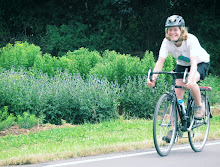

 Posts
Posts


