Opening the door of the Newport, Oregon Starbucks, I spot Captain Dave immediately. In grease-stained jean overalls and a peaked fisherman’s cap, he stands out against the plush green velour of the sofa chair he’s parked himself in. As I approach and introduce myself, he sizes me up with his one good eye, feeling his grizzled white beard like he’s asking for its advice. I take the chair next to his. The coffee shop is loud, and I lean in to catch what he’s saying as he rattles off a rant about his previous deckhands (druggies, scumbags) and gives me a brief outline of his typically rural-white-Oregonian-male political views (do-gooders, you’ve been warned). Nonetheless, he's confident that hiring women deckhands, even completely inexperienced ones, is a smart business strategy. We're not interested in stealing his tools, he tells me, and we're easier to get along with. My eligibility for employment established from his end, he then he asks me why I want to work on a fishing boat.
Somehow, although I was aware that I was going to a job interview this morning for a position I had expressed an interest in, I didn’t really have an answer to that question. The job posting he’d placed on craigslist had simply filled my three main requirements for employment these days: it didn’t require any previous experience, it sounded interesting, and it was something I could quit after two or three months without feeling guilty. No, I didn’t have any idea what I was getting into. Fishing hasn’t been a lifelong dream of mine. It's just that I was swiftly discovering the limitations of farming as a career choice.
Although those farmers lucky enough to have land to live and work on have plenty to keep them occupied (not to mention fed) through the winter months, I found myself greeting 2010 with no work and no carrots or potatoes in cold storage. Telling prospective employers that you’ll likely be leaving them come springtime in order to participate in the planting season doesn't really give you a leg up on the competition. But what scared me more than unemployment was the potential boredom of clicking a mouse or shuffling files all day. More than that, even though I tried telling myself that whatever menial employment I found would only be to get me through the winter season, the thought struck me that I might wake up five years later and find myself going to the same dreary office, driven ever forward through a bleak but not completely miserable existence by the promise of a bigger paycheck. My goals and reality thus in conflict, I found the months of January through March were stretched before me like a giant white question mark on a giant white space (in the middle of a giant white cloud of obscurity, no less).
In fact, any close examination of large blank spaces present around the first of the year would have revealed me right in the middle, hunkered down at my Grandma’s place on the central Oregon coast, watching my bank account balance dwindle. Then, on a whim, I responded to Dave’s “Deckhand Wanted” ad, explaining in the message I left that I probably wasn’t what he was looking for but I did need a job. To my complete surprise, he called back, and we arranged to meet at Starbucks. After I explained to him that day that the temporary, erratic, somewhat dangerous and often uncomfortable nature of the work he was offering was precisely what attracted me to it, he hired me, probably more out of curiosity than real faith in my potential as a deckhand. It helped that at the time he put his ad out, he didn’t have a crew – which would normally consist of two to three trained individuals working from December through August, the length of the crabbing season. There were crabs out at sea waiting to be caught, and his desperation was such that he’d rather train “girls” than try his luck with the riff-raff that normally hung around the docks. If I stuck with it, he told me, and if the crab are good, there’s money to be made. So far, this year’s crab season looks like it will be a record-breaker for Oregon – fishermen brought in $60 million dollars’ worth in the first month alone (in a typical year, the fishery is said to be worth about $44 million.) A deckhand typically takes around a 10% cut of the catch; depending on the price of crab and how much was caught, this can mean $50 to $500 per fishing day. Suddenly, I didn’t hear Dave’s rantings about do-gooder environmentalists or worry about the impact only having one good eye might have on his navigational skills. I was in. From now ‘till spring, I decided then and there, I’ll be farming the high seas.
The day after the interview, I met up with Dave down at the Port of Newport, where all the commercial fishing vessels (around 100) make harbor. As we stepped onto the docks, the briny scent of the ocean entered my brain via my nostrils and stirred up a few memories. Although I've never so much as set foot on a commercial boat, I actually grew up in small fishing village on the southern Oregon coast about 150 miles from Newport. Port Orford is one of the few coastal settlements that attempts to keep fishing as the defining industry of its economy, pushing hard against the tourist chintz that seems to have transformed the rest of the coast into an endless series of glass-blowing studios and Moe’s seafood joints. As a kid there, vacationing Californians and refugees from the Valley never really crossed my radar; I dug my sandcastles and hung around on the commercial fishing docks in peace. Today, the sound of pylons creaking in the water brings me back to the many late nights I spent with my father and older brother, fighting sleep and throwing our crab pot off the old wooden dock at low tide in hopes of pulling up the next evening’s supper. We just did it for fun; the men and women who run boats out of the harbors of Port Orford, Newport and Oregon’s many other fishing towns do it for their livelihoods. It’s a dangerous profession – in 2008, a federal study declared Oregon’s Dungeness crab fishery to be the nation's deadliest (more dangerous than Alaska’s king crab fishery, which is the subject of the Discovery Channel’s “Deadliest Catch”). In good seasons, like the one so far this year, the money seems to justify the risk for fishing families. But there could be something else about it, too. The men who own fishing boats that I’ve met in Newport so far give me the feeling that they would be out there on the ocean even if they didn’t rely on the paycheck.
The relationships men have with boats is one of those earthly mysteries, and suffice it to say that when I met Captain Dave’s “baby,” I felt like I should have kissed her hand. The Golden Sunrise, as we'll call her, is a 36-foot fiberglass boat rigged to pull crab pots from the deep or cast longlines for tuna and salmon. She has red, orange and yellow stripes running across her hull and a definite personality. When Dave and his crew aren’t out at sea, he told me, we’re either working on equipment (making buoys, coiling ropes, repairing and building crab pots) or fixing up the boat. She’s temperamental, he explained, patting the steering wheel inside the cabin and adding a few more words aside that I didn’t quite catch. They weren’t meant for me anyway.
As it turned out, the Golden Sunrise and I had the opportunity to get to know each other quite well before actually traveling to sea together. For the rest of January, the coast was hammered with weather system after weather system, keeping us shorebound. As Dave puts it, "It's called fishing, goddamn it, it's not called catching." It's always a gamble. To make up for the lack of fishing days, Dave offered me paid labor in his shop and I accepted gladly. Putting sealer on the emergency "survival suits" for the boat, wrapping buoy ropes and drilling holes in bait jars, I began to get a better idea of what going out on the boat would be like. The time ashore also gave me a chance to get to know my fellow deckhand, Hannah. a feisty Minnesotan in a position remarkably similar position to mine - 23, broke and dreaming dreams of sandy silt loam and prizewinning tomatoes. She’s spent the past three years working at her friends’ organic farm back home and admits that she misses it. But she also saw the attraction in heading west and spending a bit of time on a fishing boat. I liked her attitude, and suddenly, Dave’s political rants and weirdly oozing right eye became a lot more bearable. That, or the crotchety old guy was starting to grow on me too.
Next time: My first bout with seasicknesses; then, we (finally) catch a few crabs.
Showing posts with label new adventure. Show all posts
Showing posts with label new adventure. Show all posts
Tuesday, February 2, 2010


Thursday, July 9, 2009
First impressions of the farm

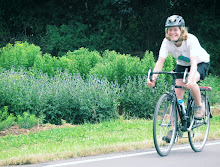
It took about six hours to reach Port Alberni (the town on Vancouver Island closest to Collins Farm) from Seattle. Shortly after crossing the border, I arrived at the ferry terminal just south of the city of Vancouver (just for the sake of confusion, apparently, the city of Vancouver is not actually on Vancouver Island). I missed the midafternoon ferry so waited around for the evening one, entertaining myself at the food court/mini mall/casino placed on the dock just in case passengers don't feel broke enough after paying the $60 fare to get a car across the water. The ferry trip took about two hours, gliding comfortably across the grey water under a grey sky. It started raining shortly after we departed, but when I arrived at the other side and drove off the ferry, things started to clear up. I shot the above photo just off the highway on my way to Port Alberni. My car and I felt like we were in some sort of ad.

The view off of my new front porch at the Collins' farmhouse. In the background you can see the faint outline of Mount Arrowsmith, the highest peak on the island. Just below that are three huge cottonwood trees, rumored to be the largest in the region. Most of the farm acerage is either forest or campsite, but the fields visible in this photo provide fodder for cattle, donkeys and horses (five thoroughbred Canadians and one Belgian mare). The Collins ran a dairy operation for many years but changes in the laws that used to protect dairy farmers ran them out of business. Diversification is their current survival strategy: The garden beds are planted in carrots, cabbage, squash, corn, peas, radishes, kale, chard, artichokes, flowers and a few other veggies. In the middle we have strawberries and potatoes in large number. The foreground? I'll give you a hint: get ready for a deluge of blackberry recipes.

Here comes Jessie, the Belgian draft horse. She's 18 hands with hooves the size of dinner plates, but don't let her size fool you - she's a big softie who loves a belly scratch.

The two Canadian stallions, Paris and Ripley. Listen closely, you can just hear it... "Eh?"
 This is the Arrowvale Campground office and cafe. We mostly serve up coffee, pie and ice cream, but the kitchen has become my fresh produce laboratory and personal bakery. The cafe is also the location of our Saturday pancake breakfasts in conjunction with the farmers' market we host. The rest of the week, it's sort of a farmhand break room and second home for Bob, Ann and me.
The view to the north, off the deck of the office. The river is just below.

On Canada Day, Crystal (another girl who helps out on the farm part-time) and I went to town to see the parade. Canada day falls on July 1 and is Canada's equivalent of the US' Independence Day. The parade featured dozens of horses, even more 4X4 trucks, some old tractors and logging equipment, and a ton of cute kids. After that, we watched them cut a gigantic cake in the form of the Canadian flag, ate some overpriced Chinese food at the "International" festival, and retreated back to the countryside where we decided we're better off.

The Stamp river, which flows into the valley's main river, the Somass. It floods regularly and rarely runs low; salmon migrate up and downriver each season to the delight of fishermen and bears. We pump irrigation water straight out of the river, no water right required. It's a very different picture from Oregon and the rest of the American West, where, as Twain famously said, "whiskey's for drinkin' and water's for fightin' over."

Crystal washes vegetables for market on Saturday. We sell the fresh produce outside the office, where farmers from across the river also sell eggs, herbs and vegetables. There's also a Saturday farmers' market in Port Alberni, which we view as a good sign - enough people are forgoing Safeway's offerings to be able to support two markets in the coummunity.

Some people get crop circles, we get alien carrots.

Full moon from earlier this week over the farm. Andrea, our full-time garden manager and my personal farming mentor has been interested lately in planting and harvesting by the moon. According to this school of thought, the moon influences plant life cycles just like it pulls the tides in and out. It all has to do with water and gravitational forces. Anyway, since the moon is full, we seeded new carrots today (root vegetables, which grow best when the moon is waning). I'll be sure to post an update on our celestial gardening. Speaking of the moon, it's probably up now and time for me to hit the hay.
Thursday, August 7, 2008
Passage to India, part 1
Record fuel and food prices.
Forest fires raging across the West (including one near my hometown).
Foreclosed-upon homes being looted by scrap metal profiteers.
Paris Hilton running for President.
Sounds like a good time to leave. Actually, with all the moaning and groaning going on in this country, it sounds like like a good time to leave for a country that has dealt with these problems (minus bratty heiresses, although I'm sure there are a few) for as long as it has existed yet whose citizens remain, for the most part, amazingly upbeat.
Of course, I didn't really take all of this into consideration when I decided to go abroad for a term. Mostly, I was feeling the travel itch, seeing the end of my college career looming ahead, and realizing I would need some internship credit to get there. So, over winter break, I found one that is sure to provide me with new and interesting situations and surroundings, while applying to my Environmental Studies degree and providing me with material for my senior thesis. That's at least three birds with one stone.
The organization I'm interning with is focused on promoting community-based agriculture movement in India, attempting to undo some of the damage done by the "green revolution" through public education, collaboration and research into traditional food practices. Since it's relatively small, I will get to participate in all of the above and more, I'm sure. For a more comprehensive description, go here, or visit Vanastree, the host organization's website.
One author I have been reading a lot of lately, Vandana Shiva, also does a good job of explaining the problem of biopiracy (agricultural corporations taking indigenous crops and patenting them, turning them into private property) and how grassroots organizations can counteract it. So check out her stuff for more information.
Anyway, my original plan was to go this summer. Then I learned about a little issue called Monsoon Season, and also realized that I could take fall term off and still graduate next spring (yippie - real world, here I come). So my scheduled departure date is now Sept 1st, arriving in Mumbai on the 2nd and flying into Hubbali, India on the 3rd. Then a driver named Mushtaq will pick me up and take me to the village of Sirsi, about 88 km southwest of there. Sirsi is in the state of Karnataka, in South India. (Map.) After twelve weeks of internship, I'll be traveling around the country for three weeks before returning home just in time for Christmas.
My internship supervisor's name is Sunita. I'll be staying on her farm and traveling to nearby cities about once per month to conduct research. I'll also go to other collective members' farms to work as needed.
So that's the context. In the meantime, I'm keeping busy, partly by reading up on India and agricultural issues and partly by answering the question "So, what are you up to this summer?" The answer to that question, incidentally, has been varied and highly entertaining (well, to me), so I'll probably get a couple blog posts out of it. When I actually get to India, though, I hope to keep updating about once a week. If you don't hear from me, call tech support...
Forest fires raging across the West (including one near my hometown).
Foreclosed-upon homes being looted by scrap metal profiteers.
Paris Hilton running for President.
Sounds like a good time to leave. Actually, with all the moaning and groaning going on in this country, it sounds like like a good time to leave for a country that has dealt with these problems (minus bratty heiresses, although I'm sure there are a few) for as long as it has existed yet whose citizens remain, for the most part, amazingly upbeat.
Of course, I didn't really take all of this into consideration when I decided to go abroad for a term. Mostly, I was feeling the travel itch, seeing the end of my college career looming ahead, and realizing I would need some internship credit to get there. So, over winter break, I found one that is sure to provide me with new and interesting situations and surroundings, while applying to my Environmental Studies degree and providing me with material for my senior thesis. That's at least three birds with one stone.
The organization I'm interning with is focused on promoting community-based agriculture movement in India, attempting to undo some of the damage done by the "green revolution" through public education, collaboration and research into traditional food practices. Since it's relatively small, I will get to participate in all of the above and more, I'm sure. For a more comprehensive description, go here, or visit Vanastree, the host organization's website.
One author I have been reading a lot of lately, Vandana Shiva, also does a good job of explaining the problem of biopiracy (agricultural corporations taking indigenous crops and patenting them, turning them into private property) and how grassroots organizations can counteract it. So check out her stuff for more information.
Anyway, my original plan was to go this summer. Then I learned about a little issue called Monsoon Season, and also realized that I could take fall term off and still graduate next spring (yippie - real world, here I come). So my scheduled departure date is now Sept 1st, arriving in Mumbai on the 2nd and flying into Hubbali, India on the 3rd. Then a driver named Mushtaq will pick me up and take me to the village of Sirsi, about 88 km southwest of there. Sirsi is in the state of Karnataka, in South India. (Map.) After twelve weeks of internship, I'll be traveling around the country for three weeks before returning home just in time for Christmas.
My internship supervisor's name is Sunita. I'll be staying on her farm and traveling to nearby cities about once per month to conduct research. I'll also go to other collective members' farms to work as needed.
So that's the context. In the meantime, I'm keeping busy, partly by reading up on India and agricultural issues and partly by answering the question "So, what are you up to this summer?" The answer to that question, incidentally, has been varied and highly entertaining (well, to me), so I'll probably get a couple blog posts out of it. When I actually get to India, though, I hope to keep updating about once a week. If you don't hear from me, call tech support...
Subscribe to:
Posts (Atom)

 Posts
Posts

