[Note: This is half of a two-part Oregon Voice article comparing approaches to environmentalism on the East and West coasts of the US. A fellow student from New Jersey is writing the other half, so it should be an interesting final product (I believe they're looking at printing next month, so look for it on oregonvoice.com) This article is also in draft form, so feedback is appreciated!]
West Coast: Keeping the Green in our Wallets
I believe the ideals of environmentalism on the west coast are best embodied by my father, an old-school conservative who grasps better than a lot of eco-conscious Generation Y-ers these days what it means to reduce, reuse and recycle. Raised by a depression-generation single mother and with decades as a small business owner behind him, the man knows how to cut corners. Yes, it’s admirable, but if you’re not careful, this frugality can deliver some unpleasant surprises.
I learned this lesson the hard way one family vacation in Hawaii a few years ago. Having forgotten to pack my own, I asked dad if I could borrow some floss. Instead of the customary plastic case containing a spool, he handed me single, suspicious-looking waxy strand. However, it was generously long, for which I give him credit. I accepted the offering, ran it between my molars and deposited it in the wastebasket as usual.
An hour later, it was his turn to perform the ritual pre-bed hygiene. He went into the bathroom. Then he came back out. With admirable coolness, he asked, “Hey, where’d you put that floss?”
“What floss?” I asked.
“The floss I gave you earlier.”
“Um, threw it away,” I said, a little confused. He looked at me with an expression of mixed disappointment for having lost his floss and dismay at my carelessness.
“Tuula,” he sighed. “That was my only piece.”
Safe in the bathroom wastebasket – where even my father wouldn’t delve – that floss was spared from the mango-fiber and pineapple-strand hell that was sure to have lain ahead during those fourteen days in the tropics.
Of course, the frayed and gummy quality of his floss over the course of that trip would never have fazed my dad. For him, stretching consumer goods beyond their reasonable lifespan is not just a way of life, it’s an ongoing little game he plays with our throw-away society. There’s nothing he enjoys more than plucking something out a discard pile, brushing it off, and using it for the next twenty years. The wobbly, undersized bicycle he rides came from a gulley near his house. He drags his firewood in off the beach. If he does come across something new, he ensures it’s darn well expired before he disposes of it himself – writing on every square inch of a used envelope and wearing t-shirts until they’re more hole than fabric.
It would be nice to believe that this thriftiness goes beyond penny-pinching and is based in a more deeply rooted conservationist ethic. But if such a philosophy does exist, it is buried under a strong aversion to environmental and social “do-gooders” that defines my father’s political views. Instead – perhaps out of a simple desire to save funds – Pop has invented his own form of environmentalism, one that rejects the entire concept of consumables.
These days, recycling the items we use in our daily lives falls under the self-righteous headings of “sustainability” or being “green” – terms that would be nice to write off on east-coast yuppies but that we’re culpable for perpetrating as well. Worse, we’ve allowed marketers to convince us to attempt to buy our way out of our multiple, converging environmental disasters with such things as hybrid cars and organic cotton clothing sold at Wal-Mart. After all, in this era of plenty, one of the luxuries we’ve earned ourselves is the ability to throw things away and purchase newer, better, greener versions. A classic example of this are the well intentioned “light bulb exchange” campaigns that you see cropping up form time to time. Sure, it sounds nice to get a free fluorescent bulb, which will save who knows how many megawatts of electricity, but do we have to throw away thousands of perfectly good “old” bulbs in order to make the transition?
So, in this context of this hip(ocritical) eco-friendliness, can west-coasters keep our cool and rationally discern between what’s good for the earth and what simply makes us feel good? The west coast in general, and Oregon in particular, has a good reputation for not only rejecting the pretentious but also enacting legislation that helps make it easier to reduce our collective footprint (which is itself a slippery concept, but we’ll run with it). Oregon was the first state to create a bottle deposit system, providing broke college students and the homeless in 11 states now the opportunity to regain some of their beer money. Its somewhat controversial land-use system – in which urban growth boundaries are strictly enforced and land designated as agricultural must remain that way – has also been heralded by environmentalists. And of course, one can’t discuss green policies without tipping a hat to Portland, where happy citizens bike, recycle and build energy-efficient structures with an air of smugness that should itself be monitored by the EPA.
Oregon’s neighbors generate a good amount of eco-friendly smug themselves. California was the first state to place emissions caps on new vehicles lower than those imposed by the federal government and is generally ahead of its east-coast counterparts in environmental leadership. Washington gained attention this winter for refusing to put salt on Seattle’s roads, irritating commuters around Puget Sound but probably generating a lot of gratitude among those who live in its waters.
Of course, good ol’ dad scoffs at all of the above schemes, and maybe he’s right to do so. But at some point, the priority needs to be placed not only on protecting consumers from themselves, but also on protecting the earth from our resource-gobbling, polluting habits. The west coast does a reasonably good job of doing so, even if we’re sometimes given to “greenwashing.” One thing’s for sure, though – you won’t find many east coast yuppie environmentalists reusing floss.
Tuesday, February 24, 2009


Tuesday, February 17, 2009
The digital age has arrived: A eulogy for broadcast
Television is dead. Long live television!
As of this morning, my TV doesn’t work anymore. I didn’t do anything to provoke this, and it’s not as if I wasn’t warned. The FCC set this date months ago for the final tradition to 100% digital broadcasting, and I, as usual, am behind the curve.
Considering that my rabbit ears were on their last legs, delivering a snowy and erratic signal to my screen, and that I only actually employed them once a week for Sunday night Desperate Housewives, this doesn’t have a huge impact on my life. My roommate and I will continue to watch previous seasons of Lost online and The L Word on DVD. Instead of investing $70 for the converter box that will allow us to receive the new digital signals, I’ll spend a few bucks on one of those cool cables that lets you put your computer screen on the television screen. When Sunday nights roll around, the wireless connection had better not go out.
But there are qualities about watching TV the old-fashioned way I’ll miss, and it’s not just the fun of trying to squint out what the ever-devious Housewives are up to in that suburban blizzard of static. The first thing is the inflexibility of it. DH is a big deal in my group of friends, and on Sunday evenings, there’s usually about eight of us squeezed into my living room. We tease and nag each other before turning on the TV at 9 to watch the same thing happening among older and more beautiful people on screen. How will I get everyone to shut up at 8:59 if they know we can now actually roll the show whenever we want? Come to think of it, how will I get them there in the first place? It won’t be too long until we’re all calling each other saying “You know, I just have too much homework, how does Monday night work for you?” Monday turns into Tuesday, then Wednesday, and then another week goes by without this important social event.
Another thing I like about broadcast television is ads. Yes, I usually mute them, but I live in a happy bubble of forward-thinking, largely unmaterialistic (mostly because we’re poor) people. How will I be reminded that people actually buy – no, wrap their entire lives around having – crap made by Lexus and Adidas if the television isn’t there to remind me that I should be too? I might grow large-headed without that constant sense of brand inadequacy.
So, TV, it’s sad to see you turned into no more than a very bulky laptop screen. Those rabbit ears are cute, but they’ll be out by the dumpster as soon as one of us gets around to getting rid of them, and some slightly less useless item will take their place on top of the stereo speaker. Perhaps my leftover New Year’s party hat or a kitchen appliance that I don’t have room for on the counter. I have no use for digital signals. Sorry, FCC, you may just have to change your name to Federal Internet Commission.
As of this morning, my TV doesn’t work anymore. I didn’t do anything to provoke this, and it’s not as if I wasn’t warned. The FCC set this date months ago for the final tradition to 100% digital broadcasting, and I, as usual, am behind the curve.
Considering that my rabbit ears were on their last legs, delivering a snowy and erratic signal to my screen, and that I only actually employed them once a week for Sunday night Desperate Housewives, this doesn’t have a huge impact on my life. My roommate and I will continue to watch previous seasons of Lost online and The L Word on DVD. Instead of investing $70 for the converter box that will allow us to receive the new digital signals, I’ll spend a few bucks on one of those cool cables that lets you put your computer screen on the television screen. When Sunday nights roll around, the wireless connection had better not go out.
But there are qualities about watching TV the old-fashioned way I’ll miss, and it’s not just the fun of trying to squint out what the ever-devious Housewives are up to in that suburban blizzard of static. The first thing is the inflexibility of it. DH is a big deal in my group of friends, and on Sunday evenings, there’s usually about eight of us squeezed into my living room. We tease and nag each other before turning on the TV at 9 to watch the same thing happening among older and more beautiful people on screen. How will I get everyone to shut up at 8:59 if they know we can now actually roll the show whenever we want? Come to think of it, how will I get them there in the first place? It won’t be too long until we’re all calling each other saying “You know, I just have too much homework, how does Monday night work for you?” Monday turns into Tuesday, then Wednesday, and then another week goes by without this important social event.
Another thing I like about broadcast television is ads. Yes, I usually mute them, but I live in a happy bubble of forward-thinking, largely unmaterialistic (mostly because we’re poor) people. How will I be reminded that people actually buy – no, wrap their entire lives around having – crap made by Lexus and Adidas if the television isn’t there to remind me that I should be too? I might grow large-headed without that constant sense of brand inadequacy.
So, TV, it’s sad to see you turned into no more than a very bulky laptop screen. Those rabbit ears are cute, but they’ll be out by the dumpster as soon as one of us gets around to getting rid of them, and some slightly less useless item will take their place on top of the stereo speaker. Perhaps my leftover New Year’s party hat or a kitchen appliance that I don’t have room for on the counter. I have no use for digital signals. Sorry, FCC, you may just have to change your name to Federal Internet Commission.
Saturday, February 7, 2009
Down with grass!
In the summer of 2008, farmer Harry MacCormack did something on his land that hasn’t been done in the Willamette Valley for over twenty years. In this small act, unbeknownst to most of his neighbors in nearby Corvallis , Oregon
So what was MacCormack up to on his farm last summer? He was growing beans. As food and fuel prices rise around the world and Oregon
MacCormack’s experimental planting, known by the coalition of farmers, distributors and retailers he works with as the “Bean and Grain Project,” could be the alternative. But the initiative is not without its detractors: some environmentalists say that attempting to grow certain crops in Oregon
Read more about the bean and grain project here: http://www.mudcitypress.com/beanandgrain.html
Friday, January 30, 2009
Why writers should not hate artists
I sip coffee from my white ceramic mug at Cafe Roma near campus, waiting for my group members to arrive. I’m uncharacteristically early, and pass the time by eavesdropping on the born-again Christians in passionate conversation at the table next to me.
A couple of minutes later, the two I was waiting for arrive, and we begin on the task at hand. One of my final journalism classes is a course on “Writing for the Arts,” and we’re assigned to interview four different artists in class. The person my group happens to be interviewing has a frustratingly visual website, with a two-sentence bio of the artist and an abundance of photos. We’re word-bound people. We can’t compile our list of hard-hitting questions without some more background information.
“Exploring the intrinsic value of timeless knowledge,” I read aloud off a photo caption. The girl next to me, wearing absurdly large frameless glasses over her small round face, sighs with frustration.
“I hate artists,” she growls. I laugh a little in sympathy; the statement I’d just read is exactly the type of vague language that has been excised from any good journalism student’s lexicon through years of writing classes. But I haven’t been brainwashed to the point of intolerance for those who still find words like these useful. After all, aren’t writers also artists? Shouldn’t we show some solidarity? Sure, our medium is words, sentences and metaphors, but we face the same challenge that artists do of expressing the formless and wordless dimensions of human thought. Not only that, but we are compensated for our work on the same crappy pay scale.
I pose the question to my two peers. The large-glasses girl scoffs. “I’m no artist,” she claims. The guy across the table is on my side, but doesn’t appear to have ever considered the question before. I decide not to pursue the topic and we move on with our work. 
Still, the question lingers in the back of my mind, and I begin wondering what gave me the idea that I was an artist in the first place. My roommate, Willa, happens to be a “real” artist, a surprisingly grounded and practical person who consistently amazes me with her productivity. I guess that’s why I’ve put so much consideration into my status as an artist: Our household is so overflowing with paintings, sketches, and shelf upon shelf of ceramic pots that I have to justify my relative invisibility. When visitors come and swoon over our walls, I point at my laptop and closet full of journals indignantly, protesting, “It’s all in there, I’m creative too!”
It so happens that the evening after the group meeting at Roma, Willa invites me to a special lecture put on by the art department on campus. I’ve always been an art appreciator, and I need an excuse not to write an essay for English class, so I go.
The lecture is by an artist visiting from New York, Shinique Smith, who specializes in sculptures featuring cord-bounded bundles of used clothing. As I settle into my seat in the lecture hall full of pink-haired, thrift-store chic artsy types, I realize I’ve never been to an event quite like this before. I’ve interviewed a couple of artists and had many more informal conversations with them, but the people I spoke with were always “translating” their ideas to me, a layperson unversed in the complexities of art. The artist speaking tonight is here simply to explain her work to a group of art students. They speak the same language.
This becomes apparent during the Q&A section at the end of the lecture. People ask Smith why she has worked for so many years with bundled clothing, and she answers simply that she hasn’t explored the extent of the medium yet. One student wants to know what Smith does first when she gets up in the morning, and they chat about that. Meanwhile, the journalist inside me is screaming. What kind of an answer is “haven’t explored the extent of the medium”? Who cares what she does when she gets up in the morning? What are the wider social implications of her work? Does she really think all that bunched up fabric does anyone any good?
I restrain myself with the simple fact that nobody else seems bothered by this, and that the work itself is interesting and beautiful. Without being told, I sense the quiet restraint in the sculpture and the hint of human form beneath it.
On the walk home, I begin to understand why writing about the arts is so difficult: art was never really meant to be put into words, especially not a news format. The challenge to the arts writer is creating an idea of the artist’s meaning by holding up and examining inexpressible concepts related to love, hate and everything in between. In this context, words become like clumsy sticks used to pick up diamonds, and we’re constantly, carefully testing our (not to mention our editor’s) tolerance for vagueness and obscurity. The reader, on the other hand, is looking for quick, descriptive news stories that come to some concrete point. Artists seem to specialize in dangling their point just out of your mental reach.
Before signing up for Writing for the Arts, I wanted to take an investigative reporting course but ended up not being able to make the commute to Portland, where it was to be held. I considered Writing for the Arts an acceptable, if less exciting and challenging, substitute.
So these past four weeks, instead of chasing criminals and sleuthing after lying politicians (and it’s a good time to be in
Conclusion: I may never find success in transforming bundles of clothing into crisp, descriptive and readable news stories, but one thing is for sure: This is a tough class. And writers who think they are not artists may as well quit while they're ahead.
Thursday, January 22, 2009
The death of mainstream media?
The Eugene Weekly this week ran a blurb about UO School of Journalism Dean Tim Gleason's cry for help for dying newspapers around the state and country. Apparently, he spoke on the subject at a recent City Club meeting. Someone then questioned him about the need to actually support the advertising-driven, PR-clogged mainstream media. The statistic that 75% of news stories come from press releases was mentioned. Gleason made some indignant response about the public benefitting from the close ties between public relations (ie advertisers) and newspapers, they just don't realize it. The Weekly's position was, well, if nobody wants to read that drivel any more, why should anybody pay reporters to produce it?
A logical argument. But I've been writing a lot of those "My Goals in Journalism" essays lately, part of several journalism internship applications (yes, it seems I'm addicted to the temporal, cold-water-plunge thrill of intern gigs), and I have a few cents to contribute to this discussion.
Yes, the state of mainstream media in this country is pretty sorry. Even a person who hasn't spent the past four years scrutinizing media outlets will probably admit that a lot of the stories we see on television and in magazines and newspapers are shallow, blatantly pro-[insert disliked industry here], and generally useless. In the meantime, we have security camera footage of the Airbus crashing into the Hudson, and anyone with a blog and access to a computer can have a readership. (Hi, readership! Thanks for supporting this 100% PR-free blog!). And this is just the beginning - once every grandma has a video phone, we'll all be silmultaneous consumers and producers of media content. So, you may ask, why keep journalists around?
Well, hate to say it, but a lot of us are better at it than you. Grandma might have seen Mrs. Plum get murdered with the brass candlestick in the drawing room, but she probably doesn't know how to scour the microfilm at the library to get Mrs. Plum's complete criminal history and shed more light on the situation. I'm talking about the good reporting that does still happen, the other 25% (and shrinking) of stories. Yes, it may be more efficient to have a whole army of citizen reporters working through online media providers, providing egalatarian, user-picked content, but that doesn't make it better. As the Weekly pointed out, "The most popular, widely read article online of any newspaper in the Northwest in recent years was a story about a man who died after having sex with a horse." Sometimes, the newspaper's primary purpose isn't to give readers the content they want to see but the content they need to see.
Not to say that the current state of affairs doesn't need fixing - a lot of fixing. If people aren't reading those important stories, it's probably a sign that the storytelling has not been adequate. And this whole selling out thing needs to end, somehow. I, for one, feel that the integrity of my Journalism degree (which I will recieve, godwilling, this June) has been compromised by the fact that I share it with Public Relations and Advertising students coming out of the same school. Not that these fields are not legitimate and can't be put to good use (check out greenwashingindex.com). It's just that, in most professional applications, they stand for everything news reporters should stand against. Twisting of the facts for profit. Hiding other certain facts to make your employer look better. When you think about it, these degree programs should be placed as far away as possible from the true Journalism programs. Like, in the business school.
A logical argument. But I've been writing a lot of those "My Goals in Journalism" essays lately, part of several journalism internship applications (yes, it seems I'm addicted to the temporal, cold-water-plunge thrill of intern gigs), and I have a few cents to contribute to this discussion.
Yes, the state of mainstream media in this country is pretty sorry. Even a person who hasn't spent the past four years scrutinizing media outlets will probably admit that a lot of the stories we see on television and in magazines and newspapers are shallow, blatantly pro-[insert disliked industry here], and generally useless. In the meantime, we have security camera footage of the Airbus crashing into the Hudson, and anyone with a blog and access to a computer can have a readership. (Hi, readership! Thanks for supporting this 100% PR-free blog!). And this is just the beginning - once every grandma has a video phone, we'll all be silmultaneous consumers and producers of media content. So, you may ask, why keep journalists around?
Well, hate to say it, but a lot of us are better at it than you. Grandma might have seen Mrs. Plum get murdered with the brass candlestick in the drawing room, but she probably doesn't know how to scour the microfilm at the library to get Mrs. Plum's complete criminal history and shed more light on the situation. I'm talking about the good reporting that does still happen, the other 25% (and shrinking) of stories. Yes, it may be more efficient to have a whole army of citizen reporters working through online media providers, providing egalatarian, user-picked content, but that doesn't make it better. As the Weekly pointed out, "The most popular, widely read article online of any newspaper in the Northwest in recent years was a story about a man who died after having sex with a horse." Sometimes, the newspaper's primary purpose isn't to give readers the content they want to see but the content they need to see.
Not to say that the current state of affairs doesn't need fixing - a lot of fixing. If people aren't reading those important stories, it's probably a sign that the storytelling has not been adequate. And this whole selling out thing needs to end, somehow. I, for one, feel that the integrity of my Journalism degree (which I will recieve, godwilling, this June) has been compromised by the fact that I share it with Public Relations and Advertising students coming out of the same school. Not that these fields are not legitimate and can't be put to good use (check out greenwashingindex.com). It's just that, in most professional applications, they stand for everything news reporters should stand against. Twisting of the facts for profit. Hiding other certain facts to make your employer look better. When you think about it, these degree programs should be placed as far away as possible from the true Journalism programs. Like, in the business school.
Saturday, December 27, 2008
The last few weeks: some concluding thoughts
After the MUWCI camp, the last couple of weeks of my internship seemed to rush by like a speeding bus. Suddenly, there were a dozen procrastinated projects to wrap up and I plunged into work like never before.
There’s another reason for this sudden intensification of work – I was also avoiding the deep thinking that should come with the conclusion of what’s been billed as a life-changing experience. Has my life changed? If so, how? What am I taking home? Do I even want to go home? Will my tick bites ever heal? These are some of the questions that have been swarming around in my head.
My internship with Vanastree officially ended with the month of November, and my plan had been to take off for a whirlwind tour of India before flying home on December 18th. As the end of November neared, however, I did do enough reflection to realize that I was probably happiest and more at peace than I’ve ever been in my life at Sunita’s farm and was in no hurry to leave. After a short trip to the ancient ruins surrounding the city of Hampi to the North, I came back in early December to pack my bags and participate in a Vanastree picnic.
Because Vanastree’s collective base is so scattered among the countless villages in Uttara Kannada district, many of the women don’t know members outside their own seed groups. Also, because domestic life is so labor intensive here, most don’t take even a day’s holiday very often. This “field trip” was an opportunity to air everyone out and give them a chance to get to know one another. It was also my opportunity to see the women I’ve gotten to know over the last few weeks one last time, and be introduced to many others I hadn’t met yet.
On the day of the picnic, the eighty or so women met up in Sirsi and piled into two busses. I sat in front of the first one, perched on the engine box between the driver and the two front seat passengers (the idea of a seat is often a very loose one here). Looking behind me, I saw for the first time the visible range of people my little NGO includes. Women close to my age sat next to wizened grandmothers. A few had come in crisp silk saris, while others’ saris were a little threadbare but still scrubbed meticulously clean. Some wore the more casual kurta (long shirt) and baggy pants as I did. All were chatting happily, the scent of coconut oil and jasmine flowers from their hair wafting around the bus.
The first stop was an apiary (bee farm) close to Sirsi. Keeping bees is an easy way to ensure good crop pollination while of course harvesting delicious honey, and we were hoping that by showing the women this place a few more of them would put bee boxes in their home gardens. We all stood in a huge circle, introduced ourselves, and then watched in awe as the beekeeper dismantled one of his bee boxes, containing a very active colony of rock bees, one of several native bee species here. The workers are the only ones with stingers, and they were all out gathering pollen, so we were able to examine the perfect octagonal cells in peace. Some contained tiny bee larvae.
After the demo, we sampled some honey and bombarded the beekeeper with questions. Then it was back to the bus and a short drive to the picnic site.
We pulled up to a beautiful spot by the river, shaded by huge trees. Everybody went down to the water to cool their feet. Out in the water near the opposite shore, there was a little shrine on a circular cement platform, and it didn’t take long for everyone to hike up their saris and wade out to it. One by one, they circled the Shiva linga counterclockwise, bowed down, and sat in the shade of the thatched roof, water rushing all around.
Before lunch we gathered under one of the trees and Manorama addressed a few words to the crowd. Then there was an unexpected “Word from the Intern”. She turned the floor over to me.
I paused an awkwardly long time. What could I say? There was too much to express, a large amount of it difficult to put into words. Despite the unstructured nature of the collective, I felt like they were all my overseers, the heart and soul of the organization that I had tried hard to be of service to. Had I accomplished what I came to do? Sunita had said that it had been helpful to have me around, but there are so many things outside of our control. If I had learned anything, it was the value of the self-sustaining, food secure system in place here. And it’s the small farmers and home gardeners, not interns, who are responsible for that.
After a deep breath, the words that came to my mouth were of thanks. Each of the stories of these women has been more inspiring than the rest, the final touch being that now they were here relaxing by the water as if none of their difficulties had ever transpired. And here I was, a complete outsider, as much a part of the group as someone from the other side of the planet could hope to be.
I’m sure I didn’t put all that too elegantly as a I stammered in front of eighty sets of expectant eyes, but I hope the message came through. Then came the Q&A. How did you like the food? (Delicious.) Did we try to feed you too much? (Yes, but I liked it.) What’s the biggest difference between the US and India?
Uhhh.
Stuck again. The constant noise, I wanted to say. The unimaginably huge population. The complete absence of Wal-Mart and overweight families. These are not useful comparisons. I tried to think bigger picture. Finally, I had it.
“A little thing known as ‘adjust’,” I said. Shortly into my stay, Sunita and I had been walking to the office, recovering from a harrowingly crowded tempo (private bus) ride when she explained “adjust” to me. Imagine you have one orange and there are twelve people. Indian politeness says that you should share the orange, and everybody will get a piece, no matter how small. You adjust. Same with the seats on the tempo or any other problem arising from the conflict between too many people and too few resources. “We’ll adjust” might as well be India’s unofficial slogan, the way people here take into stride situations that I find awkward or downright uncomfortable.
I think this idea is more than just a response to an allocation problem. It’s a way of approaching life that many from Eastern cultures share. Though it might be a gross generalization, people in the west are characteristically individualistic. It’s hard to solve problems or get much done because there’s always somebody’s ego in the way, some need that has to be taken into account. “We’ll adjust” smoothes over all those issues. It’s the opposite of “me first”. It’s the reason collectives like Vanastree work so well – everybody sharing what they have. I doubt things would run so well back home, where everything is personal property and seed companies place top priority on patenting effective seeds.
I enjoyed the rest of my stay a bit easier after that, having put into words the fascination with this Indian cultural aspect that had been forming in my head over the past three months. I went to Kerala, which was beautiful and fascinating, and stopped back at Sirsi on my way to Mumbai to catch my plane home. Mushtaq drove me to the train station in Hubli, recreating backwards the journey I’d made on my very first day in India.
As we left Sirsi behind us, I tried to think more on the way about what has changed about my approach to the country. Maybe I’d grown accustomed to a few things – the potholed road, for instance, and the monkeys scampering just out of reach of the van’s tires. I started to think I’d gotten used to the way things look here. But as we headed north, out of the jungley lushness of the Malnad and into the drier Deccan, where ox-drawn carts are commonplace and the locals wear colorful clothes and jewelry quite different from anything found in Sirsi, I found myself staring just as I did in September. India is full of surprises, I thought for the thousandth time since arriving. I could probably spend years here and still not get enough of the brilliant green rice paddies, the chaotic streets, the temples like islands of serenity in the sea of constantly active people. I leaned back in my seat, read again the pink-lettered “SMILE” on Mushtaq’s side mirror, and grinned as I stared at the scenery whizzing past.
There’s another reason for this sudden intensification of work – I was also avoiding the deep thinking that should come with the conclusion of what’s been billed as a life-changing experience. Has my life changed? If so, how? What am I taking home? Do I even want to go home? Will my tick bites ever heal? These are some of the questions that have been swarming around in my head.
My internship with Vanastree officially ended with the month of November, and my plan had been to take off for a whirlwind tour of India before flying home on December 18th. As the end of November neared, however, I did do enough reflection to realize that I was probably happiest and more at peace than I’ve ever been in my life at Sunita’s farm and was in no hurry to leave. After a short trip to the ancient ruins surrounding the city of Hampi to the North, I came back in early December to pack my bags and participate in a Vanastree picnic.
Because Vanastree’s collective base is so scattered among the countless villages in Uttara Kannada district, many of the women don’t know members outside their own seed groups. Also, because domestic life is so labor intensive here, most don’t take even a day’s holiday very often. This “field trip” was an opportunity to air everyone out and give them a chance to get to know one another. It was also my opportunity to see the women I’ve gotten to know over the last few weeks one last time, and be introduced to many others I hadn’t met yet.
On the day of the picnic, the eighty or so women met up in Sirsi and piled into two busses. I sat in front of the first one, perched on the engine box between the driver and the two front seat passengers (the idea of a seat is often a very loose one here). Looking behind me, I saw for the first time the visible range of people my little NGO includes. Women close to my age sat next to wizened grandmothers. A few had come in crisp silk saris, while others’ saris were a little threadbare but still scrubbed meticulously clean. Some wore the more casual kurta (long shirt) and baggy pants as I did. All were chatting happily, the scent of coconut oil and jasmine flowers from their hair wafting around the bus.
The first stop was an apiary (bee farm) close to Sirsi. Keeping bees is an easy way to ensure good crop pollination while of course harvesting delicious honey, and we were hoping that by showing the women this place a few more of them would put bee boxes in their home gardens. We all stood in a huge circle, introduced ourselves, and then watched in awe as the beekeeper dismantled one of his bee boxes, containing a very active colony of rock bees, one of several native bee species here. The workers are the only ones with stingers, and they were all out gathering pollen, so we were able to examine the perfect octagonal cells in peace. Some contained tiny bee larvae.
After the demo, we sampled some honey and bombarded the beekeeper with questions. Then it was back to the bus and a short drive to the picnic site.
We pulled up to a beautiful spot by the river, shaded by huge trees. Everybody went down to the water to cool their feet. Out in the water near the opposite shore, there was a little shrine on a circular cement platform, and it didn’t take long for everyone to hike up their saris and wade out to it. One by one, they circled the Shiva linga counterclockwise, bowed down, and sat in the shade of the thatched roof, water rushing all around.
Before lunch we gathered under one of the trees and Manorama addressed a few words to the crowd. Then there was an unexpected “Word from the Intern”. She turned the floor over to me.
I paused an awkwardly long time. What could I say? There was too much to express, a large amount of it difficult to put into words. Despite the unstructured nature of the collective, I felt like they were all my overseers, the heart and soul of the organization that I had tried hard to be of service to. Had I accomplished what I came to do? Sunita had said that it had been helpful to have me around, but there are so many things outside of our control. If I had learned anything, it was the value of the self-sustaining, food secure system in place here. And it’s the small farmers and home gardeners, not interns, who are responsible for that.
After a deep breath, the words that came to my mouth were of thanks. Each of the stories of these women has been more inspiring than the rest, the final touch being that now they were here relaxing by the water as if none of their difficulties had ever transpired. And here I was, a complete outsider, as much a part of the group as someone from the other side of the planet could hope to be.
I’m sure I didn’t put all that too elegantly as a I stammered in front of eighty sets of expectant eyes, but I hope the message came through. Then came the Q&A. How did you like the food? (Delicious.) Did we try to feed you too much? (Yes, but I liked it.) What’s the biggest difference between the US and India?
Uhhh.
Stuck again. The constant noise, I wanted to say. The unimaginably huge population. The complete absence of Wal-Mart and overweight families. These are not useful comparisons. I tried to think bigger picture. Finally, I had it.
“A little thing known as ‘adjust’,” I said. Shortly into my stay, Sunita and I had been walking to the office, recovering from a harrowingly crowded tempo (private bus) ride when she explained “adjust” to me. Imagine you have one orange and there are twelve people. Indian politeness says that you should share the orange, and everybody will get a piece, no matter how small. You adjust. Same with the seats on the tempo or any other problem arising from the conflict between too many people and too few resources. “We’ll adjust” might as well be India’s unofficial slogan, the way people here take into stride situations that I find awkward or downright uncomfortable.
I think this idea is more than just a response to an allocation problem. It’s a way of approaching life that many from Eastern cultures share. Though it might be a gross generalization, people in the west are characteristically individualistic. It’s hard to solve problems or get much done because there’s always somebody’s ego in the way, some need that has to be taken into account. “We’ll adjust” smoothes over all those issues. It’s the opposite of “me first”. It’s the reason collectives like Vanastree work so well – everybody sharing what they have. I doubt things would run so well back home, where everything is personal property and seed companies place top priority on patenting effective seeds.
I enjoyed the rest of my stay a bit easier after that, having put into words the fascination with this Indian cultural aspect that had been forming in my head over the past three months. I went to Kerala, which was beautiful and fascinating, and stopped back at Sirsi on my way to Mumbai to catch my plane home. Mushtaq drove me to the train station in Hubli, recreating backwards the journey I’d made on my very first day in India.
As we left Sirsi behind us, I tried to think more on the way about what has changed about my approach to the country. Maybe I’d grown accustomed to a few things – the potholed road, for instance, and the monkeys scampering just out of reach of the van’s tires. I started to think I’d gotten used to the way things look here. But as we headed north, out of the jungley lushness of the Malnad and into the drier Deccan, where ox-drawn carts are commonplace and the locals wear colorful clothes and jewelry quite different from anything found in Sirsi, I found myself staring just as I did in September. India is full of surprises, I thought for the thousandth time since arriving. I could probably spend years here and still not get enough of the brilliant green rice paddies, the chaotic streets, the temples like islands of serenity in the sea of constantly active people. I leaned back in my seat, read again the pink-lettered “SMILE” on Mushtaq’s side mirror, and grinned as I stared at the scenery whizzing past.
Tuesday, December 23, 2008
Field Notes blog
My fame and recognition as a blogger continues to grow: Here's a post I wrote for IE3's blog Field Notes. IE3 is the organization that coordinated my internship with Vanastree.
http://ie3global.ous.edu/blog/ (Go to Dec 8)
Next: National Geographic.
Really though, I have to give credit to IE3 for putting me in touch with Vanastree and making this whole adventure possible. IE3 is really an awesome organization for getting students to spend time abroad for worthwhile causes. Thanks especially to Natanya Desai for seeing me through the entire process, from application to getting home again.
http://ie3global.ous.edu/blog/ (Go to Dec 8)
Next: National Geographic.
Really though, I have to give credit to IE3 for putting me in touch with Vanastree and making this whole adventure possible. IE3 is really an awesome organization for getting students to spend time abroad for worthwhile causes. Thanks especially to Natanya Desai for seeing me through the entire process, from application to getting home again.
Monday, December 22, 2008
Oregon Voice essay published!
Due to my excellent connections at the prestigious Oregon Voice magazine, I managed to get an article published in their first issue this year. "Development versus disorder in the land of holy cows" is about losing my way and re-affirming my affection for developing nations on the winding and thoroughly confusing roads of Sirsi town.
Check it out: oregonvoice.com
Check it out: oregonvoice.com
Friday, December 5, 2008
Favorite posts?
As a writer, sometimes the most difficult part of the job is knowing what parts of your work suck and which are actually interesting and/or entertaining. I’ve been scrolling fruitlessly through my 45-page word document of blog posts from the past three months, looking for some choice bits to evolve into essays to submit to Glimpse. Progress is slow: My eyes tend to glaze over in the sea of words and I start wondering if there’s anything to eat. It all looks the same to me.
So I’m asking for your help, if you happen to have kept up with my rambling stories here: leave a comment or send me an email with a little feedback regarding which posts you enjoyed and which allowed your stomach to distract you. I’ll take three or four “good” ones and polish them up for some potential clips. Thanks. Now, if you’ll excuse me, I think there are some overripe bananas in the kitchen.
So I’m asking for your help, if you happen to have kept up with my rambling stories here: leave a comment or send me an email with a little feedback regarding which posts you enjoyed and which allowed your stomach to distract you. I’ll take three or four “good” ones and polish them up for some potential clips. Thanks. Now, if you’ll excuse me, I think there are some overripe bananas in the kitchen.
Thursday, November 27, 2008
The attack of the 11th-graders!
This past week I had the pleasure of spending eight days with a gang of eleven 16-18 year olds, most of whom were coming to rural India (and for some, rural anywhere) for the first time.
And no, the word “pleasure” is not used sarcastically. Sure, I’d forgotten this particular age group’s ability to entertain themselves with fart noises and terrible renditions of Jay-Z hits, but overall I was impressed with their inquisitiveness, willingness to try new things, and the many small signs that they may one day becoming functional adults in the strange and high-pressure environment they’re growing up in.
The “kids” are students at Mahindra United World College of India, Mahindra being the name of the auto manufacturer that funded the school. There are United World Colleges in several nations, and their mission is to bring together small but diverse groups of students for 11th and 12th grades. Their standards tend to be high but they incorporate innovative teaching strategies and try to give students a sense of social responsibility with their educations. Every term, they go on a “project week”, visiting an NGO in another part of the country for a little outside-the-classroom learning (the only useful kind, in my opinion). The 200 students split up into groups based on which location they choose, and the NGO is given free reign over the program for the entire week.
This is the third project week that Vanastree has hosted. Still, Sunita and I were more than a bit nervous as we waited for the van full of expectant students and one teacher to arrive last Saturday. MUWCI (which they pronounce “mew-key”) is located near Pune, a big city with all the amenities. Here in Karkolli village, where Sunita’s farm and many of the Vanastree women live, there are no bags of Lay’s, no cold bottles of Coke, no showers, and, on that particular morning and for several hours at a time in the last few days, no electricity (although there are several hydroelectric dams in Karnataka, most of the power goes off to Bangalore and when there are shortages, the utilities know it’s the rural people they can cut off without fear of retribution). We weren’t sure what to expect and had no idea what they were expecting, either. Last year, the students had been confused as to the purpose of their visit and seemed in constant need of junk-food fixes. The week ahead was packed with activities and it seemed everyone would either have to sink or swim.
The van finally came, and 11 tired teens, fresh off the overnight train from school, trudged up the stairs to the terrace above the guest room. We served them fresh lemonade and snacks and made our introductions, then heard theirs: All first-years (11th grade) save one second-year. Two were from Malaysia, two from Germany, four from India, one each from Nepal, Mongolia and Hong Kong. If you boiled down the entire University of Oregon student body, it probably still wouldn’t be as diverse as this group. Suddenly, it became clear to me that while they might be here to learn from me (well, mostly from Sunita), I would probably learn more from them.
In the week that followed, we removed invasive weeds from a nearby temple, talked to Manorama and a couple other Vanastree women about their livelihoods, went on hikes and saw snakes, a scorpion and a million birds. Then we moved to Mathigatta, where I did my first homestay in September, on the way stopping at Yana, a beautiful natural rock formation. More treks and a little agroforestry lesson for the students. On the way, I got too many tick bites to count, gained an appreciation for wildlife watching, and had some good conversations with students.
Like most high-achieving 11th graders, many of the MUWCI students were preoccupied with college and getting the right education to “succeed” in the world. In anticipation of this, our program included a little talk by me about my internship, how I got it, what I’ve been doing for three months, etc. At the end, most of the questions focused on the facts that I am earning credit for this and that my degree actually requires me to get some hands-on experience outside the classroom. For some, it's a new concept.
Answering the questions, I started to get some sort of grasp on the background most of these students have. In most countries in the East (India, China, Malaysia, etc.), learning is extremely textbook-based and competitive. While I hesitate to praise the United States’ education system in any way, I now can appreciate that we do give some priority to critical thinking, discussion, and learning by doing. I never thought I’d see the benefit in writing all those boring essays in English or dissecting formaldehyde-soaked frogs in biology, but when compared with memorizing facts out of a book to regurgitate them on a test later on, it almost sounds like fun. The level of competition these students have to face is also unimaginable to me. Because there are so many students, most vying for coveted scholarships to schools in the West, a difference of one percentage point could leave you “stuck” in your home country, facing the same painful type of education if you think you can stomach going on for a Bachelor’s. At least at the higher levels, one can assume that the rules will be relaxed a bit - many of the students gave battle stories of being hit with rulers or sticks and even kicked for misbehaving. My worst memory of punishment is being made to sit "on the wall" during recess for singing "99 bottles of beer on the wall" on the bus and being the only one brave enough to admit it.
While watching birds one early evening toward the end of the week, I found myself talking to the “Malaysians” (perhaps on diversity overload, the students have a perhaps insensitive but cute way of referring to each other by nationality), Daniel and Roshan. They described a problem that, in my mind, the final nail in the coffin of formalized education: standardized tests in Malaysia. According to my sources, who should know, the government contorts the test results to hide schools that are underperforming. If you do well on a test in a school that is already doing well, you might actually end up with a score lower than that of a student who didn’t to so well but happened to attend a school that needed a “boost”. According to the Malaysians, this is not a problem unique to their country, as many developing nations are vying to make themselves look better. Luckily, MUWCI ignores standardized test results, probably for this very reason, and instead interviews applicants personally and asks them to debate each other on various subjects.
But coming to a school like MUWCI doesn’t end the treadmill of competition for motivated students like Daniel and Roshan. The light at the end of the tunnel is just becoming visible: a western university, preferably Oxford or Ivy League. While countries at the forefront of the industrialization race, like India, tend to have fairly good schools, there’s an extra bit of incentive for students to head to the US or Europe: liberal arts. I have to admit that I suddenly understand their drive. In comparison to the Eastern system, schools like mine offer unlimited sets of opportunities, socially and academically. Students are given the opportunity not just to gain an education but also to discover new things about themselves. And in their own quests for diversity, the west’s universities offer thousands of scholarships, many full-ride, to students from far-flung places. Their countries of origin, then, lose all their smartest students, leaving them with a massive brain drain that is expected to soon have real economic impacts. Think of all the engineers and doctors you know that are Indian, and imagine if the top 5% of students in every high school in the US left the country, never to return (or even send remittances), and you’ll get some idea of the problem.
Faced with all this information, I had no basis upon which to either encourage the students to seek a higher education (not that they needed encouragement) or convince them to try to give their home countries a second chance by studying or working there. The global system requires a degree, earning a degree worth anything requires heading west.
However, I don’t think there's much to justify paying top dollar for reputedly "good" schools, so I explained the state university system to them as an alternative. I think that fact that I don’t come from Harvard and yet seem fairly intelligent helped my argument – most seemed to assume that state universities are only for those who don’t know or can’t afford better. It seems that Princeton, Oxford, Cornell and the rest have a death grip on the world’s degree market, one built entirely on reputation and not much else. I don’t plan on letting a location on my diploma influence what I can and can’t do in the future, and I don’t see much reason for anyone else to, either. So perhaps through my conversations with eleven brave and open-minded students, I put one small hatchet-mark in the coffin of higher education.
And no, the word “pleasure” is not used sarcastically. Sure, I’d forgotten this particular age group’s ability to entertain themselves with fart noises and terrible renditions of Jay-Z hits, but overall I was impressed with their inquisitiveness, willingness to try new things, and the many small signs that they may one day becoming functional adults in the strange and high-pressure environment they’re growing up in.
The “kids” are students at Mahindra United World College of India, Mahindra being the name of the auto manufacturer that funded the school. There are United World Colleges in several nations, and their mission is to bring together small but diverse groups of students for 11th and 12th grades. Their standards tend to be high but they incorporate innovative teaching strategies and try to give students a sense of social responsibility with their educations. Every term, they go on a “project week”, visiting an NGO in another part of the country for a little outside-the-classroom learning (the only useful kind, in my opinion). The 200 students split up into groups based on which location they choose, and the NGO is given free reign over the program for the entire week.
This is the third project week that Vanastree has hosted. Still, Sunita and I were more than a bit nervous as we waited for the van full of expectant students and one teacher to arrive last Saturday. MUWCI (which they pronounce “mew-key”) is located near Pune, a big city with all the amenities. Here in Karkolli village, where Sunita’s farm and many of the Vanastree women live, there are no bags of Lay’s, no cold bottles of Coke, no showers, and, on that particular morning and for several hours at a time in the last few days, no electricity (although there are several hydroelectric dams in Karnataka, most of the power goes off to Bangalore and when there are shortages, the utilities know it’s the rural people they can cut off without fear of retribution). We weren’t sure what to expect and had no idea what they were expecting, either. Last year, the students had been confused as to the purpose of their visit and seemed in constant need of junk-food fixes. The week ahead was packed with activities and it seemed everyone would either have to sink or swim.
The van finally came, and 11 tired teens, fresh off the overnight train from school, trudged up the stairs to the terrace above the guest room. We served them fresh lemonade and snacks and made our introductions, then heard theirs: All first-years (11th grade) save one second-year. Two were from Malaysia, two from Germany, four from India, one each from Nepal, Mongolia and Hong Kong. If you boiled down the entire University of Oregon student body, it probably still wouldn’t be as diverse as this group. Suddenly, it became clear to me that while they might be here to learn from me (well, mostly from Sunita), I would probably learn more from them.
In the week that followed, we removed invasive weeds from a nearby temple, talked to Manorama and a couple other Vanastree women about their livelihoods, went on hikes and saw snakes, a scorpion and a million birds. Then we moved to Mathigatta, where I did my first homestay in September, on the way stopping at Yana, a beautiful natural rock formation. More treks and a little agroforestry lesson for the students. On the way, I got too many tick bites to count, gained an appreciation for wildlife watching, and had some good conversations with students.
Like most high-achieving 11th graders, many of the MUWCI students were preoccupied with college and getting the right education to “succeed” in the world. In anticipation of this, our program included a little talk by me about my internship, how I got it, what I’ve been doing for three months, etc. At the end, most of the questions focused on the facts that I am earning credit for this and that my degree actually requires me to get some hands-on experience outside the classroom. For some, it's a new concept.
Answering the questions, I started to get some sort of grasp on the background most of these students have. In most countries in the East (India, China, Malaysia, etc.), learning is extremely textbook-based and competitive. While I hesitate to praise the United States’ education system in any way, I now can appreciate that we do give some priority to critical thinking, discussion, and learning by doing. I never thought I’d see the benefit in writing all those boring essays in English or dissecting formaldehyde-soaked frogs in biology, but when compared with memorizing facts out of a book to regurgitate them on a test later on, it almost sounds like fun. The level of competition these students have to face is also unimaginable to me. Because there are so many students, most vying for coveted scholarships to schools in the West, a difference of one percentage point could leave you “stuck” in your home country, facing the same painful type of education if you think you can stomach going on for a Bachelor’s. At least at the higher levels, one can assume that the rules will be relaxed a bit - many of the students gave battle stories of being hit with rulers or sticks and even kicked for misbehaving. My worst memory of punishment is being made to sit "on the wall" during recess for singing "99 bottles of beer on the wall" on the bus and being the only one brave enough to admit it.
While watching birds one early evening toward the end of the week, I found myself talking to the “Malaysians” (perhaps on diversity overload, the students have a perhaps insensitive but cute way of referring to each other by nationality), Daniel and Roshan. They described a problem that, in my mind, the final nail in the coffin of formalized education: standardized tests in Malaysia. According to my sources, who should know, the government contorts the test results to hide schools that are underperforming. If you do well on a test in a school that is already doing well, you might actually end up with a score lower than that of a student who didn’t to so well but happened to attend a school that needed a “boost”. According to the Malaysians, this is not a problem unique to their country, as many developing nations are vying to make themselves look better. Luckily, MUWCI ignores standardized test results, probably for this very reason, and instead interviews applicants personally and asks them to debate each other on various subjects.
But coming to a school like MUWCI doesn’t end the treadmill of competition for motivated students like Daniel and Roshan. The light at the end of the tunnel is just becoming visible: a western university, preferably Oxford or Ivy League. While countries at the forefront of the industrialization race, like India, tend to have fairly good schools, there’s an extra bit of incentive for students to head to the US or Europe: liberal arts. I have to admit that I suddenly understand their drive. In comparison to the Eastern system, schools like mine offer unlimited sets of opportunities, socially and academically. Students are given the opportunity not just to gain an education but also to discover new things about themselves. And in their own quests for diversity, the west’s universities offer thousands of scholarships, many full-ride, to students from far-flung places. Their countries of origin, then, lose all their smartest students, leaving them with a massive brain drain that is expected to soon have real economic impacts. Think of all the engineers and doctors you know that are Indian, and imagine if the top 5% of students in every high school in the US left the country, never to return (or even send remittances), and you’ll get some idea of the problem.
Faced with all this information, I had no basis upon which to either encourage the students to seek a higher education (not that they needed encouragement) or convince them to try to give their home countries a second chance by studying or working there. The global system requires a degree, earning a degree worth anything requires heading west.
However, I don’t think there's much to justify paying top dollar for reputedly "good" schools, so I explained the state university system to them as an alternative. I think that fact that I don’t come from Harvard and yet seem fairly intelligent helped my argument – most seemed to assume that state universities are only for those who don’t know or can’t afford better. It seems that Princeton, Oxford, Cornell and the rest have a death grip on the world’s degree market, one built entirely on reputation and not much else. I don’t plan on letting a location on my diploma influence what I can and can’t do in the future, and I don’t see much reason for anyone else to, either. So perhaps through my conversations with eleven brave and open-minded students, I put one small hatchet-mark in the coffin of higher education.
Friday, November 7, 2008
How is India?
I get asked this question a lot, usually by people back home, but sometimes by people who I talk to on the bus or other random places. I’ve worked up a series of answers, none of which are useful in conversation, at which time I usually answer “great”, trying not to be sarcastic and add something like “How is it for you?”
How is India?
India is like having a considerate but awkward boyfriend who refills your water glass before leaving the cafeteria table and always saves a seat for you on the bus, then takes half an hour to work up the nerve to start a conversation.
India is wildly entertaining, especially when being introduced to children. The best story is when I met one little boy, who, upon hearing my name, looked up at me carefully, the wheels in his head turning rapidly. The first thing everyone wants to know is where I’m from, and he thought he could figure this out on his own, even though he’d never met a “foreign” before.
“China?” He asked.
I think his thought process was something like “Ok, blonde hair, blue eyes, tall – oh, what the hell, they all look the same to me.”
India is a devoted friend you met five minutes earlier, the young Muslim woman who stands in the rain on the side of a busy road waving goodbye as the bus pulls away, a flashy sliver of pink showing under her black burqa.
India is the 19th century American west – seemingly lawless, incredibly entrepreneurial, where women are treated as ladies in public and servants at home. Only here there’s no opportunity to start afresh. Where you’re from, what your parents do, and what religion you follow are the main criteria by which you are always assessed and categorized.
India is completely fearless. While in Bangalore, I walked to a mall “up the street” from where we were staying. Turns out it was up the street, through a construction site (unbarricaded, of course), and down a busy overpass. No sidewalks. While I was walking on the overpass, cars whizzing by my elbow at top speed, a little girl ran up next to me and started doing cartwheels to earn a few rupees. I paid her off to avoid what seemed likely to be a grisly accident, although she acted as if she might as well be doing tricks on my front lawn.
India is a 24-hour soundtrack. In the city, there’s the constant background of horns from the nearest road – the rickshaw’s low buzz, short blasts from trucks, high-pitched honks from motorcycles, musical tones from tricked-out cars, feeble dings from bikes – over which crows call out, kids shout, telephones ring, clothes are scrubbed and, invariably, someone is drilling concrete or hammering. On the farm, cicadas, songbirds, owls, crickets and frogs replace the horns, with monkey calls and shouts from the neighbors occasionally chiming in.
India is paparazzi with camera phones. Apparently, the sight of a foreign is so thrilling to some people (mostly 15-20 year old boys) that they must take a photo. Somewhere, five or six Indian guys now have a picture of an angry white woman flipping them off to show all their friends.
India is dirty. Not just in a trash sense, although you can find it just about everywhere in layers of various thicknesses, but in a dusty, grimy sense. At first I thought Sunita was just obsessed with baths and sweeping the floor but then I realized every time you step onto a road or open a window you’re being assaulted by the dirt that seems to fly everywhere. Although Sirsi has plenty of paved roads there always seem to be strips of bare ground in between, constantly stirred up by the flow of human, auto and animal traffic. There are no emissions standards for vehicles, which creates another dirt factor when you think about all the exhaust going into your lungs and onto your clothes (which must be washed after one wearing).
India is a good review of economics 101. For example, this morning I laid in bed, unwilling to go out into the damp, chilly air, and calculated how much I would pay for a hot, fresh cup of Sumatran roast from my favorite Eugene coffee shop. The result came out somewhere between $15-$20, which I then converted into an opportunity cost of four pints of good Oregon microbrew or 3.7 calzones from the Dough co.
How is India?
India is like having a considerate but awkward boyfriend who refills your water glass before leaving the cafeteria table and always saves a seat for you on the bus, then takes half an hour to work up the nerve to start a conversation.
India is wildly entertaining, especially when being introduced to children. The best story is when I met one little boy, who, upon hearing my name, looked up at me carefully, the wheels in his head turning rapidly. The first thing everyone wants to know is where I’m from, and he thought he could figure this out on his own, even though he’d never met a “foreign” before.
“China?” He asked.
I think his thought process was something like “Ok, blonde hair, blue eyes, tall – oh, what the hell, they all look the same to me.”
India is a devoted friend you met five minutes earlier, the young Muslim woman who stands in the rain on the side of a busy road waving goodbye as the bus pulls away, a flashy sliver of pink showing under her black burqa.
India is the 19th century American west – seemingly lawless, incredibly entrepreneurial, where women are treated as ladies in public and servants at home. Only here there’s no opportunity to start afresh. Where you’re from, what your parents do, and what religion you follow are the main criteria by which you are always assessed and categorized.
India is completely fearless. While in Bangalore, I walked to a mall “up the street” from where we were staying. Turns out it was up the street, through a construction site (unbarricaded, of course), and down a busy overpass. No sidewalks. While I was walking on the overpass, cars whizzing by my elbow at top speed, a little girl ran up next to me and started doing cartwheels to earn a few rupees. I paid her off to avoid what seemed likely to be a grisly accident, although she acted as if she might as well be doing tricks on my front lawn.
India is a 24-hour soundtrack. In the city, there’s the constant background of horns from the nearest road – the rickshaw’s low buzz, short blasts from trucks, high-pitched honks from motorcycles, musical tones from tricked-out cars, feeble dings from bikes – over which crows call out, kids shout, telephones ring, clothes are scrubbed and, invariably, someone is drilling concrete or hammering. On the farm, cicadas, songbirds, owls, crickets and frogs replace the horns, with monkey calls and shouts from the neighbors occasionally chiming in.
India is paparazzi with camera phones. Apparently, the sight of a foreign is so thrilling to some people (mostly 15-20 year old boys) that they must take a photo. Somewhere, five or six Indian guys now have a picture of an angry white woman flipping them off to show all their friends.
India is dirty. Not just in a trash sense, although you can find it just about everywhere in layers of various thicknesses, but in a dusty, grimy sense. At first I thought Sunita was just obsessed with baths and sweeping the floor but then I realized every time you step onto a road or open a window you’re being assaulted by the dirt that seems to fly everywhere. Although Sirsi has plenty of paved roads there always seem to be strips of bare ground in between, constantly stirred up by the flow of human, auto and animal traffic. There are no emissions standards for vehicles, which creates another dirt factor when you think about all the exhaust going into your lungs and onto your clothes (which must be washed after one wearing).
India is a good review of economics 101. For example, this morning I laid in bed, unwilling to go out into the damp, chilly air, and calculated how much I would pay for a hot, fresh cup of Sumatran roast from my favorite Eugene coffee shop. The result came out somewhere between $15-$20, which I then converted into an opportunity cost of four pints of good Oregon microbrew or 3.7 calzones from the Dough co.
Wednesday, November 5, 2008
Tick Season: My war with the wildlife continues
I never thought I’d say this, but I miss the leeches. Now that the monsoons have passed, the weather has dried out, and a new pest is ruining my walks around the farm. Unlike leeches, however, these menaces attack without notice, only inflicting real pain approximately twelve hours later.
I liked the leeches because they’re so blatant, like a tank rolling through your village. With a little practice, you can feel their cold, slimy approach on your feet and become an expert at flicking them away before they do any real harm. If they do bite, you get an unreasonable amount of blood that is sure to elicit sympathy from anyone with you. Within a few days, the wound simply heals over with a bit of itching.
Ticks are like secret agents. They’re the jungle’s contract killers, moving without detection. You can happily frolic in the grass without consequence for hours, and only know you’ve been attacked when you find the red bumps on your stomach and thighs (for some reason, this area of the body is like veal to a tick). Even then, it’s easy to mistake the bite for that of the mosquito (nighttime air raiders). Only when you spot the pinprick-sized culprit just under your skin do you know you’ve been hit, and then there’s nothing you can do but claw at it like a junkie and wait for the itch to start.
A quick Wikipedia search proves my position: “According to Pliny the Elder, ticks are ‘the foulest and nastiest creatures that be.’” Although, like the other creatures that attack in the jungle, all they want is a little blood, some ticks can hang around for days on your skin, happily growing fat. Some people have allergic reactions and form welts around a bite. Luckily I just have the normal reaction of intense itching that lasts weeks.
I miss the leeches. They have personality, inching along frantically, feeling blindly with their little heads for a warm place to attach. When they do manage to bite and fill up with blood, they drop off after about twenty minutes. Then they’re even more comical, barely able to move, engorged and happy. Jungle kids play with them like other kids play with earthworms. And of course there are the medicinal applications; medieval as they may be, ticks have no such usefulness.
Ticks are just hateful. And there’s no time when this fact becomes more apparent than at three in the morning when the itch comes. You wake up scratching, and continue until your now fully-alert brain says it’s probably best to stop, although the bites demand otherwise. So you quit, throwing your hands above the covers, telling yourself it will pass.
It doesn’t pass. The itching turns to burning. The ticks demand your attention. And so you give it to them, turning on the light, removing all your clothes, and slowly picking at each bite until the culprit is gone. By then, you’re wide awake and angry as heck, without a leech to burn or a mosquito to satisfyingly squash against the wall.
I now declare jihad on ticks.
I liked the leeches because they’re so blatant, like a tank rolling through your village. With a little practice, you can feel their cold, slimy approach on your feet and become an expert at flicking them away before they do any real harm. If they do bite, you get an unreasonable amount of blood that is sure to elicit sympathy from anyone with you. Within a few days, the wound simply heals over with a bit of itching.
Ticks are like secret agents. They’re the jungle’s contract killers, moving without detection. You can happily frolic in the grass without consequence for hours, and only know you’ve been attacked when you find the red bumps on your stomach and thighs (for some reason, this area of the body is like veal to a tick). Even then, it’s easy to mistake the bite for that of the mosquito (nighttime air raiders). Only when you spot the pinprick-sized culprit just under your skin do you know you’ve been hit, and then there’s nothing you can do but claw at it like a junkie and wait for the itch to start.
A quick Wikipedia search proves my position: “According to Pliny the Elder, ticks are ‘the foulest and nastiest creatures that be.’” Although, like the other creatures that attack in the jungle, all they want is a little blood, some ticks can hang around for days on your skin, happily growing fat. Some people have allergic reactions and form welts around a bite. Luckily I just have the normal reaction of intense itching that lasts weeks.
I miss the leeches. They have personality, inching along frantically, feeling blindly with their little heads for a warm place to attach. When they do manage to bite and fill up with blood, they drop off after about twenty minutes. Then they’re even more comical, barely able to move, engorged and happy. Jungle kids play with them like other kids play with earthworms. And of course there are the medicinal applications; medieval as they may be, ticks have no such usefulness.
Ticks are just hateful. And there’s no time when this fact becomes more apparent than at three in the morning when the itch comes. You wake up scratching, and continue until your now fully-alert brain says it’s probably best to stop, although the bites demand otherwise. So you quit, throwing your hands above the covers, telling yourself it will pass.
It doesn’t pass. The itching turns to burning. The ticks demand your attention. And so you give it to them, turning on the light, removing all your clothes, and slowly picking at each bite until the culprit is gone. By then, you’re wide awake and angry as heck, without a leech to burn or a mosquito to satisfyingly squash against the wall.
I now declare jihad on ticks.
A random cultural note: Kanglish
“Kanglish” is what I’ve been calling the interesting Kannada (local language of Karnataka) version of English that many have been using to communicate with me. It’s similar to “Hinglish”, the popular term for Hindi English. The following is a short glossary, which I’ll hopefully be adding to as I hear more.
Kanglish (and some Hinglish)
tank (n.) – A lake. “Behind the trees is a large tank. Many fishes.”
tanks (intj.) – Thanks. (“Tanks for coming.”)
homely (adj.) – Comfortable, at home. “Please make yourself homely.”
foreign (n) – A non-Indian person. (“Foreign! Foreign!”; used as a rallying cry to bring forth a hoard of schoolchildren to watch me walk down the street.)
adjust (v) – What you do when 13 people and two kids need to be transported in an 8-person car, when the scheduled power cuts are extended from 7 am to 2 pm and 7 pm to midnight every day, when there are two cups of rice and ten people, or when you’re holding a meeting in which only half the participants share a common language. (“We’ll adjust”; a common saying.)
suiting shirting (n, v) – Dressy western clothes, or the act of putting them on. (“Silks, saris, suitings shirtings sold here!”)
snap (n) – Photo. (“May we have a snap with you?”; Usually coming from a bold mother of six who will then herd the entire family, including cousins and passers-by into the shot and make her husband take the photo.)
Britisher (n) – Person from the United Kingdom, usually in the historical (colonial) sense. (“The Britishers built a huge fort on that hill.”) However, there are also the upper-class Indians who are more British than the Britishers, speaking with English accents that are simply, well, top-drawer. When they open their mouths, I expect them to excuse themselves for afternoon tea with the Queen before heading off for a jolly hunt.
tube light (n) – Somebody who is a bit slow to catch on, like a fluorescent bulb. (“That George W is a bit of a tube light, isn’t he?”)
Kanglish (and some Hinglish)
tank (n.) – A lake. “Behind the trees is a large tank. Many fishes.”
tanks (intj.) – Thanks. (“Tanks for coming.”)
homely (adj.) – Comfortable, at home. “Please make yourself homely.”
foreign (n) – A non-Indian person. (“Foreign! Foreign!”; used as a rallying cry to bring forth a hoard of schoolchildren to watch me walk down the street.)
adjust (v) – What you do when 13 people and two kids need to be transported in an 8-person car, when the scheduled power cuts are extended from 7 am to 2 pm and 7 pm to midnight every day, when there are two cups of rice and ten people, or when you’re holding a meeting in which only half the participants share a common language. (“We’ll adjust”; a common saying.)
suiting shirting (n, v) – Dressy western clothes, or the act of putting them on. (“Silks, saris, suitings shirtings sold here!”)
snap (n) – Photo. (“May we have a snap with you?”; Usually coming from a bold mother of six who will then herd the entire family, including cousins and passers-by into the shot and make her husband take the photo.)
Britisher (n) – Person from the United Kingdom, usually in the historical (colonial) sense. (“The Britishers built a huge fort on that hill.”) However, there are also the upper-class Indians who are more British than the Britishers, speaking with English accents that are simply, well, top-drawer. When they open their mouths, I expect them to excuse themselves for afternoon tea with the Queen before heading off for a jolly hunt.
tube light (n) – Somebody who is a bit slow to catch on, like a fluorescent bulb. (“That George W is a bit of a tube light, isn’t he?”)
Friday, October 31, 2008
At last, my journalism training is of some use...
This article was actually accepted by TerraGreen, a small environmental journal based in India, so I've taken it down since it's now theirs (I believe I may even be getting paid). Hopefully one day there will be a link to post here, but so far it's slow in coming... Indian Standard Time.
Deepauli
Check out the pictures!
The Hindu festival of lights, known as Diwali in other parts of the country, started off with a bang and quieted down from there. We’re at the farm for this major holiday after spending Monday and Tuesday at the office. The neighbors, who welcome any opportunities to scare the monkeys out of their areca trees, are lighting off fireworks at seven in the morning. Time for me to get up anyway.
In the kitchen, Sunita is already lighting the fire under the geezer, or wood-fired hot water heater. This is always quite a task because it’s so damp here, even newspaper must be coaxed into burning. But winter is moving in, it’s a chilly, misty morning, and hot water feels extra nice on days like this. Besides, it’s part of the pooja, or Deepauli ritual, to have a thorough scrub before moving on to the day’s other activities.
We have our baths (this is the common term, although dumping cups of water over yourself from a bucket feels more like a slow-paced shower to me) and head up to Mangu and Savithri’s house. Mangu is Sunita’s farmhand and since they live just a couple hundred feet away, it makes sense to combine activities. Besides, our biogas burner is malfunctioning (Again. There’s always plenty of gas but the stove itself always manages to break down). Since the central focus of Deepauli is on a midday feast, not having a stove is a hindrance.
As I clumsily grate coconut on the floor of Savithri’s kitchen, using a special round knife mounted on a board, Sunita toasts cashews in ghee (clarified butter that is to Indians what chocolate is to us) for paisa. Paisa is a pudding made from milk, molasses, vermicilli (a thin spaghetti-like pasta), and dried fruit and nuts. After that, I peel the turmeric roots, staining my fingers yellow. Between the red mosquito bites dotting my hands, the product of my night at the office when I forgot my repellant, and the new yellow tinge, I’m beginning to look like an Easter egg. Savithri and Mangu run around making flower and leaf garlands for the cows.
Deepauli is a three-day festival, each day focused on a different aspect of celebrations and rituals. Yesterday was the shopkeeper’s day, and they all hung the garlands in their stores, hired live musicians, and did pooja in their shops. Today is cow day, and it happens to fall on the day Sunita and I usually stay home from the office (the bumpy commute more than two times a week is too much). Plus, we’re on a farm, and that’s a great excuse to celebrate her four cows, who keep us in ample supplies of milk, yogurt, butter, ghee, buttermilk, and paneer cheese.
Around 1 pm, we all assemble at the cowshed. Savihtri has dusted white rangoli patterns on the dirt outside, accented with flowers. Sunita lights incense cones and a small brass lamp. Chanting quietly, she hangs mango leaves and holy basil (both sacred plants) on a line above the door, and rubs red kumkum powder and yellow turmeric on either side of the entrance.
Then the cow pooja begins. First, Mangu goes in and rubs the red and yellow powders on the cows’ foreheads. They’re already wearing their flower garlands and looking quite pretty. However, I get the distinct impression that they’d rather be out grazing, even though they’re curious about all the attention they’re suddenly getting. “Maybe there’s food involved,” I can almost here them telling each other. After the powder comes more flowers placed in the cavity behind their heads (these cows are significantly bonier than any American variety, though not skinny). Then Mangu waves the brass lamp around their heads, bathes their feet in water, and douses them with fresh coconut milk. Savithri follows with more kumkum.
Then, much to the cows’ relief, comes the food. The other three haven’t eaten all day (I only lasted till 10), because the pooja requires first offering the food to the cows before eating yourself. From a silver tray, we hand them bananas, apples, and balls of sweets. Then Savithri brings out the lunch itself: full meals laid out on banana leaves. The first cow seems more interested in the leaf than the rice, chutney and other dishes on top of it, but the others politely lick up the people food before devouring the leaves.
After that, spurred by the delicious smells now wafting from the cowshed, we apply the kumkum to our own foreheads and head inside to eat.
While I was grating and peeling, Savithri had prepared a feast. One by one, she ladles out her concoctions on my leaf. Rice topped with sambar, a liquidy, spicy dish with large chunks of colocasia root (a hearty tuber). A dahl made from lentils. Fried papads, which resemble large potato chips but are made from rice flour. A steamed rice flour loaf called carbu sliced into thick round pieces, topped with ghee. Cucumber and coconut salad. And, finally, a delicious turmeric chutney, sweet and spicy and lightly coconut-y at the same time. Of course, for dessert there is paisa. All of the food and flavors are specific to this area – Karnataka’s cuisine varies from one village to the next due to both their isolation and the particular vegetables and grains that are grown there. Colocasia and turmeric, for example, are found in every garden, so it’s not coincidence that they’re considered vital to the local Deepauli feast.
Having sampled everything thoroughly (the chutney three or four times), I am barely able to roll myself back down the path to Sunita’s house. The only thing to do now is take a long nap in the afternoon heat.
Mushtaq, the driver, is scheduled to come at 4:00 to take us on a few Deepauli visits. A bit like trick-or-treaters, Indians on Deepauli go around and visit all their friends and neighbors, bringing snacks from home and receiving even more snacks at every house. There’s even a sort of costuming involved – tradition states that everyone should wear new clothes. In anticipation of this, I’d happily gone to a mall in Bangalore (a surreal experience after a month on a farm) and purchased a new skirt and blouse. Unfortunately, I’d had no clean clothes upon arriving back at Sunita’s after the Bangalore trip, and needed something nice to wear for a festival in Yellapur. So I busted out the new clothes, assuming that they would stay new enough for Deepauli. It turned out to be a particularly rough day not only because the blouse spontaneously decided to lose a couple of its buttons (luckily most sari-wearers have plenty of safety pins), but also with the unexpected challenges of some intestinal trouble, village boys attempting to take pictures of me with camera phones, and a couple of conversion-bent Hindu men.
Anyway, all this meant that (since I am a great procrastinator) I would need to cut my nap short to sew my buttons back on and make sure that this time, there would be no wardrobe malfunctions in front of traditional women dressed in their finest.
When all has been secured, Sunita and I walk up the road to meet Mushtaq at the gate, carrying a large stalk of bananas and a basket with apples, oranges and containers of leftover paisa (Sunita cooked enough for a hungry elephant).
The first stop is Manorama’s. She’s a very active member of Vanastree and also one of Sunita’s good friends. Although she doesn’t speak much English, I’ve found it impossible not to like her – she’s incredibly multi-talented, churning out dried bananas for sale, running a seed exchange group, managing her farm and home garden, and of course working in the Vanastree office a couple of days out of the week. Going back to her house always reminds me of my second day in India, when she’d shown up with her son, Vivek, at Sunita’s needing a photographer. She was taking a class in environmental journalism and they were asking her to provide pictures for a story she was writing on her dried banana business. With my new camera and new-intern enthusiasm, it seemed I was the person for the job. They squeezed me on to the back of the family motorcycle, which was pretty thrilling for me, considering it was probably my second or third motorcycle ride, ever, and of course the first with no helmet and two other passengers, whizzing down bumpy narrow roads in the jungle. At her house, Manorama introduced me to her daughter and made us dosas, the paper-thin rice flour pancakes dipped in molasses and ghee that I’ve come to consider probably the tastiest food in the country. Her dosas still stand out in my mind as the best, maybe just because they were the first, or maybe because I want to believe that the quality of the person determines the quality of the dosa.
I was delighted then, when Manorama ushered us into the kitchen for special Deepauli dosas, which include ground cucumber and colocasia in the batter. It was only after I’d automatically settled down on the floor and dug in with my fingers that I realized how far I’ve come – that first dosa meal, I was very confused as to why she was putting food on leaves on the floor in front of a polished wooden board with little legs. Luckily her daughter sat down on her board first and didn’t laugh when I said “Ohhhhhh...”
Manorama’s Deepauli dosas were also delicious, crisp and hot, although the lingering fullness from the afternoon meal kept me from having more than a couple. We finished off with chai and then said goodbye, begging off offers for more food.
The next stop is a woman named Ganga’s place. She lives four kilometers from the village, a distance she covers regularly by foot carrying her vegetables to sell at the market. She’s also a member of Vanastree, and one of the things they recently received funding for was installing a phone at her house, which adds some degree of convenience to her life. In return, she raises tree saplings and sells them to locals, although the land she’s using is ironically encroached forest land itself. Basically, this means the land is officially under the Karnataka Forest Department’s jurisdiction and meant as a tree preserve, although in practice the department is so involved in illegal logging operations it would be difficult to say they play any role in conservation. Of course, if you haven’t bribed your local official lately, they’re quick to jump down your throat as soon as you take down a tree that’s in your way. There’s a new law in congress now, the Forest Rights Act, that could make it easier to persecute encroachers like Ganga. Tribal-rights organizations and environmental groups are working to amend it it, saying the officials will only go after these smaller cases and ignore the bigger issues, such as government-approved hydroelectric dams that swallow up hundreds of acres of forests.
I have to duck to enter the doorway of Ganga’s small house. They don’t have electricity all the way out here, so it’s a bit cavelike inside. A dog is tied up by the window on the far side, distracting me long enough to miss seeing a man sitting on the floor to my left. Sunita introduces him as Ganga’s husband. He’d broken both his legs harvesting areca nuts from the tall, pole-like trees a few months ago. A traditional Ayurvedic bone setter in the village set his legs, and he’s now able to walk around, but must find new employment.
Ganga sits us down and puts the red kumkum powder on our foreheads. Then she and Sunita begin discussing in Kannada an upcoming student workshop we’re hosting, and I tune out to take in the view visible through the side doorway. The house is on a hillside and most of it has been cleared, allowing for expansive views of the valley below, only obstructed by a single pair of red underpants hanging on the line in the yard. The sun is just beginning to set behind the leafy, crooked-branched trees. Despite the day-to-day difficulties, I get the feeling that life is fairly peaceful out here.
We’re spared from having to stuff in more Deepauli treats, because Ganga has actually listened to our protestations and packed us a little to-go bag of food. We break off Mushtaq’s conversation with Ganga’s son and climb back in the van. Heading back into the village, we note that most houses have lights on and have a mini celebration – we’ve been experiencing scheduled power cuts every evening for the past week. Apparently this is a little festival-of-lights gift from the electric authorities.
The third visit is at Radhka’s, who I spent a weekend with earlier this month. Compared to Ganga, she’s very well off, with a large, well-lit house near the village. But she’s also another person I really like – easy to laugh, pleasantly plump, and a devout Hindu. She explains to us the story of Deepauli, and Sunita translates: Essentially, Deepauli is the celebration of the triumph of good over evil. Legend has it that the lord Vishnu, the destroyer, had banished the good demon Bali to the underworld by stepping on his head. On the third day of Deepauli (which is today) Bali makes his triumphant return, restoring balance to the world.
Radhka gives us more blessings and powder, and then we’re off to our last stop, the house of a couple I’ve met only briefly before. It’s completely dark now, and the stars are out in full force. In fact, the sky is thick with them, to the point where it seems more silver than black. Those lights are reflected in the pathway leading up to the house we’re visiting, where they’ve placed oil lamps (small dishes filled with oil and a wick) along the edges. The fancy rangoli pattern is also surrounded by candles. The orangey glow of the lights reminds me a bit of Halloween, and I realized my recent sadness at missing this holiday at home was premature – we’ve practically recreated it here.
After a short visit and some more snacks (deep-fried bananas, very good), we head for home. It’s time to light our own lamps.
Deepauli lamps are more than a representation of the good that is supposed to prevail around this time; they are also lit in reverence to the people you’re thinking of and wish could be celebrating the holiday with you. Sunita, who’s a transplant from Bangalore with many friends too busy to come visit, has a lot of lamps to light. After nearly two months away from home, so do I. One by one, we add tiny flames to her porch, until it looks like a cruise ship at night. The last lamp is set on the holy basil shrine at the edge of the small lawn. We sit on the porch for a long time, listening to the chorus of cicadas and frogs, eating fruit and thinking our own thoughts. Then the lights all start blurring into blob of sleepiness and I know it’s time for bed.
Tuesday, October 28, 2008
One-Ant Revolution?
“Cooking the Navadarshanam Way”, it turns out, means using a minimum of oils and refined sugar to prepare food. Two trustees are vegan, they all fast often, and everybody loves raw foods. Luckily, they’ve mastered the art of healthy cooking and most of the dishes were very good. Fresh salads of coconut, cucumber and herbs, spicy curries served over red rice, vegan cakes and herbal teas kept me pretty well fed.
As much as I enjoyed just cooking and eating, I wanted to see how and where Navadarshanam was getting all this food. My experiences with Vanastree so far have comprised sort of a crash-course in small-scale agriculture and food politics, so Navadarshanam’s food production system promised to be another piece of this neverending puzzle. To my initial disappointment, however I found that they don’t have such a system per say. No matter how much I pestered Ananthu, the one who might be loosely be labeled as “in charge” of the place, I couldn’t get a precise explanation for this. Eventually, however, I figured out the reasons seem to be two-fold: the first is a series of “problems” in growing crops that he alluded to (I assume this has to do with the typical difficulties of weather, soil and animal invaders), and the second is the dedication to “natural farming” that one of the founding trustees, Pratab, brought with him.
A few decades ago, Pratab was living in a farming commune when he read Masanoba Fukuoka’s The One-Straw Revolution, which I quoted in a previous post. Fukuoka basically invented natural farming (though, again, it draws on previous traditions) in Japan, and his ideas have been extremely influential to the organic farming movement. Basically, natural farming asks how to reduce the inputs, both of labor and materials, involved in growing food. The answer he came up with was to eliminate everything – don’t weed, don’t apply compost, don’t till, and certainly don’t use synthetic pesticides, herbicides or fertilizer. Most of his experiments had to do with rice, and the amazing thing is, it actually worked. In fact, he recorded higher yields than conventionally grown rice, and of course did a lot less work than those farmers. He also applied this method to growing vegetables: scattering seeds, seeing what came up, and then harvesting it, leaving an little of the crop to reseed for next year. Seeing success in that as well, he opened up a whole school and his books became bestsellers.
Of course, something that works on one mountainside in Japan won’t necessarily work everywhere else, but the idea has been applied in many areas, most recently resulting in the “no-till” agriculture movement popular in the US. And when Pratab read the book, he shared it with his fellow commune members, who then decided to try natural farming on their land. They lived this way (without starving!) for quite a few years, and Pratab became a fervent believer in the method. He describes this whole experience in the introduction to One Straw Revolution that he later wrote.
Pratab went on to become a professor of anthropology at Harvard and wrote many books of his own, but now he lives in Bangalore with a second home at Navadarshanam. In fact, he led my group on a couple of walks, talking quietly the whole way about everything from the benefits of eating ants (which he also demonstrated) to the dangers of industrial agriculture. A sturdy, ever-smiling old fellow, Pratab will talk your ear off if you let him, which many of us did because everything he said seemed somehow steeped in wisdom, although it could have just been his reputation getting ahead of him or the power of the thick white beard.
Still a highly dedicated follower of natural farming and plant-based diets, Pratab has encouraged the Navadarshanam leaders toward a similar lifestyle. After reforesting the 100 acres that they’d invested in, the trustees found that they could harvest quite a bit of food from wild plants. They haven’t gone so far as to include ants in the official menu (and Pratab prefers to pick them fresh off the cow dung anyway), but most of the greens and some other vegetables are found in the forest. Other than that, they get most of their food from outside sources, but plans are in the works to try (again) with a vegetable garden based on biodynamics, a whole other system that I have a very limited understanding of. This effort is what finally reassured me that Navadarshanam’s goals might just be practical and that when the eventual apocalypse does come, their little commune might not be a bad place to be.
So I left Navadarshanam a little sadly, wishing I had more time to hang out in Ananthu’s library, tease Tania and Manuel about their rotis, and listen to Pratab rant in his quiet way about society and the way we eat. Instead, the international team crammed in a car with and a generous family from Bangalore who was heading back there. As the clamoring city abruptly rose around us, I put my pastoral dreams behind me and instead focused on the fried foods and sugary desserts that would soon be confounding my digestive system but delighting my taste buds.
As much as I enjoyed just cooking and eating, I wanted to see how and where Navadarshanam was getting all this food. My experiences with Vanastree so far have comprised sort of a crash-course in small-scale agriculture and food politics, so Navadarshanam’s food production system promised to be another piece of this neverending puzzle. To my initial disappointment, however I found that they don’t have such a system per say. No matter how much I pestered Ananthu, the one who might be loosely be labeled as “in charge” of the place, I couldn’t get a precise explanation for this. Eventually, however, I figured out the reasons seem to be two-fold: the first is a series of “problems” in growing crops that he alluded to (I assume this has to do with the typical difficulties of weather, soil and animal invaders), and the second is the dedication to “natural farming” that one of the founding trustees, Pratab, brought with him.
A few decades ago, Pratab was living in a farming commune when he read Masanoba Fukuoka’s The One-Straw Revolution, which I quoted in a previous post. Fukuoka basically invented natural farming (though, again, it draws on previous traditions) in Japan, and his ideas have been extremely influential to the organic farming movement. Basically, natural farming asks how to reduce the inputs, both of labor and materials, involved in growing food. The answer he came up with was to eliminate everything – don’t weed, don’t apply compost, don’t till, and certainly don’t use synthetic pesticides, herbicides or fertilizer. Most of his experiments had to do with rice, and the amazing thing is, it actually worked. In fact, he recorded higher yields than conventionally grown rice, and of course did a lot less work than those farmers. He also applied this method to growing vegetables: scattering seeds, seeing what came up, and then harvesting it, leaving an little of the crop to reseed for next year. Seeing success in that as well, he opened up a whole school and his books became bestsellers.
Of course, something that works on one mountainside in Japan won’t necessarily work everywhere else, but the idea has been applied in many areas, most recently resulting in the “no-till” agriculture movement popular in the US. And when Pratab read the book, he shared it with his fellow commune members, who then decided to try natural farming on their land. They lived this way (without starving!) for quite a few years, and Pratab became a fervent believer in the method. He describes this whole experience in the introduction to One Straw Revolution that he later wrote.
Pratab went on to become a professor of anthropology at Harvard and wrote many books of his own, but now he lives in Bangalore with a second home at Navadarshanam. In fact, he led my group on a couple of walks, talking quietly the whole way about everything from the benefits of eating ants (which he also demonstrated) to the dangers of industrial agriculture. A sturdy, ever-smiling old fellow, Pratab will talk your ear off if you let him, which many of us did because everything he said seemed somehow steeped in wisdom, although it could have just been his reputation getting ahead of him or the power of the thick white beard.
Still a highly dedicated follower of natural farming and plant-based diets, Pratab has encouraged the Navadarshanam leaders toward a similar lifestyle. After reforesting the 100 acres that they’d invested in, the trustees found that they could harvest quite a bit of food from wild plants. They haven’t gone so far as to include ants in the official menu (and Pratab prefers to pick them fresh off the cow dung anyway), but most of the greens and some other vegetables are found in the forest. Other than that, they get most of their food from outside sources, but plans are in the works to try (again) with a vegetable garden based on biodynamics, a whole other system that I have a very limited understanding of. This effort is what finally reassured me that Navadarshanam’s goals might just be practical and that when the eventual apocalypse does come, their little commune might not be a bad place to be.
So I left Navadarshanam a little sadly, wishing I had more time to hang out in Ananthu’s library, tease Tania and Manuel about their rotis, and listen to Pratab rant in his quiet way about society and the way we eat. Instead, the international team crammed in a car with and a generous family from Bangalore who was heading back there. As the clamoring city abruptly rose around us, I put my pastoral dreams behind me and instead focused on the fried foods and sugary desserts that would soon be confounding my digestive system but delighting my taste buds.
Monday, October 27, 2008
Navadarshanam, pt 2
The next three days provide a comfortable routine of food preparations, walks, and conversations with fellow workshoppers and Navadarshanam trustees, which slowly erodes my cynicism and changes my perspective from looking at what the place isn’t to appreciating it for what it is: an apolitical space for people with very specific ideals to live out a model lifestyle.
The most important insight I gained at ND came from observing the lack of political spin that surrounds their philosophies. I think this comes as a result of approaching life from a strictly spiritual perspective, one based in traditional Eastern schools of thought advocating unselfishness and living within one’s means. From this, the trustees arrived at five practical applications for their living space: reforestation of the bare land; energy and water independence; renewable building materials (mud bricks and wood); natural farming; and eating healthfully. They don’t really advertise themselves as living “sustainably” or having an “alternative lifestyle” – they’re not fighting the commercial world or pushing changes on anybody. So there’s nothing to be political about. Also, their practices aren’t really new, as traditional Indians have done these things (minus the high-tech solar panels) for centuries. Hinduism, like many religions, advocates simplicity and awareness of people and beings other than oneself.
This cultural context might explain why most of the workshop participants seemed fairly mainstream*. They weren’t interested in going off the grid or changing the government’s policy toward organic farmers, they just wanted to learn how to cook good food, and the setting happened to be one in which they picked up a lot of “environmental” messages as well. But in India, unlike in the US, people can dip into these kinds of “unconventional” areas without being labeled with the glorious spectrum of labels we have for anything different – from “environmentalist” to “hippie” – simply because going back to the land in this way is anything but unconventional. Globalization only started (in its current form) a couple of decades ago. While Americans would have to go back to colonial days to reach the minimal level of impact places like ND strive toward, Indians only need look to the nearest village, where people regularly gather “biofuel” (wood) and practice “green architecture” (mud and thatch huts, which are always cool inside). As a result, buying organic food (which is not prohibitively expensive here, if you can find it) or trying to conserve electricity is not a political statement like it is often made to be in the US, it’s simply an extension of being a rational, future-minded person.
*With the exception of my fellow “international team” members – Tania and Manuel from Colombia who shared my inability to fry a proper roti or appreciate pickled lemon rind.
The most important insight I gained at ND came from observing the lack of political spin that surrounds their philosophies. I think this comes as a result of approaching life from a strictly spiritual perspective, one based in traditional Eastern schools of thought advocating unselfishness and living within one’s means. From this, the trustees arrived at five practical applications for their living space: reforestation of the bare land; energy and water independence; renewable building materials (mud bricks and wood); natural farming; and eating healthfully. They don’t really advertise themselves as living “sustainably” or having an “alternative lifestyle” – they’re not fighting the commercial world or pushing changes on anybody. So there’s nothing to be political about. Also, their practices aren’t really new, as traditional Indians have done these things (minus the high-tech solar panels) for centuries. Hinduism, like many religions, advocates simplicity and awareness of people and beings other than oneself.
This cultural context might explain why most of the workshop participants seemed fairly mainstream*. They weren’t interested in going off the grid or changing the government’s policy toward organic farmers, they just wanted to learn how to cook good food, and the setting happened to be one in which they picked up a lot of “environmental” messages as well. But in India, unlike in the US, people can dip into these kinds of “unconventional” areas without being labeled with the glorious spectrum of labels we have for anything different – from “environmentalist” to “hippie” – simply because going back to the land in this way is anything but unconventional. Globalization only started (in its current form) a couple of decades ago. While Americans would have to go back to colonial days to reach the minimal level of impact places like ND strive toward, Indians only need look to the nearest village, where people regularly gather “biofuel” (wood) and practice “green architecture” (mud and thatch huts, which are always cool inside). As a result, buying organic food (which is not prohibitively expensive here, if you can find it) or trying to conserve electricity is not a political statement like it is often made to be in the US, it’s simply an extension of being a rational, future-minded person.
*With the exception of my fellow “international team” members – Tania and Manuel from Colombia who shared my inability to fry a proper roti or appreciate pickled lemon rind.
Saturday, October 25, 2008
Navadarshanam, part 1
When Sunita puts me in the hired car that is to take me to my next stop, Navadarshanam, I’m still in the food-politics doldrums of the GREEN Foundation conference. Adding to my frustrations was the fact that the panel on “Women and Access to Markets”, during which was Vanastree’s presentation, had been cut short due to other panels (which didn’t address gender issues) taking up more than their allotted time, and then the next speaker (another man) droned on for twenty minutes longer than he should have. At home, I wouldn’t put much emotional stock in such things, but in this country, where women are only beginning to get a toehold in any sort of public sphere, it was an affront, especially since their role in preserving traditional farming practices is huge. Because women normally take on the responsibility of feeding families, it is they who preserve the most nutritious and high-yielding varieties of crops, and they who are hit first when food is short.
Anyway, the two-hour car ride to Navadarshanam, most of it through the city, ends up leaving me little time to regain my composure, chock-full as it is of things to gape at. Roads and overpasses are being built an astonishing rate to keep up with the population growth, and old buildings are bought up, knocked down and replaced with asphalt in a matter of weeks. There’s more traffic than I could have imagined, and it’s still a holiday. I see corporate buildings with inexplicable architecture (on the way back a couple of days later, we were unable to decide whether one was supposed to be a spaceship or an ocean liner) across the street from slums. People swarm everywhere, some tapping at the window with open mouths and crying babies.
Finally, we reach the outskirts and drive through some agricultural land. Soon we cross over into Tamil Nadu (the next state), and drive though a couple of small villages with slightly happier-looking kids running around skinny and barefoot. Old men sit on stoops and watch the car go by.
Still, arriving at Navadarshanam is like landing on a different planet. We go through a gate, park, and the driver drops my bag by one of the three buildings there. Surrounded as we are by huge trees, I can’t see much beyond that, but there are colorful murals on the walls and all seems clean and orderly. Presently, a woman comes up the path and directs me toward another building, where my workshop is beginning. I’m here to spend three days learning how to cook “the Navadarshanam way”. Not sure what the “way” is but the cooking part had sounded like fun, so I signed up.
At the workshop session, which I slip into a few minutes late, all the fifteen or so participants are introduce themselves in turn. Most are housewives from Bangalore, but a couple brought their husbands and then there are some others who, like me, just happened upon the place. After the intros, Ananthu, the founding trustee, talks a little about what Navadarshanam actually is.
Eighteen years ago, Ananthu and a few friends decided to leave civilization for a place of their own where they could pursue a sustainable livelihood and apply their spiritual philosophies more actively to their lives. Basically, ND operates as a trust in which all the half-dozen or so trustees share resources (from tools to food) and live harmoniously on the same land – 115 acres of it, most of which has been left as wild land.
Well, ok, says my Bangalore-hardened brain when Ananthu wraps up. That all sounds well and good, but we all know communism doesn’t work on a large scale, so what are they trying to prove? And what are they doing to help the villagers just outside their gates? With all this land, shouldn’t they be exporting food? What good are all these trees to anybody? Who cares about spiritual ideals when there are hungry people?
I don’t push for answers at that time. I haven’t yet lost all patience, and I do have three days to interrogate, so I eat my dinner quietly and allow myself to be calmed slightly by evening prayers – chanted beautifully over a chorus of frogs and cicadas.
That night, before falling asleep, I read a little in the book I’m working on, Wendell Berry’s The Gift of Good Land. He writes about attending a conference about hunger and food politics, in which a bunch of academics debated policies abstractly, without firsthand knowledge of the very issue they’re discussing or any real grasp on its root causes (ie, poor land management). I was struck by how similar his feeling of being worn out and frustrated was to mine.
After the conference, however, Berry goes out to interview some farmers, and even though the situation is dismal (poverty and water scarcity), he feels better about being there than in the city amongst the “experts”. The following lines were the first thing since leaving the NIAS campus that made me feel slightly better:
“In the presence of the problems intelligence encounters details. It is like stepping from slippery footing onto dry rock. The relief if physical. And it is hopeful, too, for it is in the presence of the problems that their solutions will be found. Solutions have perhaps the most furtive habits of any creatures; they reveal themselves very hesitantly in artificial light, and never enter air-conditioned rooms.” (from “Three Ways of Farming in the Southwest”)
I’m not in the presence of problems yet, but there are details to be found here. Whether they bring forth any solutions remains to be seen.
[Pictures of Navadarshanam here.]
Anyway, the two-hour car ride to Navadarshanam, most of it through the city, ends up leaving me little time to regain my composure, chock-full as it is of things to gape at. Roads and overpasses are being built an astonishing rate to keep up with the population growth, and old buildings are bought up, knocked down and replaced with asphalt in a matter of weeks. There’s more traffic than I could have imagined, and it’s still a holiday. I see corporate buildings with inexplicable architecture (on the way back a couple of days later, we were unable to decide whether one was supposed to be a spaceship or an ocean liner) across the street from slums. People swarm everywhere, some tapping at the window with open mouths and crying babies.
Finally, we reach the outskirts and drive through some agricultural land. Soon we cross over into Tamil Nadu (the next state), and drive though a couple of small villages with slightly happier-looking kids running around skinny and barefoot. Old men sit on stoops and watch the car go by.
Still, arriving at Navadarshanam is like landing on a different planet. We go through a gate, park, and the driver drops my bag by one of the three buildings there. Surrounded as we are by huge trees, I can’t see much beyond that, but there are colorful murals on the walls and all seems clean and orderly. Presently, a woman comes up the path and directs me toward another building, where my workshop is beginning. I’m here to spend three days learning how to cook “the Navadarshanam way”. Not sure what the “way” is but the cooking part had sounded like fun, so I signed up.
At the workshop session, which I slip into a few minutes late, all the fifteen or so participants are introduce themselves in turn. Most are housewives from Bangalore, but a couple brought their husbands and then there are some others who, like me, just happened upon the place. After the intros, Ananthu, the founding trustee, talks a little about what Navadarshanam actually is.
Eighteen years ago, Ananthu and a few friends decided to leave civilization for a place of their own where they could pursue a sustainable livelihood and apply their spiritual philosophies more actively to their lives. Basically, ND operates as a trust in which all the half-dozen or so trustees share resources (from tools to food) and live harmoniously on the same land – 115 acres of it, most of which has been left as wild land.
Well, ok, says my Bangalore-hardened brain when Ananthu wraps up. That all sounds well and good, but we all know communism doesn’t work on a large scale, so what are they trying to prove? And what are they doing to help the villagers just outside their gates? With all this land, shouldn’t they be exporting food? What good are all these trees to anybody? Who cares about spiritual ideals when there are hungry people?
I don’t push for answers at that time. I haven’t yet lost all patience, and I do have three days to interrogate, so I eat my dinner quietly and allow myself to be calmed slightly by evening prayers – chanted beautifully over a chorus of frogs and cicadas.
That night, before falling asleep, I read a little in the book I’m working on, Wendell Berry’s The Gift of Good Land. He writes about attending a conference about hunger and food politics, in which a bunch of academics debated policies abstractly, without firsthand knowledge of the very issue they’re discussing or any real grasp on its root causes (ie, poor land management). I was struck by how similar his feeling of being worn out and frustrated was to mine.
After the conference, however, Berry goes out to interview some farmers, and even though the situation is dismal (poverty and water scarcity), he feels better about being there than in the city amongst the “experts”. The following lines were the first thing since leaving the NIAS campus that made me feel slightly better:
“In the presence of the problems intelligence encounters details. It is like stepping from slippery footing onto dry rock. The relief if physical. And it is hopeful, too, for it is in the presence of the problems that their solutions will be found. Solutions have perhaps the most furtive habits of any creatures; they reveal themselves very hesitantly in artificial light, and never enter air-conditioned rooms.” (from “Three Ways of Farming in the Southwest”)
I’m not in the presence of problems yet, but there are details to be found here. Whether they bring forth any solutions remains to be seen.
[Pictures of Navadarshanam here.]
Tuesday, October 21, 2008

Monday, October 20, 2008
Food fights in Bangalore
[This post is from two weeks ago, when I set off for Bangalore Bangalore
The journey from Sirsi to Bangalore
The only unnerving part of the trip was the “rest stop” at 2 AM– most of the travelers were men, forcing me and my full bladder to dash across the darkened highway alone, flashlight in hand, to find a bush, all the time trying not to imagine the many ways I might die or, worse, miss the bus as it pulled away. In record time, I took care of business and climbed back into my bunk, none the worse for the wear.
When we reach Bangalore
Luckily, the conductor had assumed correctly that I would not recognize my stop name when he called it out, and jabs a finger in my direction when I am to get off. I stumble down the aisle with my overstuffed backpack and Sunita is waiting just outside, as promised (she’s already been here in Bangalore
On the way, Sunita explains that NIAS stands for the National Institute of Advanced Studies, one of the more prestigious universities in the country. It was actually founded by the same man who created the Tata empire, India
On arrival, we are given one of the guest rooms that NAIS has set aside for conferences such as these. In the walled-off campus with security guards at the gates, I can almost pretend I’m back in Sirsi. The biggest difference is nobody stares at me here – they’re all used to foreigners.
At the elaborate breakfast provided, I meet Dr. Vanaja Ramprasad, the surprisingly approachable and grandmotherly director of Green Foundation, who has been dedicated to improving the livelihoods of farmers for decades. An hour later (only half an hour behind schedule!) the conference kicks off with a lecture by Devinda Sharma, a journalist and expert on genetically modified crops and agro-politics. I’ve been given the intern’s honor of taking notes for the next two days, but I would have been riveted anyway: this guy is pretty incensed about the state of agriculture and India
Most of Sharma’s talk relates to the WTO and its liberalization of international markets. Pre-WTO , India
Under the WTO, however, the balance began to shift. Heavily subsidized grains from the US
The result was predictable. As Sharma put it, “Importing food is importing unemployment.” Today, India is headed down a path to attain a similar socioeconomic profile to the US, where less than 1% of the population (and dropping) grow agricultural products and a farmer living in Iowa would starve if his local grocery store suddenly ran out of supplies (due to, say, a fuel shortage) because he’s surrounded by a thousand miles of inedible corn and soybeans. The only difference is, there are simply too many people and not enough land for this system to work in India
As Sharma and the other speakers at the seminar explained, organic farming is supposed to be the antidote to all this mess, but it lacks the government backing to really make it work. Commercial, “conventional” agriculture (using chemical inputs) is, of course, subsidized ever since the WTO arrived, which makes it very competitive in domestic and international markets. Organic farmers receive no such help. In fact, they have to pay for organic certification by often-sketchy certification boards, who in classic Indian style create a tangled network of bureaucratic procedures and paperwork. The farmers, on the other hand, are usually not the corporate-world dropouts who usually take up organic farming in the States. They’re simply trying to sell produce that has been grown the only way they’ve known how for centuries – without outside inputs and with minimal impact on the land.
Although I’ve been studying this stuff for a while, hearing it again and talking to the people who are running against these problems in real life left me feeling disheartened. The second day involved more group discussions with farmers and other interested parties, including one incident that was sort of the highlight for me: an organic farmers vs. biochemical company representative throwdown. This fellow actually had the gall to get up in front of the entire room of 100-some organic farmers and declare that organic food doesn’t taste as good as conventional. In true Indian fashion, he was quite straightforwardly told to shove it. We didn’t see him the rest of the conference.
Despite that happy episode, I left the conference feeling frustrated and a bit hopeless, not only because of what I’d heard, but also because of what I hadn’t heard – an actual solution or at least a plan. Sure, in our air-conditioned haven with meals provided every four hours, we’d come up with a list of “policy recommendations” for the Indian government. But after witnessing during the last few weeks the clumsiness of India
Next stop: Navadarshanam, a collective just outside Bangalore
Subscribe to:
Posts (Atom)
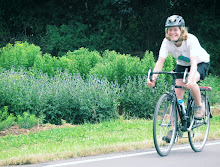

 Posts
Posts

